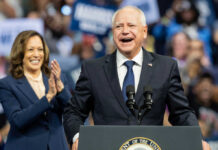
A new federal law signed by President Trump halts thousands of veteran foreclosures, reversing years of chaos and executive overreach with a bipartisan, congressionally mandated housing rescue.
At a Glance
- President Trump signed the VA Home Loan Program Reform Act into law on July 30, 2025
- The law replaces the controversial, executive-only VASP program
- Nearly 70,000 veteran homeowners at risk of foreclosure now eligible for relief
- The VA is mandated to implement a five-year partial claims program immediately
- Bipartisan lawmakers assert new oversight and long-term stability
Congress Reclaims Control
After months of rising defaults among military families, Washington finally acted. With the stroke of a pen, President Trump signed into law the VA Home Loan Program Reform Act, ending the short-lived VASP experiment and restoring constitutional oversight to a program that directly affects nearly four million veterans. The new law mandates a five-year partial claims option that allows the Department of Veterans Affairs to cover overdue payments for delinquent borrowers—staving off foreclosure for tens of thousands.
Watch now: Veterans Saved from Foreclosure Under New Law · YouTube
Lawmakers on both sides of the aisle hailed the move as a necessary course correction after the VASP program, launched without congressional input, failed to stabilize housing security for veterans. Critics blasted it as an unstable fix that exposed military families to unnecessary financial risk. Now, with Congress back in control, the VA must ensure that relief reaches the veterans who need it most—before the damage becomes irreversible.
Relief Comes Just in Time
As of mid-2025, over 60,000 veterans faced immediate foreclosure, while nearly 70,000 were seriously delinquent on their mortgages. The American Legion and other advocacy groups had warned for months that the previous lack of a formal, codified mitigation pathway risked turning an economic aftershock into a full-blown homelessness crisis.
Under the new law, the VA can offer partial claims to cover missed payments, giving families breathing room to recover financially. Housing analysts say the program’s structure—mirroring FHA and USDA counterparts—finally places the VA on equal footing with other federal housing backstops. It also shores up local housing markets by reducing forced sales and preserving veteran equity.
The relief is also symbolic. For many veterans, owning a home is a hard-earned pillar of post-service life. Watching that promise crumble due to bureaucratic improvisation under the VASP framework prompted widespread anger. This law restores a sense of justice—and certainty—to those who served.
A Conservative Blueprint Emerges
Beyond its immediate policy effects, the law offers a striking ideological pivot. Trump’s signature not only secures veteran homes—it reasserts Congress’s supremacy over major federal benefit programs. The Reform Act’s passage signals a broader conservative rebuke of unilateral executive governance in favor of legislated accountability.
Rep. Derrick Van Orden (R-WI), a Navy SEAL-turned-lawmaker, and Rep. Mike Bost (R-IL) spearheaded the push, arguing that permanent housing programs must be rooted in law—not dictated by administrative fiat. Their efforts reframed veteran relief not as a partisan talking point, but as a constitutional obligation.
As the VA crafts the program’s rollout plan, oversight will be intense. Congress expects regular reporting, transparency in implementation, and collaboration with mortgage servicers and advocates. Missteps could reignite the very mistrust this law seeks to resolve.
Sources
Congress.gov
Fox News
House Committee on Veterans’ Affairs
American Legion
HUD Exchange