
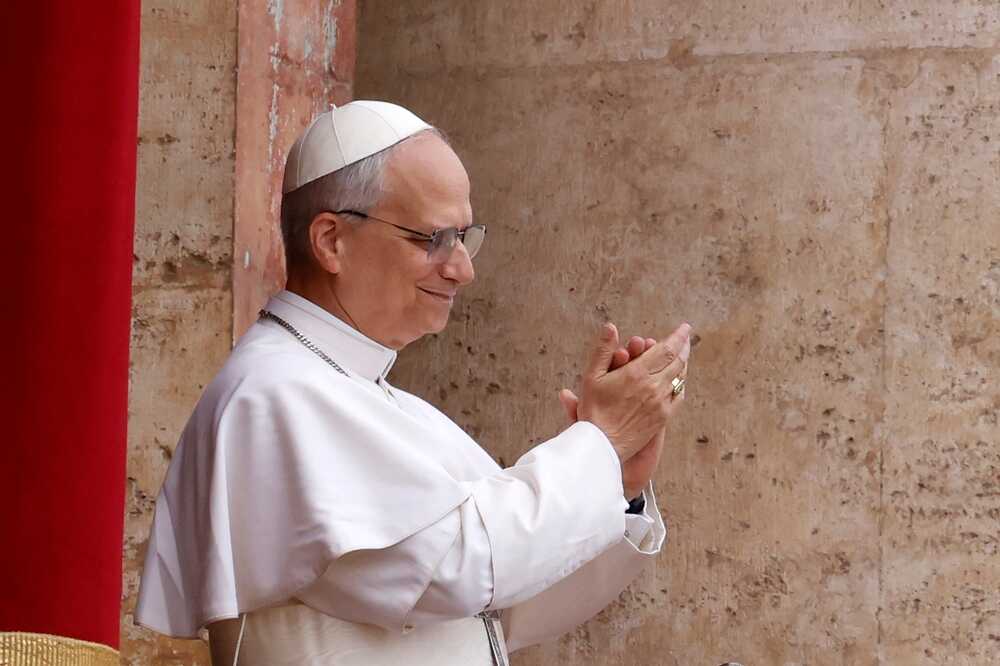
President Trump unleashes blistering Truth Social attacks on Pope Leo XIV, sharing a provocative AI image of himself as a divine warrior, igniting a rare clash between America’s elected leader and the Vatican’s moral authority.
Story Highlights
- Trump criticizes Pope Leo XIV as “weak on crime” and “terrible for foreign policy” over Iran, migration, and pandemic stances.
- Pope responds defiantly from papal plane: “no fear” of Trump administration, vows to promote peace amid Iran tensions.
- AI-generated image of Trump styled like Christ with fighter jets draws widespread backlash and memes.
- Unprecedented personal feud pits political power against spiritual peacemaking, tied to ongoing US-Israel actions in Iran.
Trump’s Direct Challenge
On April 12, 2026, President Donald Trump posted scathing attacks on Truth Social targeting Pope Leo XIV. Trump labeled the Pope “weak on crime,” “terrible for foreign policy,” and stated he is “not a big fan.” The criticisms focused on the Pope’s positions on Iran, migration, Venezuela, and COVID policies. Trump escalated by sharing an AI-generated image depicting himself as a divine figure, resembling Jesus Christ amid fighter jets and the Statue of Liberty. This move amplified the personal nature of the confrontation.
Pope Leo XIV FIRES BACK at Trump After President Targets Him with a Stinging Social Media Message (VIDEO) | The Gateway Pundit | by Cullen Linebarger
American born or not, it doesn’t matter. The Pope is a Dope.
Yes. I mean it. https://t.co/ok8uAgXBVv— RedState (@BordersUSA) April 13, 2026
Pope’s Defiant Aerial Response
April 13, 2026, aboard a papal aircraft en route to Algeria and Africa, Pope Leo XIV addressed Trump’s attacks directly. The Pope declared he has “no fear” of the Trump administration and refused to engage in debate. He reaffirmed commitment to peace, dialogue, and opposition to war, citing threats of annihilation and nuclear proliferation linked to Iran tensions. A Vatican prayer vigil at St. Peter’s preceded his remarks, underscoring the moral stance against conflict.
Escalating Ideological Rift
Relations soured from initial praise when Trump hailed Pope Leo XIV’s 2025 election as “historic for America.” Tensions built over the Pope’s condemnations of “delusion of omnipotence” driving wars, rejection of Trump’s Gaza peace initiative, and cancellation of a US visit. Historical precedents include papal critiques of US actions in Venezuela, but this marks a rare direct reference to a sitting US president. Trump’s reference to “brother Louie” remains unexplained.
The power dynamic contrasts Trump’s electoral mandate for strong foreign policy and crime control with the Pope’s role as moral peacemaker. Vatican officials disapproved of the AI papal attire image Trump shared earlier. Jesuit commentator Antonio Spadaro defended the Pope’s voice as rooted in conscience, beyond national interests or force.
Global Spectacle and Implications
The exchange sparked global media attention, meme proliferation, and an AI image firestorm. Critics called Trump’s divine self-portrayal “unhinged,” while the Vatican framed its position as gospel-focused, not personal. BBC analysis noted the unusual papal naming of a US president, targeting war’s “moral architecture” universally. Short-term, it heightens US-Vatican tension; long-term, it deepens divides on war and peace, affecting Catholic voters and diplomacy.
Affected communities include Catholics worldwide, Iran conflict victims, and US conservatives. Politically, it challenges Trump’s narrative amid ongoing US-Israel operations in Iran. Both sides reflect broader frustrations with elite power—Trump defending America First against perceived weakness, the Pope advocating multilateral peacemaking—echoing shared citizen distrust of distant authorities over everyday struggles.