
As Canada rushes to open a new consulate in Nuuk, Greenland, President Trump has renewed his push for the U.S. to secure control of the island, framing it as essential for American national security. This move has ignited fierce public resistance from nervous NATO allies, exposing deep tensions over Arctic security, national sovereignty, and the role of the U.S. in the alliance.
Story Highlights
- Canadian leaders are heading to Greenland to open a consulate just as Trump renews calls for U.S. control of the island.
- NATO and European officials are publicly pushing back, insisting “Greenland belongs to its people.”
- The showdown exposes deep tensions over Arctic security, national sovereignty, and America’s role in NATO.
- Canada is walking a fine line between backing Denmark and protecting its own trade ties with the U.S.
Canada Moves into Greenland as Trump Raises the Stakes
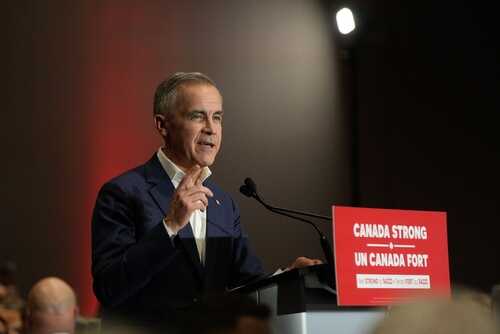
Canadian Prime Minister Mark Carney has announced that Governor General Mary Simon and Foreign Minister Anita Anand will visit Greenland in early February to open a new Canadian consulate in Nuuk. Their trip comes immediately after President Donald Trump renewed his longstanding call for the United States to “take control of” Greenland, describing the island as essential to American national security against China and Russia in the Arctic. Canada is presenting its move as support for Greenlandic self-government and regional stability.
Trump’s renewed push differs sharply from the 2019 episode when he floated buying Greenland and was brushed off by Denmark as “absurd.” This time, the White House is explicitly framing control of Greenland as a defensive necessity for NATO’s northern flank and U.S. missile warning systems. Trump and senior aides argue that Denmark cannot adequately secure the massive Arctic territory, and that only firm American control can keep Russian and Chinese influence at bay in increasingly contested polar waters.
NEW: PM @MarkJCarney says Governor General Mary Simon and Foreign Affairs Minister @AnitaAnandMP will visit Greenland as Donald Trump renews talk of U.S. annexation and Arctic security — AP
READ MORE: https://t.co/gIjpOCqnqF pic.twitter.com/dKdNpRggTK
— TrendingPolitics.ca (@TrendPolCa) January 7, 2026
NATO Allies Push Back While Sovereignty Takes Center Stage
European leaders responded with unusual public defiance toward a sitting U.S. president. Denmark, joined by France, Germany, Italy, Poland, Spain, and the United Kingdom, issued a joint statement declaring that “Greenland belongs to its people” and that only Denmark and Greenland can decide the island’s future. Their message directly counters any notion of U.S. annexation or coerced transfer, underscoring that Greenland is NATO territory and that forced changes would raise Article 5 collective-defense questions inside the alliance itself.
Carney aligned Canada with that sovereignty message during a meeting with Danish Prime Minister Mette Frederiksen at the Canadian Embassy in Paris. Standing beside her, he said the future of Greenland and Denmark is decided solely by their people, not by outside powers. At the same time, he stressed that Arctic security is a core priority for his government and that Canada intends to do more within NATO. For Trump supporters focused on strong national borders, this dynamic highlights a recurring pattern: global institutions and allied elites resisting assertive moves to secure strategic territory.
Military Option Talk Raises the Temperature
The rhetoric from Washington has escalated well beyond routine diplomatic bargaining. White House press secretary Karoline Leavitt stated that “utilizing the U.S. military is always an option” when discussing Trump’s Greenland objective, signaling that the administration wants opponents to understand it considers every tool on the table. Earlier, deputy chief of staff Stephen Miller argued that nobody would fight the United States militarily over Greenland’s future, downplaying fears of a direct clash with NATO partners while still projecting resolve.
Trump has justified his stance by pointing to Greenland’s strategic location and assets. The island hosts the key U.S. base at Thule and sits astride vital North Atlantic and Arctic sea lanes, with significant mineral and rare earth potential as ice recedes. Supporters of a tougher Arctic posture view control over such a chokepoint as consistent with traditional conservative priorities: strong national defense, energy security, and reducing dependence on rivals like China for critical minerals. Critics inside the alliance, however, worry that aggressive annexation talk complicates unity against Russia and China.
Canada’s Balancing Act Between Washington and NATO Partners
Behind the public statements lies a delicate calculation in Ottawa. Canada is an Arctic nation with its own vast northern coastline and Indigenous communities, and it has long treated Arctic sovereignty as a central national interest. Opening a consulate in Nuuk and sending Mary Simon—an Inuk leader and former ambassador to Denmark—signals solidarity with Greenland’s Inuit population and its self-governing status. At the same time, Carney must manage Canada’s deep economic dependence on the U.S., especially as a key free-trade agreement is being renegotiated under the Trump administration.
Analysts note that this is a genuine tightrope. If Canada is seen as undermining Washington’s strategic objectives, it risks trade or diplomatic friction with its largest partner. If it stays silent, it would appear to abandon long-held positions on international law and territorial integrity—principles that conservatives often invoke when opposing border erosion, illegal immigration, or supranational bodies overriding national decisions. For American readers who value strong borders and clear lines of sovereignty, the Greenland episode is another reminder that global politics rarely present simple choices.
Watch the report: Canada To Open Consulate in Greenland Following Trump’s Annexation Comments? FM Anita Anand Says…
Sources:
- Top Canadian officials to visit Greenland amid international fears as Trump eyes NATO-linked territory
- Canada’s Indigenous governor general to visit Greenland as Trump renews talk of annexing it
- Top Canadian officials to visit Greenland amid U.S. security claims
- Canada to open new consulate in Greenland amid U.S. security claims