
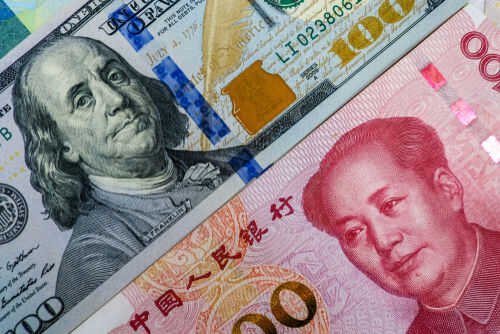
U.S. military action against Iran, sold as strategic genius targeting China, is instead handing Beijing a golden opportunity while leaving America’s Asian allies scrambling for fuel and questioning Washington’s reliability.
Story Snapshot
- Iran grants Chinese oil tankers preferential access through the Strait of Hormuz while restricting others, strengthening Beijing’s energy security
- U.S. allies Japan, South Korea, and Taiwan face severe oil shortages, implementing fuel rationing and shortened workweeks while Russia’s economy benefits
- China advances its petroyuan agenda, threatening the petrodollar’s dominance over the 20% of global oil flowing through the critical chokepoint
- Pro-war MAGA commentators claim the conflict weakens China, but evidence shows Beijing positioned as regional stabilizer amid U.S.-induced chaos
The 4D Chess Narrative Collapses
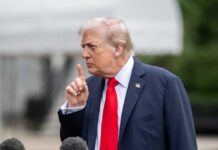
Former Trump adviser KT McFarland and political operative Roger Stone have promoted the Iran conflict as a masterstroke aimed at strangling China’s energy supplies. Stone claims the war cuts off 80% of China’s Iranian oil, while McFarland argues it will cripple China’s manufacturing revolution. Hudson Institute’s Zineb Riboua frames the strikes as targeting one of China’s three Middle East pillars. This narrative, amplified through MAGA outlets and Fox News, presents the military action as calculated strategy rather than dangerous overreach with unintended consequences.
Iran’s Selective Transit Enforcement
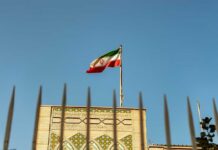
Reality on the ground contradicts the pro-war talking points. Iran has implemented yuan-only transit rules through the Strait of Hormuz, allowing dozens of Chinese oil tankers safe passage while blocking others. This enforcement stems from the 2021 China-Iran Comprehensive Strategic Partnership, which included technology transfers of BeiDou satellites and radar systems now being used for Iranian precision strikes. The selective access accelerates China’s petroyuan push, initiated in December 2022 through Gulf Cooperation Council oil trades on the Shanghai Exchange, directly challenging dollar dominance.
Allied Devastation in the Pacific
America’s Asian partners bear the conflict’s heaviest burdens. Japan, which depends on Middle Eastern oil for 95% of its energy needs, has implemented emergency fuel controls alongside South Korea, which relies on the region for 70% of its supply. Taiwan faces similar shortages while simultaneously watching U.S. attention and resources drain toward the Middle East rather than Pacific deterrence. These allies are now exploring alternative arrangements with Russia and reconsidering their security relationships with Washington, precisely the outcome Beijing seeks as it positions itself as a reliable regional power.
China’s Strategic Advantages Multiply
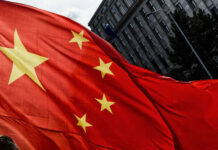
Beijing’s actual vulnerability to Hormuz disruptions proves far less severe than hawks claim. China sources only 20% of its oil through the strait, maintains substantial strategic reserves, and possesses alternative coal-based energy infrastructure alongside Central Asian pipeline routes. The conflict instead grants China preferential access while competitors suffer, strengthens the petroyuan against the petrodollar at a critical global chokepoint, and demonstrates U.S. unreliability to nervous allies. Russia’s economy simultaneously benefits as Asian nations pivot to Siberian oil supplies, undermining Washington’s stated goal of isolating Moscow.
Technology and Financial Warfare
The Iran-China technology partnership creates additional complications beyond energy politics. Iranian integration of Chinese BeiDou satellite systems into its power grid provides anti-jamming capabilities for missile accuracy, forming what analysts call a “Digital Wall” against U.S. military superiority. This technological cooperation extends China’s influence while the petroyuan enforcement through Hormuz transit controls advances de-dollarization at scale. Trump’s postponement of his planned China summit amid escalating tensions signals recognition that the conflict trajectory contradicts the optimistic 4D chess framing promoted by administration defenders.
The gap between hawkish rhetoric and strategic reality exposes deeper problems with America’s foreign policy establishment. Citizens across the political spectrum increasingly recognize that military interventions sold as brilliant strategy often serve elite interests while average Americans and allied populations pay the price. Japan’s shortened workweeks and Taiwan’s growing doubts about U.S. commitment represent concrete harms that undermine national security far more than any theoretical benefit from pressuring Iran. When both pro-war MAGA voices and establishment think tanks converge on narratives contradicted by observable facts, it reinforces the perception that Washington’s decision-makers prioritize justifying their choices over honest assessment of outcomes that matter to ordinary people trying to live their lives and maintain their freedoms.
Sources:
No 4D Chess: War With Iran Helps China – The American Conservative
How Iran and China Shaped the War Chessboard – Other News
Former Trump adviser KT McFarland: Trump playing four-dimensional chess on Iran war – Media Matters