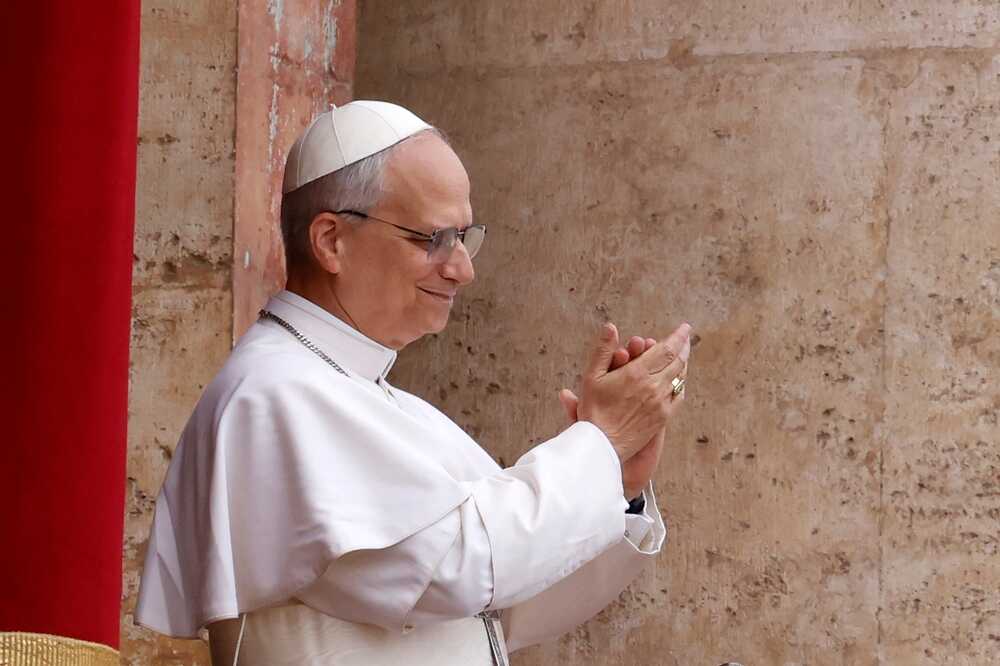
A single bishop’s border-crossing backstory just turned West Virginia into the Vatican’s loudest immigration argument.
Story Snapshot
- Pope Leo XIV appointed Bishop Evelio Menjivar-Ayala to lead the Diocese of Wheeling-Charleston, which covers all of West Virginia.
- Reports describe Menjivar-Ayala entering the U.S. illegally as a teenager after multiple failed attempts, including being smuggled in a car trunk.
- The diocese defended the choice as a “better life” story, while critics framed it as a political signal aimed at a conservative state.
- His later legalization and U.S. citizenship complicate the simplistic “lawbreaker vs. hero” narratives on both sides.
A Red-State Diocese Becomes a Global Messaging Board
Pope Leo XIV’s decision to place Bishop Evelio Menjivar-Ayala in charge of the Diocese of Wheeling-Charleston did not land as a quiet church staffing matter. West Virginia’s statewide diocese sits in a culturally conservative region where immigration policy often reads as a kitchen-table question: who followed the rules, who didn’t, and who pays the price. That friction made the appointment feel less like routine governance and more like a test case.
Menjivar-Ayala’s biography, carries the kind of details that trigger strong reactions because they are concrete: multiple attempts to enter the United States, time in the hands of authorities, deportations, and eventually a successful crossing near San Ysidro, California, hidden in a car trunk. Those specifics matter because they pin the story to real choices and real law, not abstract slogans. People argue harder when the timeline has fingerprints.
The Border Story That Won’t Stay in the Past
The account begins in the late 1980s or early 1990s, when El Salvador’s violence and poverty pushed many families to gamble everything on escape. Menjivar-Ayala, still a teenager, reportedly tried more than once and failed more than once. Mexican authorities jailed him at one point; another time ended with deportation toward Guatemala. This isn’t a clean, cinematic crossing. It’s the messy, repetitive, high-risk pattern that border agents recognize instantly.
The “1990” reference that circulates in coverage functions more as an approximate peg than a notarized date, but the broader sequence stays consistent: repeated failures, then eventual success, followed by years of building a life in the United States. Roughly two decades ago, he reportedly obtained humanitarian protection and later citizenship. That arc sets up today’s conflict: critics focus on the original unlawful entry, supporters focus on the later lawful status and public service.
Why This Appointment Hit a Nerve in 2026
The Vatican’s personnel decisions always carry symbolism, but they hit harder when they align with an active political fault line. In 2026, immigration enforcement, refugee policy, and high-profile clashes between Church leaders and American politicians already strained nerves. In that atmosphere, a bishop with a widely reported history of illegal entry becomes a walking press conference. Even if Pope Leo intended pastoral emphasis, opponents read provocation; supporters read moral clarity.
West Virginia adds another layer because a statewide diocese is intimate by design: fewer degrees of separation between bishop and parishioner, fewer “big city” buffers. When the diocese pushed back on criticism and framed Menjivar-Ayala’s past as a search for a better life, it invited Americans to decide what “better life” means in a nation built by immigrants but governed by laws. That tension never resolves on autopilot.
Common-Sense Standards Conservatives Should Demand
American conservatives can hold two ideas at once without apologizing for either. First, illegal entry violates the law, and normalizing it invites more disorder at the border. Second, redemption and lawful regularization have meaning, and people can become exemplary citizens and leaders after a rough beginning. The strongest conservative critique, based on common sense, is not personal contempt but institutional clarity: the Church should not appear to reward lawbreaking as a credential.
The strongest pro-appointment argument, if it wants to persuade skeptics, must also deal in clarity. It should explain how humanitarian protection and citizenship changed the legal and moral posture of the story, and why that matters for leadership today. Vague appeals to compassion won’t satisfy people who watched communities absorb costs from uncontrolled migration. Persuasion requires acknowledging enforcement realities, not talking past them.
What West Virginia Catholics Will Watch Next
Parishioners will not judge this bishop by headlines for long. They will judge him by whether he prioritizes evangelization, protects the vulnerable, manages diocesan finances responsibly, and speaks about immigration in ways that do not reduce citizens to villains or migrants to props. The open question is whether this appointment becomes a bridge or a battering ram: a leader who can respect the law while preaching mercy, or a symbol used to escalate conflict.
The story’s lingering hook sits right there in the timeline: a teenager’s illegal crossing, followed by legal status, followed by a bishop’s mitre in a conservative state. That combination forces an unavoidable national question into a local pew: can a society demand borders and still believe in transformation? West Virginia will give the first answers, not in op-eds, but in Sunday attendance, parish trust, and whether the noise eventually yields to leadership.
Sources:
Pope Leo places former illegal immigrant in charge of red state diocese
A Lesson in Morality: Pope Leo Appoints Former Illegal Immigrant as Bishop in WV