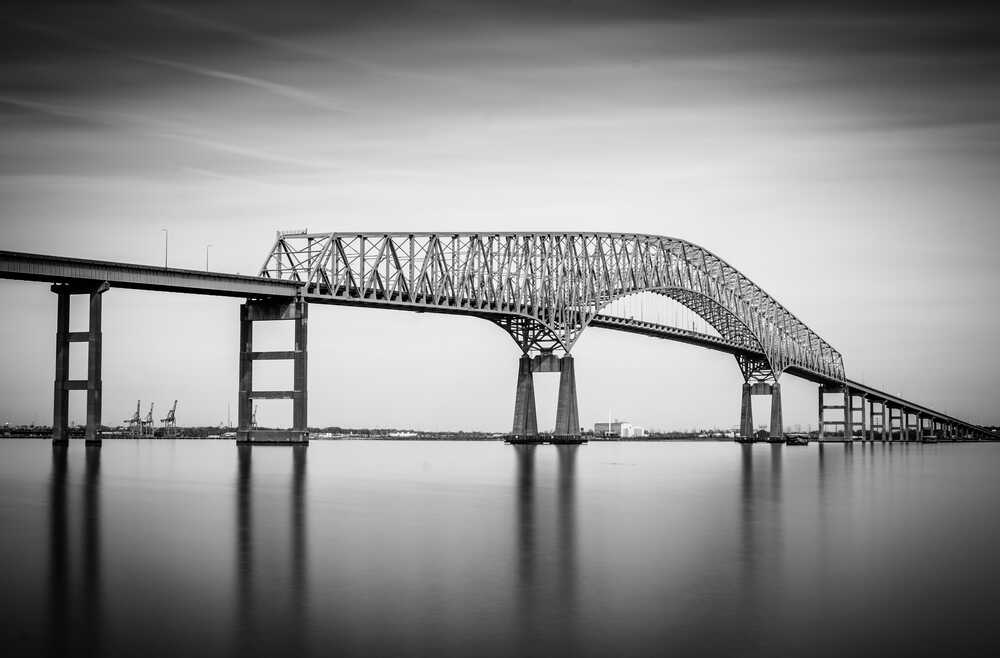
Foreign shipping companies now face federal criminal charges for allegedly covering up safety failures that led to the deadly collapse of Baltimore’s Francis Scott Key Bridge, exposing how lax oversight of foreign operators may have cost six American workers their lives.
Story Snapshot
- Two Synergy Marine companies and a technical superintendent face conspiracy, obstruction, and environmental charges tied to the March 2024 bridge collapse that killed six construction workers
- Federal prosecutors allege the firms fabricated safety inspections and lied to Coast Guard investigators about known electrical hazards aboard the M/V Dali
- The Singapore and India-based companies face billions in potential damages while the key accused employee remains in India, complicating extradition efforts
- The indictment marks the first criminal charges against foreign ship managers in this disaster, signaling heightened U.S. enforcement against maritime negligence
Federal Indictment Targets Foreign Ship Managers
The U.S. Department of Justice unsealed criminal charges on May 12, 2026, against Synergy Marine Pte Ltd of Singapore and Synergy Maritime Pte Ltd of Chennai, India, along with their employee Radhakrishnan Karthik Nair. The companies managed the 900-foot container ship M/V Dali when it lost power and struck Baltimore’s Francis Scott Key Bridge on March 26, 2024, killing six Latino construction workers and causing the bridge’s catastrophic collapse. U.S. Attorney Kelly O. Hayes announced the indictment at a Baltimore press conference, stating that Synergy employees fabricated critical safety inspections prior to the disaster.
Alleged Cover-Up of Preventable Hazards
Prosecutors charge that Nair, the 47-year-old Technical Superintendent responsible for the vessel’s maintenance oversight, directed the improper use of a flushing pump to supply fuel to the ship’s generators rather than addressing underlying electrical problems. Following the crash, federal investigators allege Synergy employees forged inspection records and provided false statements to the National Transportation Safety Board and Coast Guard about the pump configuration. Acting Assistant Attorney General Nicole Argentieri stated the defendants repeatedly failed to document hazardous conditions, then lied to investigators attempting to determine what caused six preventable deaths. This obstruction undermines the accountability Americans expect when corporate negligence kills workers.
Economic and Safety Implications
The bridge collapse disrupted 20 percent of U.S. East Coast vehicle imports, costing Maryland’s economy an estimated 15 million dollars daily in port losses. Reconstruction costs hover near 1.9 billion dollars, while the families of Miguel Luna, Alejandro Hernandez, Dorlian Ronial Castillo Cabrera, Maynor Yasir Suazo Sandoval, Carlos Orlando Villalobos, and Jose Mynor Lopez continue seeking justice through parallel civil litigation. Maritime experts note this rare criminal prosecution signals zero tolerance for corporate cover-ups in shipping incidents. The charges could force stricter vetting of foreign vessel managers operating in U.S. waters, addressing longstanding concerns about accountability gaps when overseas companies control critical maritime operations affecting American infrastructure and lives.
Jurisdictional Challenges Ahead
Nair is believed to be in India, complicating U.S. efforts to bring him to trial and raising questions about whether foreign nationals can evade accountability for crimes committed against Americans. The companies face asset freezes and potential exclusion from U.S. ports if convicted, threatening Synergy’s global operations. A bench trial is scheduled for June 1, 2026, running parallel to civil liability suits filed by Baltimore and Maryland against the ship’s owner, Grace Ocean Private Ltd. Defense attorneys will likely argue that onboard crew errors, not shoreside management decisions, caused the power failures. Yet the indictment’s focus on systematic fraud and concealment suggests prosecutors possess strong evidence linking management negligence directly to the tragedy, reinforcing the principle that no company should escape consequences for putting profits over safety.
Singaporean, Indian firms face criminal charges over Maryland bridge crashhttps://t.co/Vc03xbjmss
— Insider Paper (@TheInsiderPaper) May 12, 2026
The case represents a critical test of whether U.S. authorities can hold multinational shipping conglomerates accountable when their cost-cutting and negligence result in American deaths. For too long, complex corporate structures and foreign jurisdictions have shielded decision-makers from facing justice. These indictments demonstrate that federal prosecutors are willing to pursue criminal charges against overseas firms whose reckless conduct devastates communities, though success will depend on international cooperation and the willingness to impose meaningful penalties that deter future negligence in an industry where corners are too often cut at workers’ expense.
Sources:
Justice Department announces criminal charges in Baltimore’s deadly Key Bridge collapse – ABC17News
Baltimore bridge collapse charges – Pittsburgh Post-Gazette