
After four years of war, the biggest unanswered question isn’t whether Russia can keep fighting—it’s whether Vladimir Putin can keep control if the strain finally snaps at home.
Quick Take
- Finland’s foreign minister has argued the West should pressure Russia toward a Soviet-style systemic breakdown to end the war without direct NATO combat.
- As of 2026, Russia still occupies roughly 20% of Ukraine, and no broad “popular revolt” has materialized despite visible stresses.
- The 2023 Wagner mutiny exposed elite fractures, but it was contained quickly—showing both regime vulnerability and regime capacity.
- Economic distortions inside Russia appear to be deepening, with analysts warning that even a ceasefire wouldn’t automatically repair structural damage.
Collapse Talk Returns as the War Grinds On
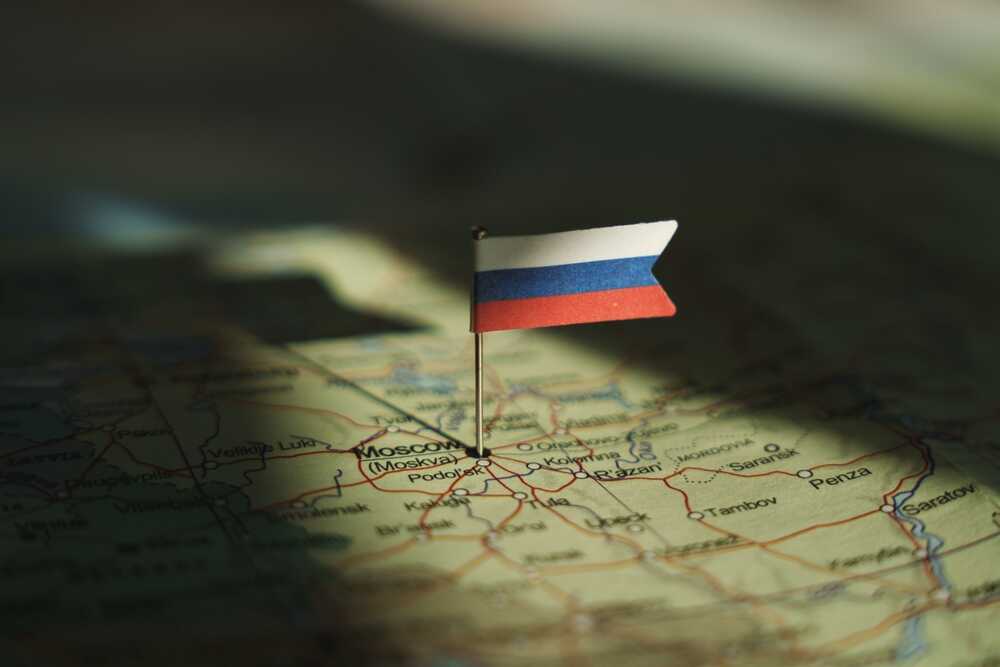
Elina Valtonen, Finland’s foreign minister, has publicly revived a hard-edged theory of victory: keep political and economic pressure on Moscow until Russia approaches a Soviet Union–style collapse that forces an end to the Ukraine war. That argument is designed to avoid a direct NATO-Russia fight while still producing a decisive outcome. The catch is timing and proof—by 2026, Russia remains in the fight, and Ukraine remains partially occupied.
Russia’s full-scale invasion began February 24, 2022, after years of coercion, disinformation, and military pressure that followed the 2014 Revolution of Dignity in Ukraine. Analysts have described Putin’s deeper fear not as NATO tanks crossing borders, but the “contagion” of a successful, democratic Ukraine next door. That fear helps explain why the Kremlin treated Kyiv’s independence and Western alignment as a regime-level threat, not a standard security dispute.
What the Wagner Mutiny Proved—and What It Didn’t
The closest modern preview of “collapse” arrived in June 2023, when the Wagner Group mutinied and advanced toward Moscow before de-escalating after Belarus helped broker an arrangement. The episode highlighted real fractures inside Russia’s security apparatus and elite power structure—rare for a tightly managed system. At the same time, the mutiny ended quickly, and the regime survived. That dual lesson matters: instability is possible, but not easy to convert into revolt.
Economic Strain Looks Real, but Revolt Is Still Speculation
By 2026, the war’s persistence has created a grinding set of pressures: sanctions, sustained defense spending, and the long-term costs of mobilization and isolation. Economic reporting has warned that ending the war would not automatically fix Russia’s economy, pointing to deeper “deformations,” a tilt toward nationalization, and lingering business uncertainty. Those conditions can fuel discontent, but the available research does not document a nationwide uprising or an imminent loss of political authority.
Carnegie’s analysis of the postwar trajectory underscores another point conservatives tend to appreciate: even a weakened adversary can become more dangerous. A Russia that is “less secure” and more aggrieved may lean harder into sabotage, disinformation, and other hybrid tools aimed at Europe and the West. That means Washington’s challenge is not just helping Ukraine hold territory today, but preparing for a long contest that mixes military deterrence with domestic resilience against covert interference.
What This Means for U.S. Policy in 2026
For Americans frustrated with dysfunction at home, the temptation is to see “collapse” as a clean solution—let the pressure build, and the problem solves itself. The research supports a more sober takeaway: the war has exposed stress inside Russia, but a popular revolt remains unproven, and predictions are inherently speculative. If policymakers pursue a strategy explicitly aimed at collapse, they also inherit the risks of disorder, loose weapons, and intensified hybrid attacks.
The Ukraine War Could Spark ‘A Collapse of Political Authority and a Popular Revolt’ in Russiahttps://t.co/0Ytih0THx6
— 19FortyFive (@19_forty_five) May 5, 2026
In practical terms, the most defensible position—based on the available sources—is to separate what’s confirmed from what’s hoped for. Confirmed: Ukraine is still resisting, Russia still holds significant ground, and the Kremlin has faced internal drama and economic distortion. Not confirmed: an imminent breakdown of authority or a mass revolt capable of ending the war. For voters tired of elite spin, that distinction is the real headline.
Sources:
Russia-Ukraine: Postwar Divided European Security
Ending the Ukraine War Won’t Fix Russia’s Economy