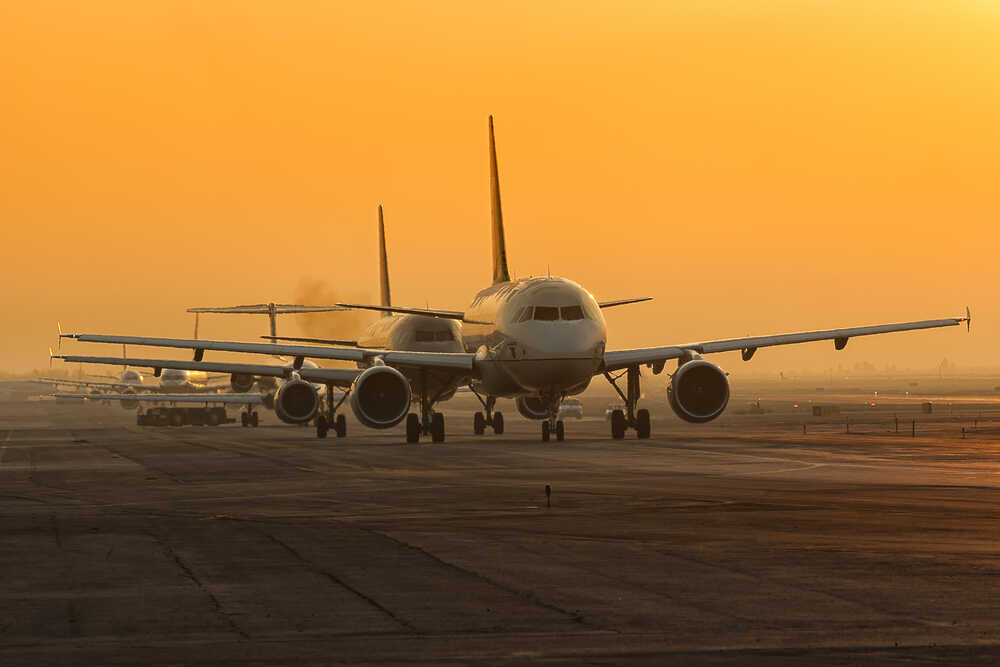
A Frontier Airlines jet struck and killed a person who scaled a perimeter fence and walked onto an active runway at Denver International Airport during takeoff, triggering an engine fire and emergency evacuation that injured a dozen passengers but revealed stunning gaps in airport security at one of America’s busiest hubs.
Story Snapshot
- Flight 4345 to Los Angeles hit an unidentified individual on Runway 17L at 11:19 PM on May 8, killing the trespasser instantly
- The person breached security by scaling the east perimeter fence and accessing the active runway during high-speed takeoff operations
- All 231 passengers and crew evacuated via emergency slides after pilots reported engine fire and cabin smoke; 12 sustained minor injuries
- NTSB launched investigation into the security failure while DIA inspected perimeter fencing for additional vulnerabilities
- The runway reopened after 12 hours, but questions persist about how anyone could access an active runway at a major commercial airport
When Airport Security Fails at 150 Miles Per Hour
The Airbus A321neo accelerated down Runway 17L with 224 passengers aboard, seconds from lifting off toward Los Angeles. Pilots felt the sickening thud of impact at approximately 150 miles per hour. The collision sent human remains into the jet engine, triggering an immediate fire that filled the cabin with smoke. Within moments, the flight crew aborted takeoff and ordered emergency evacuation. Passengers deployed down inflatable slides into the Colorado night, some sustaining minor injuries in the chaos. Five required hospital transport, but remarkably, everyone aboard survived what could have been catastrophic.
Transportation Secretary Sean Duffy confirmed the victim deliberately scaled Denver International Airport’s perimeter fence on the east side. This wasn’t accidental wandering or confused disorientation. Someone bypassed multiple security layers designed specifically to prevent runway access, reaching an active departure runway during one of aviation’s most critical phases. The individual’s identity remained undisclosed days later, with authorities stating only that the person was not an airport employee. Motivation remains unknown, though investigators have ruled out any connection to maintenance work occurring on a parallel runway that evening.
The Security Breach Nobody Saw Coming
Denver International Airport spans more than 34,000 acres, making comprehensive perimeter security a monumental challenge. Yet that’s precisely what federal regulations and common sense demand. Post-9/11 protocols established multiple defensive layers: physical fencing, electronic surveillance, motion detection, and regular patrols. On May 8, all of them failed. Someone determined enough to climb a fence found themselves on Runway 17L, a 12,000-foot strip of asphalt where commercial jets routinely reach velocities exceeding 150 miles per hour during departure. Airport officials inspected the east perimeter fence the following morning, reporting it intact with no obvious gaps or damage.
The NTSB coordinated with the FAA, Denver Police, and airport operations to piece together how this happened. Their preliminary statements offered no answers, only confirmation they were gathering information. Frontier Airlines expressed sadness while cooperating with investigators. Meanwhile, runway incursion experts noted the grim rarity of pedestrian strikes at major U.S. commercial airports. The FAA tracks runway incursions religiously because they represent existential threats to aviation safety. Most involve vehicles, ground equipment, or aircraft taxiing where they shouldn’t. Pedestrians on active runways during takeoff operations? That’s almost unheard of at facilities like Denver International.
Emergency Response Validated Under Fire
The Frontier crew’s response deserves recognition even amid tragedy. Pilots immediately recognized the collision, reported the engine fire to air traffic control, and executed emergency procedures flawlessly. The engine fire extinguished quickly, likely aided by modern fire suppression systems designed for exactly these scenarios. Cabin crew directed 231 people off the aircraft via emergency slides in minutes, preventing panic and ensuring orderly evacuation despite smoke in the cabin. Twelve passengers sustained minor injuries during evacuation, with five requiring hospital transport for evaluation. Zero fatalities among those aboard represents a testament to training, technology, and crew professionalism under extreme pressure.
Emergency responders deployed immediately, closing Runway 17L for investigation. The closure disrupted operations for approximately 12 hours until airport officials reopened the runway at 11:30 AM on May 9. Most passengers eventually departed Denver on replacement Frontier flights, though the psychological impact will likely linger. Witnessing a fatal collision, experiencing an engine fire, and evacuating down emergency slides creates trauma that doesn’t dissipate quickly. Compensation claims and potential litigation seem inevitable, though liability determination awaits investigative findings about exactly what failed and why.
Questions Demanding Answers
How does someone access an active runway at one of America’s largest airports? That question haunts every frequent flyer and should trouble anyone concerned about aviation security. Denver International handles over 60 million passengers annually, operating as Frontier Airlines’ primary hub. The facility maintains 24/7 operations across multiple runways, requiring constant vigilance against intrusions. Yet on May 8, that vigilance failed. Whether through inadequate technology, insufficient patrols, deliberate circumvention, or simple human error, someone reached Runway 17L undetected and died there. The NTSB investigation will eventually determine probable cause and issue recommendations. The FAA may implement new security directives industry-wide.
Airport security experts anticipate significant changes at Denver International and potentially across major U.S. airports. Enhanced perimeter monitoring through advanced sensors, upgraded surveillance camera systems, increased security patrols, and improved detection technology all seem likely. The question isn’t whether upgrades will occur but how quickly airports can implement them without disrupting operations. Meanwhile, the aviation industry watches closely. Other airports will review their own perimeter security, identifying vulnerabilities before tragedy strikes. Technology vendors offering security solutions may see increased demand as airports scramble to prevent similar incidents. The economic costs extend beyond immediate emergency response to long-term infrastructure investments, potential litigation, insurance implications, and reputational damage.
The Human Cost Beyond Statistics
One person died on Runway 17L, their identity still undisclosed days later. Twelve passengers sustained injuries evacuating the aircraft. Five required hospitalization. Two hundred thirty-one people experienced the terror of emergency evacuation. Families received devastating news. Emergency responders confronted a gruesome scene. Frontier Airlines employees faced questions about safety. Denver International Airport staff grappled with security failure. These aren’t statistics or data points but human beings whose lives intersected with tragedy on a Friday night in May. The deceased individual’s motivation may never be fully understood, particularly if mental health crises or personal desperation drove them to scale that fence.
Aviation safety depends on multiple redundant systems precisely because individual failures occur. Technology malfunctions, humans make mistakes, circumstances align unexpectedly. Modern aviation’s remarkable safety record exists because when one layer fails, others compensate. On May 8, all layers failed simultaneously for one individual, but succeeded spectacularly for 231 others. That’s worth remembering amid justified criticism of security failures. The crew training that ensured successful evacuation, the aircraft systems that contained the engine fire, the emergency response that prevented further casualties—these worked exactly as designed. The challenge now involves fixing what failed while preserving what succeeded, ensuring that next time, nobody reaches that runway in the first place.
Sources:
Pedestrian hit by Frontier airplane departing Denver for Los Angeles
Frontier Airlines jet reports striking individual walking on runway