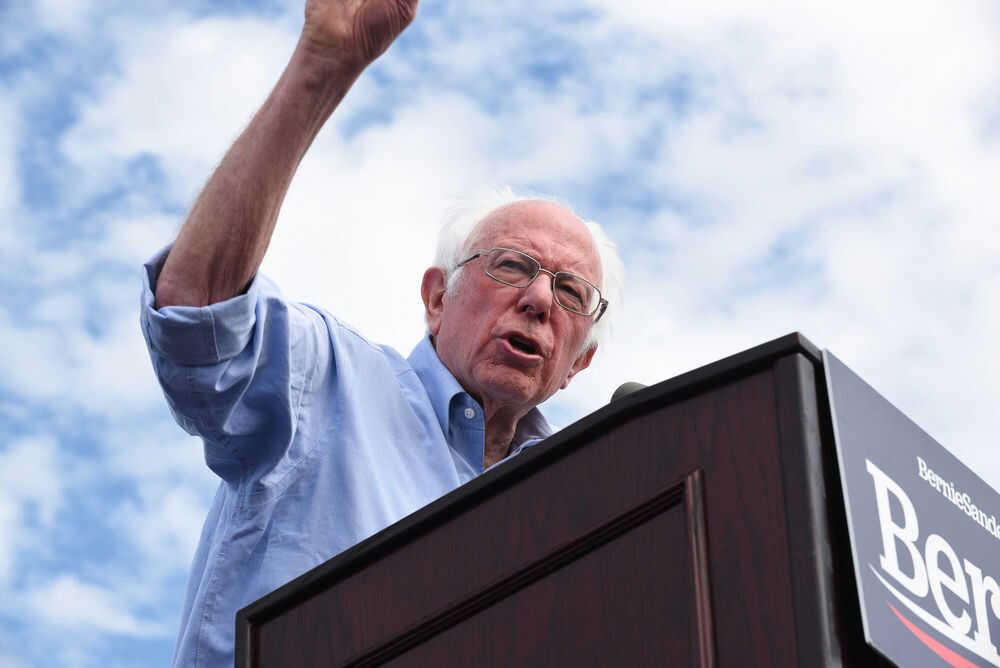
Bernie Sanders’ “fight the oligarchy” brand took a fresh hit when he boarded a first-class flight out of Washington as unpaid federal workers waited for relief.
Story Snapshot
- Sen. Bernie Sanders left Washington, D.C., on a first-class flight from Reagan National at 2:42 PM ET on March 27, 2026, during a partial government shutdown.
- The flight came hours after the Senate passed a bill to pay TSA officers and minutes after House Speaker Mike Johnson rejected that Senate-passed bill.
- President Trump later signed an executive order to get TSA officers back pay, while other affected workers—reported as including FEMA and some Coast Guard employees—remained unpaid.
- The sources do not clarify whether Sanders’ first-class ticket was paid personally or by campaign funds, a key detail fueling the credibility debate.
First-Class Optics Collide With Shutdown Reality
Sen. Bernie Sanders departed Washington, D.C., on Friday, March 27, 2026, taking a first-class flight from Reagan National Airport at 2:42 PM ET. The timing mattered: the Senate had passed a bill around 2:00 AM to pay TSA officers after 41 days without compensation, and House Speaker Mike Johnson rejected the Senate-passed bill shortly before Sanders left. The sources frame the episode as a sharp optics problem for Sanders’ anti-wealth messaging.
Sanders’ office told reporters he was not taking a vacation and was headed to Minnesota for a “No Kings” rally over the weekend. That detail explains why he traveled, but it does not resolve the central question critics raised: why a politician who routinely condemns “oligarchy” and luxury politics would choose premium travel while federal employees were stuck in a pay limbo. The available reporting also leaves one practical fact unanswered—who paid for the ticket.
Trump’s Executive Action Helped TSA, Not Everyone
During the shutdown, the sources describe TSA officers as going 41 days without pay until President Trump signed an executive order that delivered back pay and ended that specific gap. However, the same reporting says other workers were still affected, including FEMA staff and some Coast Guard employees, even after the TSA fix. That split outcome became part of the broader frustration: Washington found a targeted workaround, but not a full solution for every agency and employee caught in the disruption.
The legislative backdrop also complicates accountability. The sources say the Senate passed a bill aimed at paying TSA, but the House rejected it, and then many senators left town, making it harder for Congress to respond quickly to new House action. The political system’s stop-and-go rhythm—big votes, immediate dead ends, and lawmakers departing Washington—left voters with a familiar picture of dysfunction. For taxpayers watching from home, it looked like urgency for photo ops but delay for paychecks.
“Fight the Oligarchy” Tour Faces Scrutiny Over Travel Spending
Sanders’ travel choices are not being judged in a vacuum. His “Fight the Oligarchy” tour launched in February 2025 with Rep. Alexandria Ocasio-Cortez, and subsequent reporting cited campaign finance records showing significant air-travel spending. One report said Sanders’ committee spent $221,723 chartering private jets in the first quarter of 2025, and another said spending reached nearly $230,000 on private jets in the second quarter of 2025. Those figures drive the narrative that elite travel has become routine.
When challenged previously about private-jet use, Sanders offered a blunt defense in the reporting: he said he had “no apologies” and described private jets as standard campaign practice. That may be an accurate description of modern politics, but it also reinforces the hypocrisy critique the sources highlight. If “oligarchy” is defined as a ruling class insulated from the consequences of its own policies, voters will naturally compare rhetoric to lifestyle—especially during crises that hit working families hardest.
Why This Resonates With Frustrated Voters in 2026
The sources focus on Sanders, but the larger political lesson is about credibility in a time of stacked pressures—runaway spending fights, shutdown disruptions, and Americans weary of leaders who preach sacrifice while living differently. For conservatives who already distrust progressive economic lecturing, the first-class story lands as validation that “anti-elite” branding can be a marketing strategy rather than a standard of personal conduct. The reports do not prove wrongdoing; they do document an optics problem Sanders invited.
'Fight the Oligarchy' Bernie Sanders Caught in First Class While Government Workers Left Hanging https://t.co/ADtd5JFjdI
— Rex_Tudor_Coup (@iamgnurr) March 28, 2026
At minimum, the episode underscores a basic accountability standard many voters now demand: officials should explain clearly how travel is funded, especially when they campaign against luxury and privilege. The available reporting does not specify whether Sanders paid personally or used political funds, and that gap matters for evaluating the seriousness of the criticism. Until that detail is clarified, the public is left with what Washington too often produces—more suspicion than transparency, and another reminder that messaging is not the same as merit.
Sources:
https://twitchy.com/justmindy/2026/03/27/bernie-sanders-first-class-n2426534