
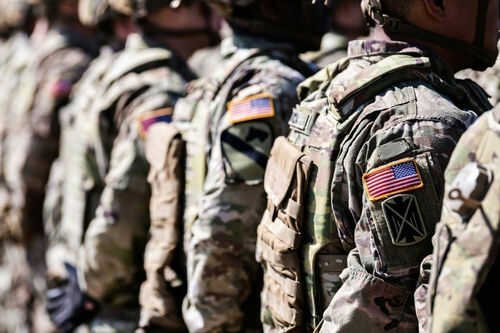
Iran’s warning that it will “rain fire” on American troops collides with a sobering reality for Trump voters: the White House now owns every next step toward—or away from—another Middle East ground war.
Quick Take
- Iran’s parliament speaker publicly threatened U.S. forces, claiming Tehran is ready to attack American troops if “boots on the ground” arrive.
- U.S. deployments in the region, including the USS Tripoli with roughly 3,500 personnel, are fueling speculation about possible ship-to-shore missions or raids.
- President Trump publicly floated sweeping strikes on Iran’s power and oil infrastructure if no deal is reached, while Iran signaled wider retaliation threats.
- Shipping chokepoints and energy infrastructure sit at the center of the escalation, raising the stakes for oil prices and U.S. household costs.
Iran’s “Rain Fire” Threat Meets a Real U.S. Military Buildup
Mohammad Bagher Ghalibaf, Iran’s parliamentary speaker, accused the United States of negotiating in public while preparing an invasion in private, and he said Iranian forces are “waiting” for American troops to arrive on the ground so they can “rain fire” on them while punishing U.S. regional allies. The rhetoric landed as the war moved into a fifth week and as U.S. naval forces continued to shift into the theater.
Reports tied the spike in Iranian warnings to visible U.S. movements, including the arrival of the USS Tripoli with about 3,500 personnel. Separate reporting cited Pentagon preparation for Marine Expeditionary Unit ship-to-shore missions, and other accounts discussed possible ground operations or raids—ideas that remain speculative based on what has been publicly confirmed. The most concrete facts are the deployments and the escalating statements, not a verified decision for a ground invasion.
Trump’s Ultimatums Raise the Cost of Miscalculation
President Trump’s public posture has toggled between claiming progress toward a deal and issuing blunt threats of expanded destruction if negotiations fail. Reporting described Trump warning that Iran’s electricity plants, oil wells, and sites tied to exports could be targeted if no agreement is reached, with Kharg Island repeatedly mentioned in coverage as a strategic oil hub. Those threats matter because infrastructure targeting can push retaliation beyond military sites and into pressure on civilians, markets, and allies.
Iran’s side has paired battlefield-style warnings with broader retaliation messaging. Reporting described threats tied to universities and to the personal residences of U.S. and Israeli commanders, language that widens the conflict’s psychological and political footprint. Regional institutions have already reacted; American University of Beirut reportedly shifted to online instruction amid threats. Taken together, these signals show both sides leaning on coercion—moves that can corner leaders into “responding” rather than choosing a deliberate off-ramp.
Straits, Energy, and the Kitchen-Table Reality for U.S. Families
Shipping lanes and energy infrastructure sit at the center of the escalation, and that’s where conservative voters feel it first—at the pump and in home energy bills. Coverage described threats involving the Strait of Hormuz and mentions of a possible Bab el-Mandeb blockage, along with talk of strikes on oil ports and desalination facilities. Any sustained disruption around these chokepoints can ripple into global energy prices and supply chains, punishing American households regardless of party.
What’s Verified, What’s Speculation, and Why It Matters for MAGA
The reporting is consistent on several core points: Iran issued an explicit threat against U.S. ground troops; U.S. warships and forces have repositioned; airstrikes have continued for roughly a month; and leaders on both sides have used maximalist language. The least certain claims involve the existence of a settled U.S. plan for a ground invasion, which is discussed as preparation and possibility rather than a confirmed order. That distinction matters because democracies drift into wars when “preparation” quietly becomes “inevitable.”
For Trump’s base, the political tension is obvious: voters who rejected left-wing globalism and forever-war thinking now watch a Republican administration manage a fast-moving crisis with high risks to troops, energy prices, and constitutional priorities at home. The immediate question is whether Washington can pursue deterrence and negotiation without sliding into a ground commitment that many Americans—especially veterans and working families—believe never ends cleanly. The available reporting cannot answer that yet, but it shows how quickly the pieces are moving.
Sources:
Iran warns US over “boots on the ground” reports
Iran warns US over boots on the ground reports