
As Marco Rubio told senators that Iran’s navy “has no navy left,” the bigger story is how Trump’s hard‑power strategy is reshaping the Middle East and igniting a new fight in Washington over what victory really looks like.[3]
Story Snapshot
- Rubio says Operation Epic Fury left Iran’s navy on the “bottom of the ocean” and gutted its military‑industrial base.[3]
- Senate Democrats press Rubio on civilian costs, legality, and whether the campaign truly forced Iran toward negotiations.[1][3]
- The Trump administration links Iran’s economic pain to leverage for a tougher nuclear and regional deal.[2]
- Critics warn that Iran still has drones and proxies, questioning claims of a decisive and lasting victory.[2]
Rubio’s Stark Claim: Iran’s Navy “Has No Navy Left”
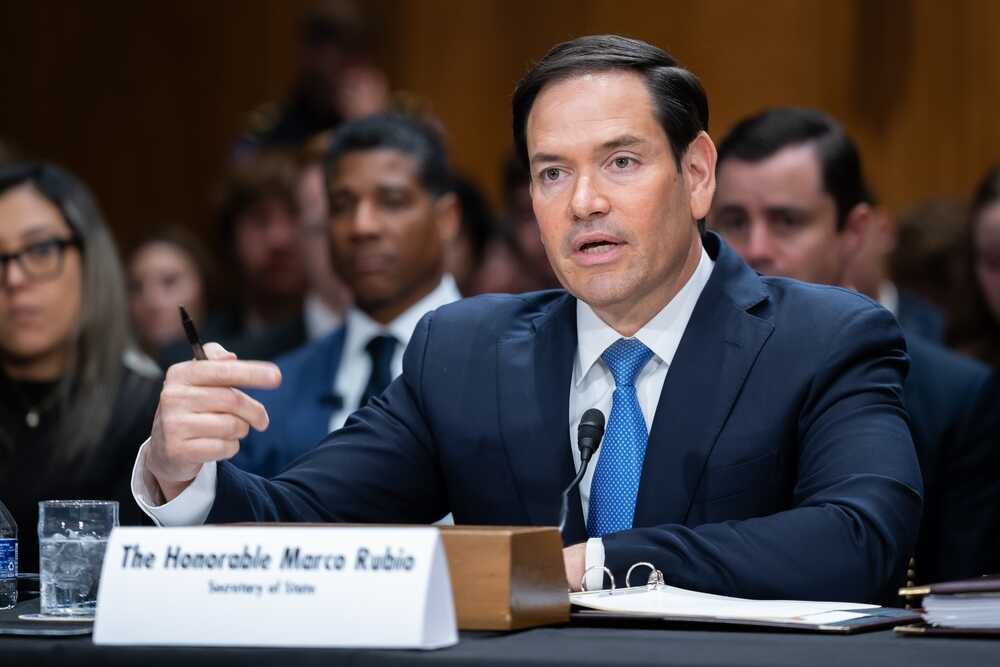
During a tense Senate Foreign Relations Committee hearing, Secretary of State Marco Rubio declared that after Operation Epic Fury, “Iran has no navy left,” insisting that United States strikes destroyed much of Tehran’s sea power and military industry.[3] Rubio told Senator Cory Booker that Iran has “lost a substantial percentage of their defense industrial base” and a large share of its missile launchers, portraying the Islamic Republic as materially weaker than just months ago.[3] Those remarks framed the Trump administration’s narrative of decisive victory at sea.
Rubio’s testimony came at his first major congressional appearance since the Iran war escalated, giving lawmakers and the public a clearer picture of how the White House views the conflict’s current phase.[2][4] He described an enemy whose economy is “far worse” than six to nine months earlier, tying that decline directly to coordinated military strikes and a tight blockade around Iranian ports.[3] For many conservatives who remember years of appeasement and cash pallets under earlier administrations, Rubio’s language marked a sharp return to unapologetic American power.
From Offensive Strikes To Blockade And Negotiation Leverage
Rubio and administration allies say the offensive phase, Operation Epic Fury, has ended and the United States has shifted into a defensive posture built around a maritime blockade and protection of shipping in the Strait of Hormuz. Reports describe the combat phase as largely concluded, with U.S. forces now focused on enforcing restrictions on Iran’s oil exports and guarding sea lanes critical to global energy markets. Rubio linked this posture to “maximum pressure” on Tehran’s rulers, arguing that military and economic pain together are creating conditions for a harder‑line negotiation.[2]
In media coverage summarizing his testimony, Rubio outlined an off‑ramp that begins with Iran reopening and de‑mining the Strait of Hormuz and allowing commercial ships to pass safely.[2] Only after that, he said, would a second negotiation phase address Iran’s nuclear program, with the administration claiming that Tehran has signaled some willingness to talk even as Iranian officials publicly downplay that notion.[2] For conservatives long skeptical of Iranian promises, the sequence reflects a philosophy of “pressure first, diplomacy second,” instead of leading with concessions as in the past.
Democrats, Critics, And The Question Of How “Crippled” Iran Really Is
Democratic senators used the same hearings to question whether the administration’s victory narrative matches battlefield and intelligence realities, especially regarding Iran’s remaining drone and missile capabilities.[2][3] Coverage of Rubio’s Hill appearances notes that while he emphasized degraded missile and drone networks, he also acknowledged Iran still retains significant drone capacity, a point critics highlight to argue the threat has evolved rather than disappeared.[2] Civilian‑casualty concerns and worries about escalation into a broader regional war featured heavily in questioning.[1][3]
Outside the hearing room, foreign policy commentators point to a familiar pattern in modern conflict: governments rushing to declare strategic success before independent verification catches up. In Iran’s case, skeptics argue that while docked ships, coastal batteries, and known industrial sites can be hit, covert facilities, proxy militias, and asymmetric tools like drones and cyber units are harder to permanently destroy.[2] They warn that overselling Iran’s losses could lull Washington into underestimating the regime’s ability to hit back at regional allies, oil infrastructure, or American forces.
What This Means For Conservatives: Power, Costs, And The Next Phase
For many conservative voters who watched Iran humiliate weak American leadership for decades, the idea that its navy “lies at the bottom of the ocean” is proof that strength still matters in a dangerous world.[3] Trump’s team is betting that visible damage to Iran’s fleet, missile sites, and industrial base, combined with a painful blockade, will finally force the regime to choose between economic collapse and serious nuclear and regional concessions.[2] That approach aligns with long‑standing right‑of‑center calls for peace through strength rather than endless half‑measures.
At the same time, the hearings show that battles over war powers, civilian harm, and the true scope of Iranian degradation are far from settled in Washington.[1][6] Rubio is working to head off a bipartisan revolt over authorizations and oversight, even as the administration keeps pressure on Tehran.[6] For conservatives, the challenge now is holding the line on constitutional checks, demanding honest accounting of costs and gains, and insisting that any eventual deal with Iran reflects America’s security, energy, and family interests—not the globalist nostalgia of the past.
Sources:
[1] YouTube – Marco Rubio gives Senate hearing Iran war update, says Iranian navy …
[2] YouTube – Rubio & Booker argue at hearing as US-Iran talks stall
[3] YouTube – Rubio testifies before Congress for 1st time since start of Iran war
[4] YouTube – JUST IN: Cory Booker And Marco Rubio Spar Over The …
[6] YouTube – Secretary of State Marco Rubio Testifies at U.S. Senate