

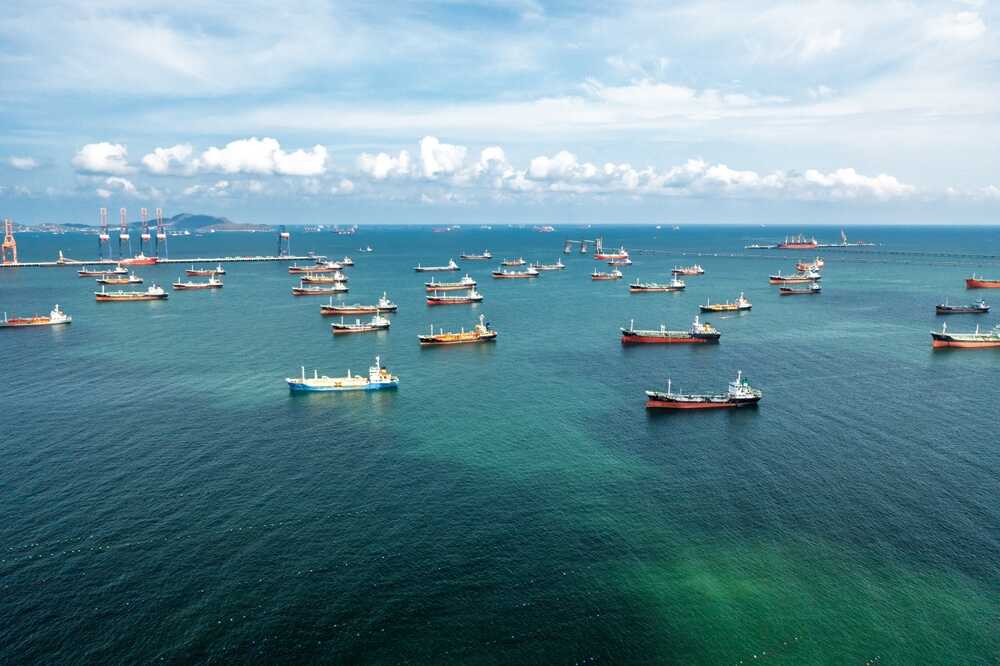
President Trump announced Saturday that approximately 100 massive oil tankers are racing to American shores to load up on U.S. crude, capitalizing on global energy chaos caused by Iran’s blockade of the Strait of Hormuz while the federal government scrambles to manage an unprecedented surge that could reshape world energy markets.
Story Snapshot
- Trump reveals roughly 100 empty supertankers heading to U.S. Gulf ports with combined capacity exceeding 200 million barrels amid Middle East energy crisis
- Iran’s closure of Strait of Hormuz has driven Brent crude up over 30 percent to $97 per barrel since late February 2026
- President touts American energy dominance as global alternative, claiming U.S. possesses more oil reserves than next two nations combined with superior quality
- Vice President JD Vance conducts overseas peace negotiations while administration promises international buyers quick turnaround on American crude
Global Energy Crisis Drives Tanker Surge
Iran’s strategic closure of the Strait of Hormuz in late February 2026 created a global energy emergency that has now redirected the world’s oil supply chains toward American ports. The 21-mile-wide chokepoint between Iran and Oman historically handles 20 to 30 percent of global oil trade, making its blockade a catastrophic disruption for energy-dependent nations worldwide. With only approximately 12 vessels managing to transit the Strait following a limited ceasefire, according to Associated Press data, international buyers face stark choices about securing alternative supplies.
Trump’s Saturday morning Truth Social post declared that massive numbers of completely empty oil tankers, including some of the world’s largest vessels, were making a beeline for the United States to load what he characterized as the best and sweetest oil and gas available globally. The announcement included a map visualization showing the scale of the tanker movement toward U.S. Gulf Coast facilities. Each supertanker carries approximately 2 million barrels of capacity, meaning the convoy represents potential exports of roughly 200 million barrels if fully loaded—a staggering volume that underscores how drastically global energy flows have shifted in response to Middle Eastern instability.
American Energy Independence on Full Display
The President’s announcement reflects a fundamental shift in global energy dynamics that many Americans have long demanded from their government. For decades, U.S. foreign policy entanglements in the Middle East were justified partly by America’s dependence on imported oil from that volatile region. Now, with domestic production reaching approximately 13 million barrels per day and reserves claimed to exceed the next two largest oil economies combined, the United States has transformed from energy supplicant to energy superpower. This reversal validates the concerns of citizens who questioned why America remained beholden to foreign energy sources when domestic resources remained underdeveloped due to regulatory obstacles.
Trump emphasized that U.S. crude quality surpasses international alternatives, particularly highlighting light sweet crude from Gulf of Mexico and Permian Basin operations. His promise of quick turnaround for international buyers signals confidence in American port infrastructure and production capacity to meet sudden global demand spikes. The administration frames clearing the Strait of Hormuz as doing other nations a favor, rather than a strategic necessity for American interests—a pointed contrast to previous decades when Middle Eastern stability was treated as existential to U.S. economic security.
Diplomatic and Economic Implications Unfold
Vice President Vance’s simultaneous overseas peace talks regarding the Iran conflict demonstrate the administration’s dual-track approach: leveraging American energy abundance for economic gain while pursuing diplomatic solutions to restore normal shipping routes. However, the tanker rush raises questions about whether government officials anticipated this scale of demand or possess adequate plans to manage the logistics. Gulf Coast port congestion could become problematic if infrastructure fails to handle the unprecedented volume, potentially embarrassing an administration touting American superiority while revealing the kind of planning failures that frustrate citizens regardless of political affiliation.
Brent crude prices reaching $97 per barrel represent a 30 percent-plus increase since the conflict began, directly impacting American consumers at the pump despite domestic abundance. This reality exposes the disconnect between production capacity and everyday affordability that angers working families. Meanwhile, traditional Middle Eastern exporters like Saudi Arabia face market share losses as buyers pivot to U.S. suppliers, fundamentally altering geopolitical relationships built over decades. Whether these shifts serve long-term American interests or simply enrich energy companies while average citizens bear inflation costs remains a legitimate concern that transcends partisan politics.
Empty Oil Tankers Are Racing to the US for Oil https://t.co/SsP0Qk9hh3
— Fearless45 (@Fearless45Trump) April 12, 2026
The tanker phenomenon illustrates both the promise and peril of America’s energy position. Domestic production capabilities vindicate those who advocated for energy independence against opposition from environmental advocates and globalist policymakers. Yet the broader question persists: will this energy windfall translate into tangible benefits for struggling American families, or will profits concentrate among corporate interests and political allies while ordinary citizens continue facing economic pressures from inflation and stagnant wages? The administration’s handling of this unprecedented moment will test whether government officials prioritize national prosperity or merely exploit opportunities for political messaging while failing to deliver substantive improvements to Americans’ daily lives.
Sources:
‘Completely empty’ tankers heading to US to ‘load up’ with oil & gas: Trump
‘Completely empty’ tankers heading to US to ‘load up’ with oil & gas: Trump
Trump: Empty oil tankers heading to US to load up with oil, gas
Trump says empty oil tankers heading to US to fill up on ‘sweetest’ oil and gas
Trump says giant empty tankers headed to US for world’s best oil