The Ninth Circuit cleared federal officers to use nonlethal crowd-control tools near Portland’s ICE facility, rejecting claims that the Constitution requires them to wait for imminent danger first.
Story Highlights
- The court vacated injunctions that had limited federal officers’ use of tear gas and similar tools.
- The majority affirmed that officers may use nonlethal force to clear crowds and restore order.
- Protest retaliation claims and a new right against incidental chemical exposure were rejected at this stage.
- The rulings were 2-1 decisions and apply at the preliminary-injunction stage.
What The Court Decided And Why It Matters
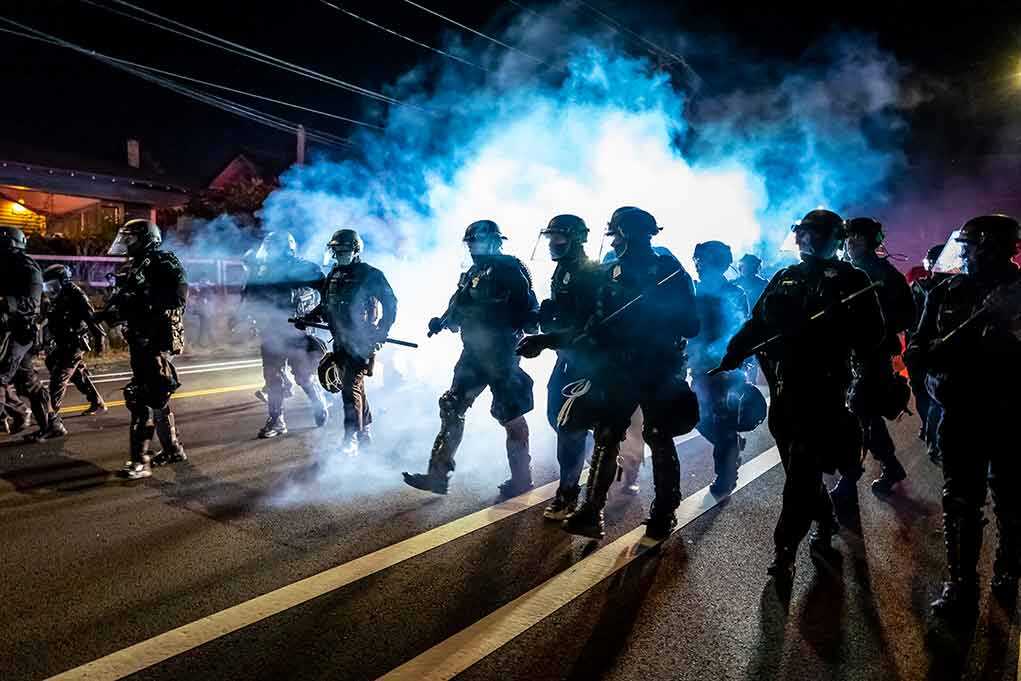
The United States Court of Appeals for the Ninth Circuit vacated two lower-court orders that had restricted federal officers guarding the Portland Immigration and Customs Enforcement facility. The panel held that officers can use nonlethal force, like tear gas and pepper balls, to disperse crowds and restore order without first facing an imminent threat of physical harm. The companion ruling rejected, at this early stage, claims that officers targeted peaceful protesters and journalists in retaliation for speech.
Judge Kenneth K. Lee wrote that long-standing precedent permits nonlethal tactics to clear crowds that disrupt government operations. The majority emphasized that the First Amendment does not shield unlawful conduct and that crowd-dispersal tools do not become unconstitutional solely because speech occurs nearby. The court removed a district judge’s temporary restraints and a provisional class, signaling that federal officers may again apply standard crowd-control policies while cases proceed.
The Dobbs Tie-In: No New “Deeply Rooted” Right Created
The panel rejected claims by nearby residents who sought a constitutional right to avoid exposure to chemicals used during dispersal. The court relied on the Supreme Court’s instruction that any substantive-due-process right must be “deeply rooted in our Nation’s history and tradition.” The majority found no historical basis for a right to be free from incidental exposure when officers lawfully disperse crowds, and it vacated the protections the district court imposed for the Gray’s Landing community.
The rulings link protest policing to the modern substantive-due-process test that followed the Supreme Court’s Dobbs decision. That framework requires courts to be cautious about inventing new rights. The Ninth Circuit applied that caution here, concluding that the residents’ theory reached beyond the Constitution’s text and history. This analysis limits efforts to use creative constitutional claims to hamstring routine security operations outside federal facilities.
First Amendment Retaliation Claims Fall Short At This Stage
Protesters and two independent journalists alleged that federal officers used tear gas and pepper balls to chill speech during repeated demonstrations. The Ninth Circuit vacated the preliminary injunction and the temporary class, finding the early record did not show that officers acted with retaliatory intent, as opposed to using force to disperse crowds during security operations. This does not end the lawsuits, but it removes sweeping limits while the evidence is tested through normal litigation.
Ninth Circuit clears feds to use tear gas at Portland ICE facility https://t.co/l58Pza9uz8
— Batalysta (@batalysta) November 11, 2026
Reports have highlighted allegations of injuries and harsh tactics. A district judge previously cited accounts involving protesters and press, and residents described chemicals drifting into nearby apartments. The appellate court acknowledged these claims but held they do not justify new constitutional rights or speech-based injunctions on this record. The decisions were 2-1, so debate will continue. Still, the government can now safeguard a critical federal site using standard, nonlethal methods while cases proceed.
What This Means For Law, Order, And Common Sense
These rulings support officers who must keep order when demonstrations become unsafe or block federal operations. The majority affirmed that the Constitution does not require agents to absorb risk until someone is about to be harmed. It also pushed back on attempts to recast standard crowd-control tools as constitutional violations. That balance protects speech but rejects blanket rules that would tie the hands of those guarding federal property and nearby families.
What Comes Next
The cases return to the trial courts without the heavy thumb of broad injunctions. Plaintiffs can still pursue claims with specific evidence about particular incidents or officers. Agencies can and should document clear warnings, reasons for each deployment, and adherence to policy. But for now, the Ninth Circuit has restored a common-sense baseline: enforce the law, use nonlethal tools when needed, and do not invent new rights that would make basic security work impossible.
Sources:
redstate.com, theepochtimes.com, washingtontimes.com, cdn.ca9.uscourts.gov, detroitnews.com, democracyforward.org, oregonlive.com