

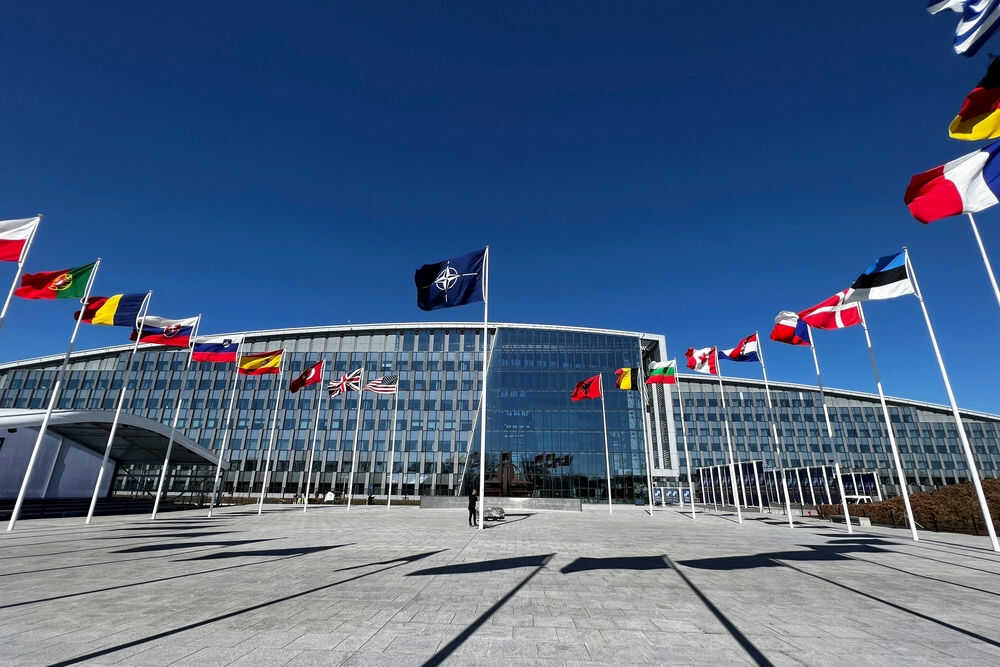
NATO’s refusal to back U.S. operations around the Strait of Hormuz is exposing how quickly “allies” can turn into free-riders when America is the one paying the price.
Quick Take
- President Trump is publicly pressing NATO and key partners to help police the Strait of Hormuz as the U.S.-Israel war with Iran reaches day 17.
- Major European leaders are rejecting a NATO role, arguing the alliance is defensive and the Iran conflict is not a NATO mission.
- Iran’s disruption of Hormuz is driving tanker reroutes and higher oil prices, with analysts warning prolonged disruption could trigger recession-level pain.
- Trump’s messaging has swung between “we don’t need help” and “all who benefit must help,” reflecting the tension between U.S. military dominance and global economic exposure.
Trump’s Hormuz Demand Tests NATO’s Burden-Sharing Talk
President Donald Trump has escalated his criticism of NATO allies for refusing to help secure the Strait of Hormuz during the ongoing U.S.-Israel conflict with Iran, now in its 17th day. Reporting on Trump’s public remarks and interviews describes him warning that NATO faces a “very bad future” if allies decline to assist, especially those whose economies depend heavily on Gulf energy shipping. Trump has also argued the United States benefits less than Europe and China from the strait staying open.
The pressure campaign matters because it revives an old argument Trump has made for years: alliances cannot be a one-way transaction where American taxpayers underwrite other nations’ security while they hesitate when risk arrives. The reporting also captures a real contradiction that critics are exploiting—Trump has sometimes emphasized U.S. self-sufficiency and military dominance, while also demanding a coalition response to the economic fallout created by Iranian disruption in Hormuz.
Allied Leaders Say “Not a NATO Mission,” Even as Energy Risks Grow
European leaders are pushing back by pointing to NATO’s core purpose as a collective defense pact rather than a vehicle for Middle East offensives. In coverage of allied reactions, Germany’s chancellor flatly stated the war is not a matter for NATO, and the United Kingdom signaled it does not want to be pulled into a broader conflict. France was portrayed as somewhat more open in tone, but without commitments that would change the immediate operational picture.
From a constitutional, America-first perspective, that split is a reminder that U.S. leaders must separate two questions: what America must do to protect Americans, and what others should do if they want uninterrupted trade routes and stable prices. Allies can argue about NATO’s mandate, but the economic reality does not disappear. The research indicates NATO’s refusal remains firm so far, leaving Washington and Jerusalem to carry the operational load while others bear the consequences mostly through fuel costs.
Iran’s Asymmetric Leverage: Disrupt the Strait, Shake the World
Iran’s strategy highlighted in the research is not primarily about matching U.S. firepower ship-for-ship; it is about using geography. The Strait of Hormuz is a narrow chokepoint that the research estimates handles about 20% of global oil and gas flows, giving Tehran a tool to cause global price spikes even after taking heavy military losses. Reports describe tanker disruptions, rerouting, and an environment where intermittent attacks can create outsized uncertainty.
That uncertainty is already filtering into political and household economics. It includes warnings that oil could surge toward extremely high levels if disruption persists for weeks, which would translate into higher gas prices and broader inflation pressure. For voters who lived through the Biden-era cost-of-living squeeze, this is the practical takeaway: foreign policy chaos and energy chokepoints can hit U.S. families fast, regardless of whether the U.S. imports less directly than other regions.
Mixed Signals: “War Won” Claims vs. a Conflict Still Running on Day 17
The reporting also underlines why messaging discipline matters during a fast-moving conflict. Trump has claimed major battlefield success and described Iran as being militarily and economically devastated, and he has told rally crowds the war is “won.” At the same time, there is no clear end date while Hormuz remains disrupted and escalation risks persist. Even supportive audiences can see the gap between declaring victory and still needing extended operations to stabilize shipping lanes.
Two facts can both be true: U.S. and Israeli strikes may have badly damaged Iranian capabilities, and Iran can still impose real economic pain through the strait. The lack of NATO buy-in means the administration’s next decisions—whether to keep pressing allies, build a narrower maritime coalition, or pursue talks—will carry direct consequences for energy prices, midterm-year politics, and the long-term credibility of burden-sharing within Western alliances.
Sources:
Donald Trump Warns NATO, China and the Press as Iran War Hits Day 17
Trump warns NATO faces ‘very bad future’ if allies refuse to back US war on Iran