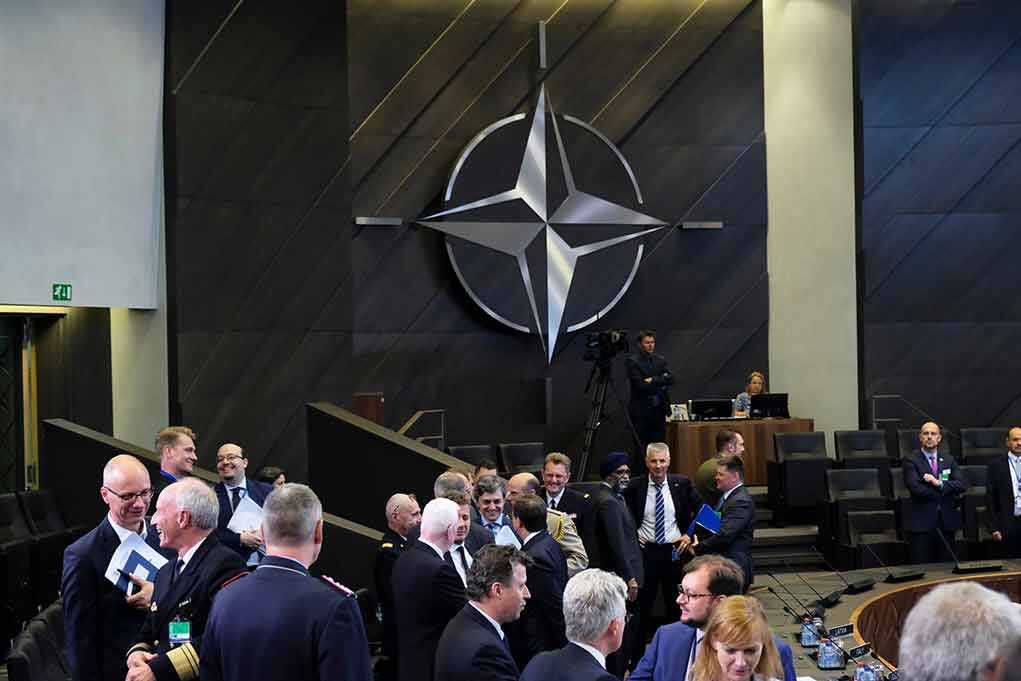
NATO’s new 5% of GDP defense push by 2035 locks in a long-term build-up to deter Russia—and it is already shaping real forces, logistics, and industry across Europe.
Story Highlights
- NATO leaders named Russia a long-term threat and set a 5% by 2035 defense investment goal.
- Allies agreed targets for air and missile defense, long-range weapons, logistics, and large land forces.
- Germany’s plan would move up to 800,000 troops and 200,000 vehicles across its territory in six months.
- NATO says it stands ready to defend every inch of Allied territory against conventional and hybrid attacks.
NATO Sets 2035 Investment Goal To Deter A Long-Term Russian Threat
NATO heads of state declared Russia a long-term threat to Euro-Atlantic security and set a new investment path. The Hague Summit Declaration commits Allies to spend 5% of national output each year by 2035, with at least 3.5% on core defense and up to 1.5% for related security needs. Leaders framed the goal as a sustained plan, not a one-year surge. The pledge links money to a task list that includes forces, infrastructure, industry, and civil resilience across the alliance.
The declaration moves beyond budgets and spells out where the money should go. NATO named core combat power, critical infrastructure, network defense, civil preparedness, innovation, and the defense-industrial base as parts of the plan. That means runways, rail, ports, energy, and fiber lines are part of defense, not just tanks and jets. The scope reflects lessons from recent wars: logistics, cyber, and industry can decide outcomes before a shot is fired.
Capabilities: Air Defense, Long-Range Weapons, Logistics, And Maneuver
NATO defense ministers agreed on new capability targets to match the strategy. The targets include air and missile defense, long-range weapons, logistics lifts, and large land maneuver formations. These aims back NATO defense plans that guide how forces would deploy if a crisis starts. Air defenses address drones and missiles. Long-range weapons hold enemy assets at risk. Logistics and maneuver move combat units into place fast enough to matter if fighting spreads.
NATO leaders say the posture is meant to defend every inch of Allied ground and seas. The Secretary General stated that Allies are ready, willing, and able to protect members from Russia, cyberattacks, sabotage, and broader strategic competition. The message ties daily readiness to public promises. It also signals that hybrid threats count as attacks on vital systems. That matters for rail hubs, energy grids, ports, and cables that keep forces and economies running.
From Paper To Movement: Germany’s Transit Plan And Alliance Posture
Germany published an operational plan that shows how reinforcements would flow east. In a crisis, up to 800,000 allied troops and 200,000 vehicles must be able to cross Germany in six months with host-nation support. The plan highlights ports, railways, roads, fuel, and security. It treats Germany as a transport backbone for the eastern flank. The document is a planning requirement, but it gives a concrete yardstick for throughput, staging, and protection during a surge.
NATO has already activated defense plans and moved troops since Russia’s 2022 full-scale invasion of Ukraine. Allies deployed thousands of additional forces from both sides of the Atlantic to deter further Russian moves. Those deployments add weight to the new targets. They show that the posture is not only on paper. Rotations, exercises, and stocks have increased in the east. The alliance is linking peacetime tasks to wartime routes and command chains.
Industrial Base, Timelines, And The Execution Gap
The 5% commitment is designed to grow defense industry alongside forces. NATO’s public material stresses production, munitions, and maintenance lines to sustain operations, not just start them. The spending plan requires national budgets and annual updates to stay on track. That means parliaments, ministries, and factories must deliver together. The schedule runs to 2035, so the push overlaps elections and budget cycles in many countries.
The official record shows a gap between goals and full delivery today. The Hague pledge sets targets and reviews, while the capability list points to areas still being built out over coming years. Germany’s 800,000-transit figure is a planning requirement, not proof of wartime execution at that scale. NATO leaders frame this as a long race, not a sprint. The alliance says it will defend every inch while closing the gaps with money, training, and hard logistics.
What It Means For American Conservatives
For U.S. readers who value strength and fiscal sense, this matters. The alliance is setting firm goals, clarifying tasks, and tying cash to combat power. That supports peace through strength, which protects trade, families, and energy flows. It also pushes European partners to carry more of the load. Clear targets on air defense, long-range strike, and logistics make it easier to measure results and hold leaders to account, year after year.