
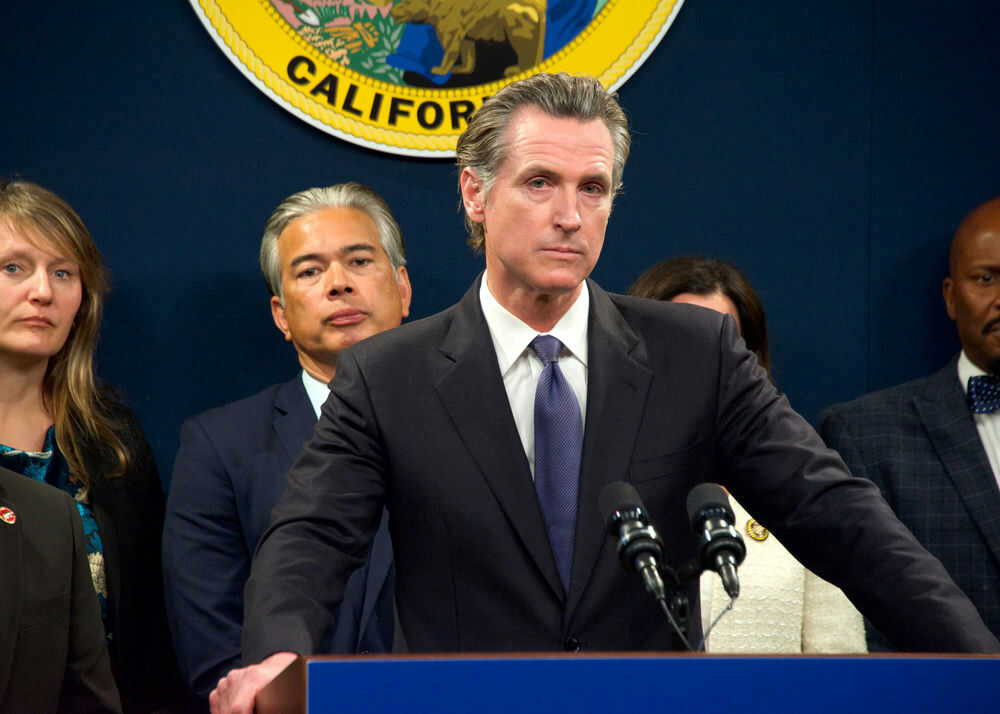
California’s governor just used an official state communications channel to mock one of the country’s most influential independent media figures in Trump-style all-caps—a move that says as much about today’s politics as it does about Gavin Newsom and Joe Rogan.
Quick Take
- Gov. Gavin Newsom’s press office posted a viral, Trump-mimicking message calling podcaster Joe Rogan “JOE ‘LITTLE GUY’ ROGAN” and “too chicken” to host him.
- Rogan recently criticized Newsom as a “narrative-driven politician” and a “cardboard cutout,” arguing California’s problems reflect elite mismanagement.
- The dispute highlights how public officials increasingly use meme culture and online provocation—sometimes from official accounts—rather than straightforward public accountability.
- Newsom’s team framed the clash as a challenge to debate; Rogan signaled he doesn’t want to platform what he sees as performative politics.
An Official Account, a Personal Feud, and a Very Online Message
California Gov. Gavin Newsom’s press office account on X posted an all-caps message mocking podcast host Joe Rogan as “JOE ‘LITTLE GUY’ ROGAN,” accusing him of being “too chicken” to invite Newsom onto his show. The post also taunted Rogan as afraid of being “crushed,” and it copied the aggressive cadence and nickname-driven style many Americans associate with Donald Trump’s online persona. The result was instant virality—and immediate questions about professionalism.
The direct trigger was a resurfaced clip and renewed attention to Rogan’s recent on-air criticism of Newsom. Rogan described Newsom as a “stone cold, narrative-driven politician” and a “cardboard cutout,” and he argued the governor’s online behavior makes a serious interview look like a “bad strategy.” Rogan’s broader point was that a high-profile political sit-down should be about clear answers on policy, not about feeding a social-media performance loop.
What Rogan Is Really Attacking: Elite Narrative vs. Lived Reality
Rogan’s critique is not limited to tone or personality. Over multiple episodes and public conversations, he has connected Newsom to California’s highly visible quality-of-life and governance problems—especially homelessness, cost pressures, and the sense that rules hit ordinary people harder than the well-connected. That framing resonates with voters who already believe government works for insiders first, whether those insiders are corporate, political, or media elites. The press-office response, however, focused on ridicule rather than rebuttal.
The feud also has history. Rogan and his guests have repeatedly referenced Newsom-era COVID controversies, including high-profile optics that undermined public trust in pandemic rules. The longer this goes on, the less it resembles an invitation to public scrutiny and the more it looks like a rivalry between a powerful state executive and a private citizen with a massive audience. That imbalance matters: official channels carry the weight of the state, even when used for a jab.
The Stakes for 2026 Politics: Media Power Is Shifting
This episode lands at a moment when independent platforms can shape national narratives faster than traditional outlets. Rogan’s show reaches a scale that many cable networks envy, and politicians increasingly treat those platforms as must-win territory. For conservatives, this is also a reminder that cultural and informational power often sits outside Washington—especially when voters distrust federal institutions, legacy media, and permanent bureaucracies. That distrust is bipartisan, even if the reasons differ across left and right.
Accountability vs. Performance: What’s Missing From the Exchange
The key limitation is that neither side has produced a substantive, on-the-record policy confrontation tied to California’s measurable outcomes in this specific exchange. Newsom’s camp offered a dare, not a data-driven defense. Rogan offered blunt character judgments, not a formal interview. If the governor wants to persuade skeptics—including middle-aged and older Americans tired of “woke” messaging, overspending, and high energy costs—he has to show results and explain tradeoffs, not just trade insults.
Gavin Newsom delivers low blow to 'little guy' Joe Rogan https://t.co/cmSxtlYkgW pic.twitter.com/R2tBPdJh2W
— New York Post (@nypost) May 1, 2026
For voters who already suspect government is failing the people, this kind of official-account mockery can deepen cynicism. It reinforces a shared concern across ideological lines: too many leaders look more interested in viral moments, factional applause, and personal brand protection than in the slow, serious work of fixing problems. Whether Newsom ever sits for a long-form interview with a skeptical host remains unclear, but the political lesson is already visible—Americans are watching the style, not just the substance.
Sources:
Gavin Newsom takes on Joe Rogan
Gavin Newsom Flames ‘Relegated’ Joe ‘Little Guy’ Rogan