
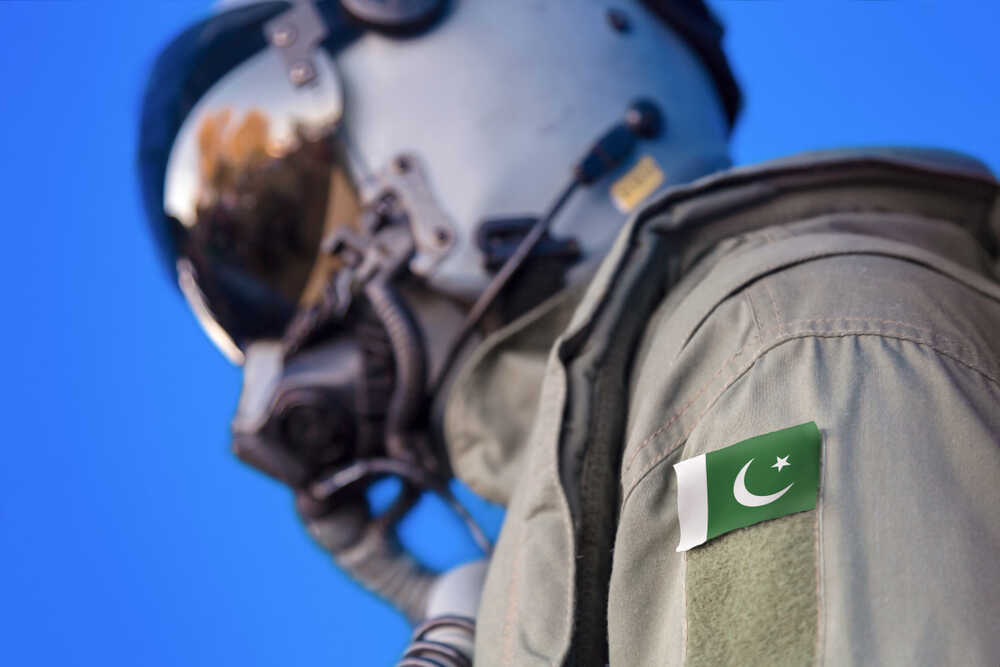
Pakistani fighter jets landing in Saudi Arabia signals a bold new defense alliance that could reshape Middle East power dynamics amid Iranian threats.
Story Snapshot
- Pakistani Air Force fighter jets and support aircraft arrived at King Abdulaziz Air Base on April 11, 2026, launching the first visible deployment under a mutual defense pact signed in September 2025.
- Saudi Defense Ministry cites joint military coordination and operational readiness to counter regional instability, including recent Iranian attacks on Saudi energy sites.
- Pakistan balances military support for Saudi Arabia with hosting diplomatic talks in Islamabad to end the Iran war.
- Nuclear-armed Pakistan elevates its role as a key Saudi ally, strengthening Gulf security against escalating threats.
Deployment Details
Pakistani military aircraft, including fighter jets and support planes from the Pakistan Air Force, touched down at King Abdulaziz Air Base in Saudi Arabia’s Eastern Province on April 11, 2026. This marks the initial operational step under the bilateral mutual defense agreement formalized in September 2025. The pact binds both nations to view attacks on one as assaults on both, reflecting decades of security ties rooted in military training, financial aid, and economic partnerships. Saudi Arabia hosts the forces to bolster defenses in a volatile region.
Regional Tensions Prompt Action
Iranian attacks in recent weeks targeted Saudi energy infrastructure, killing a Saudi national and heightening Gulf insecurity. These strikes follow broader Middle East instability involving Iran, Israel, and the United States, disrupting energy supplies and raising escalation fears. The Saudi Defense Ministry announced the deployment to strengthen joint coordination and readiness. Pakistan, as a nuclear-armed partner, provides tangible military backing, leveraging Saudi financial resources for mutual strategic gains. This move underscores reliance on bilateral pacts over multilateral efforts often criticized for elite entanglements.
Strategic Objectives and Statements
The Saudi Defense Ministry outlined goals: enhance operational readiness, improve military coordination, and support regional stability. Analysts describe it as continued coordination amid Gulf uncertainty, even as diplomatic channels remain open. Pakistan demonstrates commitment through this first visible deployment, positioning itself as both Saudi supporter and diplomatic mediator. Islamabad simultaneously hosts talks to end the Iran war, adopting a dual-track approach of military resolve paired with negotiation. This aligns with American principles of strength deterring aggression while pursuing peace.
Such partnerships highlight frustrations across political lines with distant federal bureaucracies failing to secure vital energy flows. Conservatives wary of globalist overreach see value in sovereign alliances protecting American interests like stable oil prices. Liberals concerned with elite power games recognize how bilateral deals bypass ineffective international bodies, empowering nations to defend their people directly.
Pakistani Warplanes Land In Saudi Arabia For Start Of Mutual Defense Pact https://t.co/q1IPlVqsO4
— zerohedge (@zerohedge) April 12, 2026
Short- and Long-Term Impacts
Immediate effects include boosted joint capabilities in Saudi’s Eastern Province and a clear signal of pact resolve to adversaries like Iran. Energy infrastructure gains protection, vital for global markets including U.S. consumers facing past inflation from supply shocks. Long-term, the alliance sets precedents for joint exercises or rotational forces, fortifying the Saudi-Pakistani axis. Regional actors including the U.S. monitor shifts in security architecture. This development reinforces traditional values of self-reliant defense over endless foreign entanglements, echoing calls for government accountability to citizens over elite agendas.
Americans on both sides share distrust of “deep state” influences prioritizing power over prosperity. As President Trump’s second term advances America First policies with GOP congressional majorities, such alliances abroad remind us that strong bilateral ties can stabilize energy without overextending U.S. resources, countering past overspending and globalist failures.
Sources:
TRT World: Official Saudi Defense Ministry statement; historical context
RIA Novosti/NAMPA: Official announcement; specific date and location
Middle East Eye: Defense pact details; official statements
The Cradle: Deployment confirmation; strategic context
Bloomberg: Official ministry statement; nuclear-armed Pakistan context
Arab News: Comprehensive analysis; analyst perspectives; regional context
The True Story: Deployment characterization as “first visible move”