
Russia’s war economy is collapsing under the weight of depleted reserves, surging debt defaults, and elite infighting as the financial lifeline sustaining Putin’s regime runs dry.
Story Snapshot
- Russia’s National Wealth Fund reserves, built over two decades, have been exhausted funding the Ukraine war and military-industrial complex
- Russian GDP contracted 0.5% in Q1 2026 with real inflation hitting 15%, far exceeding official government figures of 5.86%
- Corporate debt defaults surged to 46 in two years, with $109 billion in commercial nonpayments threatening systemic banking collapse
- Western intelligence confirms Putin’s regime is manipulating economic data to hide a $30 billion budget deficit and deteriorating fundamentals
- Russian elites are turning on each other as cash dries up, signaling the three pillars sustaining the regime are crumbling
War Economy Drains Two Decades of Reserves
Russia has survived over three years of sanctions and war by depleting the National Wealth Fund accumulated from oil and gas exports since 2004. Putin’s regime flooded the economy with cash after the February 2022 invasion, paying massive bonuses to soldiers and financing a military-industrial complex ramp-up. Western intelligence agencies now confirm those reserves are exhausted. Sweden’s Thomas Nilsson and Germany’s BND analysts report Russia is “living on borrowed time,” with oil revenues falling since late 2022 while war expenditures consume six to eight percent of GDP annually. This unsustainable spending model mirrors the Soviet Union’s economic exhaustion before its 1991 collapse.
Economic Data Manipulation Hides Financial Crisis
Official Russian statistics paint a misleading picture of economic stability that contradicts ground-level reality. The Central Bank claims inflation runs at 5.86 percent, but Western intelligence confirms the real rate exceeds 15 percent, eroding living standards for ordinary Russians. Putin himself admitted GDP contracted 1.8 percent in early 2026, yet government projections had forecast 1.6 percent growth. Intelligence reports reveal Russia understated its budget deficit by $30 billion, using accounting tricks to mask the fiscal hemorrhaging. The regime requires Urals crude oil prices above $100 per barrel for over a year to stabilize finances, an unlikely scenario given global market conditions and sanctions enforcement.
Corporate Defaults Signal Banking System Threat
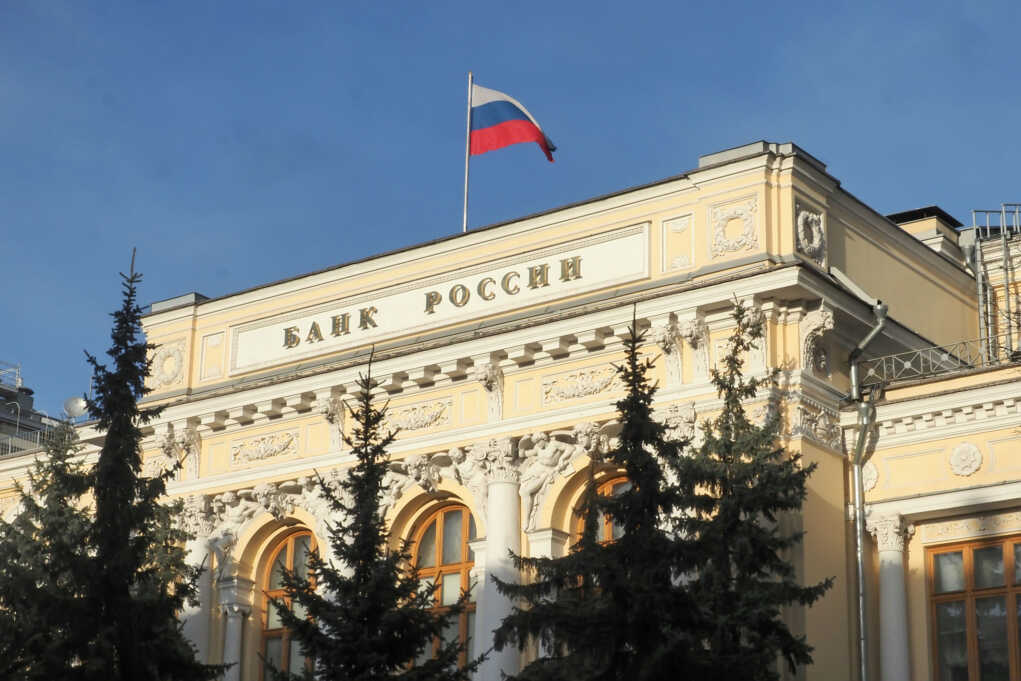
Russia’s corporate sector is experiencing a debt crisis that threatens systemic financial collapse. Official data from Izvestia, a pro-government newspaper, documented 11 defaults in 2024, 24 in 2025, and another 11 in the first quarter of 2026 alone. Approximately 25 percent of the bond market faces default risk, with commercial nonpayments hitting a record $109 billion in January 2026. A state think tank warned in December 2025 of a potential banking crisis, and Putin’s own officials cautioned him in early 2026 about a summer financial emergency. Refinancing costs remain elevated despite rate cuts, straining businesses dependent on rolling over debt at twice the previous volume. This credit crunch directly impacts the military-industrial complex’s ability to source technology and spare parts blocked by sanctions.
Elite Infighting Accelerates as Money Disappears
The repressive apparatus Putin built to maintain power through fear and financial incentives is fracturing. Russian elites and oligarchs, described by analysts as “addicted” to offshore asset extraction, are turning on each other as state funds evaporate. The siloviki security forces and military-industrial complex operators who enforced loyalty through cash payouts face reduced financing. Brain drain that accelerated in early 2022 continues depleting the professional class Russia needs for economic recovery. Exiled oligarch Mikhail Khodorkovsky and other regime critics predict a palace coup becomes increasingly likely as competing factions vie for control of diminishing resources. Society is fraying as ordinary Russians, long described as “professional sufferers,” reach the limits of tolerance for declining living standards while war spending crowds out civilian needs.
Putin’s Russia Looks Like It’s on Borrowed Timehttps://t.co/OzwrhOQJr4
— 19FortyFive (@19_forty_five) May 11, 2026
The convergence of depleted reserves, manipulated economic data, corporate debt crisis, and elite competition exposes Putin’s regime as fundamentally unsustainable. Western analysts warn Russia faces either “long-term decline or shock” leading to financial disaster by October 2026. The military humiliation in Ukraine, combined with technology shortages from sanctions cutting access to critical components, further weakens the political center’s legitimacy. What frustrates both conservative supporters of strong defense policy and liberal advocates of democratic governance is watching a corrupt authoritarian system prop itself up temporarily through financial manipulation while ordinary citizens on all sides suffer the consequences. Russia’s trajectory demonstrates how elites prioritize regime survival over addressing fundamental economic problems, a pattern American voters increasingly recognize in their own government’s failures to tackle debt and spending accountability.
Sources:
Living on borrowed time: Russia manipulating data to make its economy look better
Russian debt defaults surge as Putin remains fixated on Ukraine war
SAGE Policy Brief: Putin Russia on Borrowed Time
Don’t fear Russia, it’s on borrowed time
Palace coup likely as Putin’s Russia runs on borrowed time