

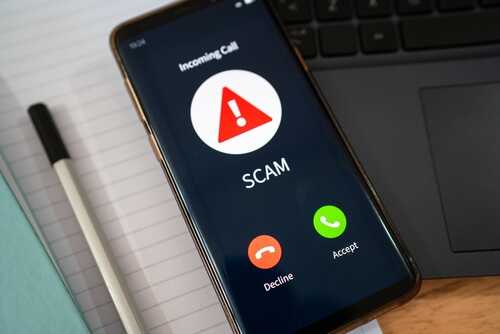
Every week, millions of Americans are being targeted by a constant wave of scam and spam calls—a hidden cost of a regulatory system that has failed to keep pace with technology. This digital ambush, fueled by cheap global Voice-over-IP (VoIP) and easy caller-ID spoofing, turns the simple act of answering a phone into a risk. Older adults and trusting citizens are prime targets, highlighting an urgent need for smarter technology, tougher crackdowns on cross-border fraud rings, and a renewed commitment to empowering consumers with information.
Story Snapshot
- Surveys show people now endure roughly two scam or spam calls every week, turning the phone into a constant ambush instead of a trusted tool.
- Cheap global VoIP, caller‑ID spoofing, and weak international enforcement let criminals bypass consumer protections and swamp law‑abiding Americans.
- Older adults and prior fraud victims are prime targets, underscoring the need for vigilance, education, and tougher crackdowns.
- Regulators and telecoms are rolling out caller‑ID authentication and AI‑driven blocking, but overseas loopholes and evolving scams keep the arms race alive.
Scam Calls Become a Weekly Headache for Ordinary Americans
Across the developed world, surveys now find that the average person is hit with roughly two scam or spam calls every single week, with some regions reporting even higher levels depending on age, phone type, and country. These are not harmless annoyances. They are a steady drip of attempted theft and harassment that punishes people simply for owning a phone. For many conservative families, it feels like one more way the system favors lawbreakers over law‑abiding citizens.
These constant interruptions reflect a larger “spam crisis” fueled by technology that dishonest actors exploit while regulators and legacy bureaucracies lag behind. Cheap internet‑based calling lets fraud rings blast out millions of calls at negligible cost. Caller‑ID spoofing lets them masquerade as local numbers, banks, or even government agencies, tricking people into picking up. When most people can relate to getting those fake “IRS,” “Social Security,” or “bank fraud department” calls, the statistics suddenly feel very real.
People receiving two scam calls each week on average, survey indicates https://t.co/fQQbyBr3kW pic.twitter.com/7zZIr16iaR
— Standard News (@standardnews) January 12, 2026
How Old Rules Failed and Global Scammers Rushed In
Traditional consumer protections like national Do Not Call registries were built for legitimate telemarketers, not criminal scammers who ignore the law entirely. Once automated dialing and robocalls combined with spoofed caller ID and global Voice‑over‑IP routes, the cost of each call dropped close to zero, while the potential payoff stayed high. Overseas carriers operating in weakly regulated jurisdictions became convenient conduits, making cross‑border enforcement painfully slow and often ineffective, even when victims face devastating financial losses.
Scammers now mix illegal robocalls with live social‑engineering pitches, running scripts that impersonate tax agencies, police, banks, tech support desks, or lottery operators. Older Americans in particular are singled out, both because they answer the phone more reliably and because many grew up in a culture where a call from “the government” or “the bank” still carries weight. Studies show that prior fraud victims, seniors, and isolated individuals are especially vulnerable, turning this phone‑based crime wave into a targeted assault on some of the most trusting members of our communities.
@RobWittman I would LO♥️E to see some sort of legislation to combat spam callers. I get about 20-30+ calls a day scamming anything from Medicare to home improvements to car insurance (my last 10 minute call which i used to waste their time). Check my Facebook 4 my full request.
— 804Michael real estate expert (@804Michael) January 12, 2026
Consumers, Businesses, and Telcos Caught in the Crossfire
For everyday Americans, two scam calls per week translate into constant alert fatigue and growing mistrust of unknown numbers. People let calls go to voicemail, miss legitimate outreach, and feel their privacy slipping away. Businesses get hit from both sides. Criminals spoof their numbers to trick customers, damaging reputations and driving up complaint and support costs. At the same time, honest companies must work harder to prove that their own outbound calls are real, investing in new tools just to be believed by wary customers.
Telecom operators sit at the choke points of this mess. They face pressure from regulators and customers to stop illegal traffic yet must avoid accidentally blocking legitimate calls that families, doctors, banks, and small businesses depend on. Network‑level tools such as call analytics, branded calling, and fraud‑detection engines are becoming selling points, not afterthoughts. But as long as hostile actors can push traffic through foreign networks and constantly change tactics, even well‑intentioned carriers struggle to stay ahead.
New Tech, New Rules—And Persistent Loopholes
In response to public anger, regulators have imposed caller‑ID authentication frameworks, such as STIR/SHAKEN in the United States, forcing voice providers to verify that a call’s displayed identity matches its origin as it moves across networks. Dedicated robocall mitigation teams, enforcement databases, and rulemakings now pressure carriers to screen out clearly fraudulent traffic. Industry vendors promote AI‑driven systems that analyze calling patterns in real time, automatically blocking high‑risk calls before they ever reach a consumer’s handset.
These steps have produced some wins, especially against spoofed calls originating on domestic networks, and consumers now see more “scam likely” or “spam risk” labels on their screens. Yet overseas VoIP routes remain a glaring vulnerability, allowing criminals to sidestep the rules by hopping through less cooperative jurisdictions. Threshold‑based and rule‑only defenses also face trade‑offs: clamp down too hard and legitimate calls get caught in the net; ease up and sophisticated scams slip through. The result is an ongoing regulatory and technical arms race rather than a clean victory.
Research offers some encouraging guidance for conservatives who prize personal responsibility and education. Experiments with older fraud victims show that clear forewarning about specific scams can sharply reduce the odds they fall for a later attempt, while broader, repeated warnings help maintain skepticism over time. That aligns with a common‑sense approach: empower citizens with accurate information, support tough enforcement against cross‑border fraud rings, and demand that telecom and tech giants prioritize security over convenience. The phone should serve free people—not the criminals trying to exploit them.
Sources:
Why contact centers need outbound communication strategies that mitigate the impact of robocalls
People receiving two scam calls each week on average, survey indicates
Fraud and Scam Prevention Series: report identifies broad problems and recommendations
People receiving two scam calls each week on average, survey indicates