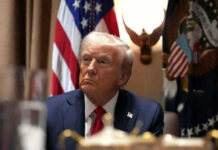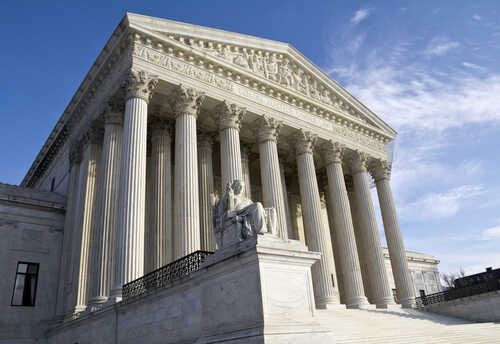
The Trump administration has appealed to the Supreme Court to overturn a federal judge’s block on deploying National Guard troops in Chicago, escalating a legal and constitutional debate over federal authority and judicial oversight.
Story Highlights
- The Trump administration filed an emergency Supreme Court appeal on October 17, 2025, challenging a federal judge’s decision to block the deployment of National Guard troops to Chicago.
- A federal judge issued a temporary restraining order on October 9, citing insufficient evidence to justify military intervention.
- The case highlights a conflict between executive power, as asserted by President Trump, and judicial oversight, with the administration arguing that the restraining order undermines presidential authority during crises.
- The administration contends that federal agents face significant risks amid ongoing protests and unrest at Chicago immigration facilities.
- Illinois Governor JB Pritzker opposes federalizing the state’s National Guard, aligning with similar disputes in other states.
- The Supreme Court’s decision could significantly impact federal-state relations and the future of immigration enforcement.
On October 17, 2025, the Trump administration filed an urgent appeal with the Supreme Court after a federal judge in Chicago blocked the deployment of 300 Illinois National Guard members. Judge April Perry’s temporary restraining order, issued on October 9, stated that there was insufficient evidence of a “danger of rebellion” to justify military intervention. This legal challenge has garnered national attention, as President Trump argues that federal agents are at intolerable risk due to escalating unrest at local immigration facilities and that the restraining order compromises presidential authority in times of crisis.
Chicago’s federal appeals court blocked trump’s National Guard deployment. pic.twitter.com/A4hhsJsf9y
— ᗰᗩƳᖇᗩ (@LePapillonBlu2) October 17, 2025
Federal involvement in domestic law enforcement is typically restricted by legal constraints such as the Posse Comitatus Act. Historically, such deployments have faced scrutiny, particularly in cities led by Democratic administrations. Protests in Chicago, notably at the Broadview ICE facility, have reportedly included assaults on federal agents and organized resistance, leading to the Trump administration’s request for military support. Illinois Governor JB Pritzker has voiced opposition to federalizing the state’s National Guard, reflecting similar disagreements seen in Oregon and California, where courts have previously limited federal deployments.
Key figures in this dispute include President Trump, who advocates for military intervention, and Solicitor General D. John Sauer, who is arguing for expanded executive authority before the Supreme Court. Judge Perry’s skepticism regarding the evidence for a rebellion has intensified the debate. Illinois Governor Pritzker and Texas Governor Abbott represent differing state positions, with Governor Abbott having deployed Texas National Guard troops in support of the Trump administration’s efforts. Protesters and civil rights organizations continue to oppose federal intervention, expressing concerns about civil liberties and local autonomy. The Supreme Court, with its conservative majority, is expected to issue a decision that could reshape the balance between federal power and state sovereignty.
Trump admin asks Supreme Court to allow National Guard deployment in Chicago
The administration’s approach is consistent with broader policy changes since Trump’s return to office, which include an emphasis on aggressive immigration enforcement and challenges to sanctuary jurisdictions. The executive branch has expanded expedited removal processes, increased daily arrest quotas, and re-established partnerships with local law enforcement, testing the boundaries of presidential discretion. Legal challenges from states and advocacy groups have increased, with courts closely examining the administration’s reliance on claims of rebellion as a basis for military involvement.
Recent events in Chicago underscore the volatile nature of the situation. Protests outside immigration facilities have intensified, with law enforcement reportedly using chemical agents for crowd control. Federal agents continue to face threats, and the deployment of National Guard troops remains blocked pending Supreme Court review. The Supreme Court has set an October 20 deadline for Illinois and Chicago officials to respond to the government’s request. Previous legal battles in Oregon and California have established precedents that judicial oversight can limit federal military action, but the outcome in Chicago could indicate a significant shift if the Supreme Court rules in favor of the administration.
Solicitor General Sauer’s argument focuses on “irreparable harm” to executive authority and the safety of federal agents, while Judge Perry maintains that there is no substantial evidence of a rebellion. This disagreement highlights a broader conflict over constitutional checks and balances, with the judiciary acting to restrain executive actions. For Chicago residents, particularly immigrant communities, the uncertainty surrounding enforcement actions and protest management has led to widespread concern.
In the short term, the situation is expected to result in heightened tensions between federal and state authorities, increased protests, and uncertainty for law enforcement. In the long term, the Supreme Court’s decision could establish a precedent for federal intervention in state affairs, potentially impacting state sovereignty and judicial authority. Political analysts suggest that the ruling could influence future immigration enforcement strategies, protest rights, and federal-state relations. Legal scholars have emphasized the risks associated with using military force for domestic law enforcement, cautioning that it could undermine civil liberties and lead to further litigation.
Major news outlets and judicial documents consistently report the facts of the appeal, the restraining order, and statements from stakeholders. While the administration frames military intervention as essential for agent safety and public order, opponents argue that it poses a threat to democratic norms and local autonomy. The Supreme Court’s conservative majority may favor executive authority, but judicial skepticism persists. As the legal proceedings continue, the importance of constitutional protections and the ongoing efforts to uphold them against government overreach remain a central focus.
Watch the report: Appeals court denies Trump administration appeal of National Guard deployment ruling in Illinois
Sources:
- Trump administration asks Supreme Court to allow deployment of National Guard in Chicago area
- Trump administration asks Supreme Court to allow deployment of National Guard in Chicago area
- Trump administration asks Supreme Court to allow deployment of National Guard in Chicago area
- Trump administration asks Supreme Court to allow National Guard deployment in Illinois
- Trump asks Supreme Court to allow deployment of National Guard in Illinois