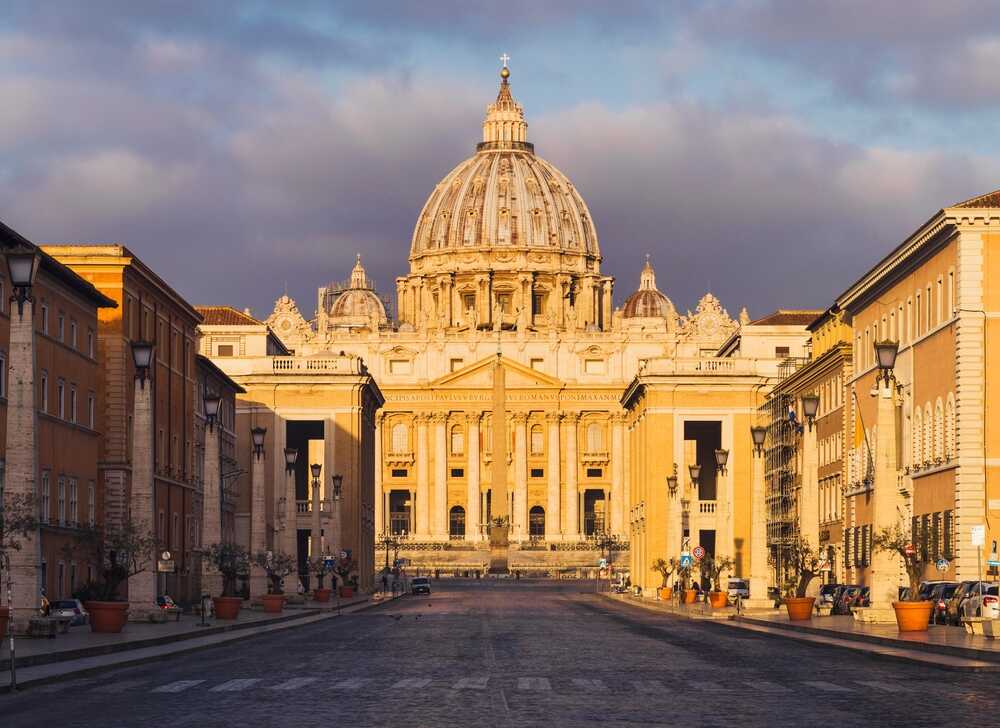
Over 1,200 LGBTQ+ Catholics just walked through the Holy Doors of St. Peter’s Basilica in an event officially listed on the Vatican’s Holy Year calendar—a stunning reversal from 25 years ago when similar pilgrims were detained as threats to the Church.
Story Snapshot
- First Vatican-approved LGBTQ+ pilgrimage during Holy Year marks historic shift from 2000 detentions to 2026 calendar inclusion
- Over 1,200 participants crossed St. Peter’s threshold, emphasizing pastoral accompaniment already happening in parishes worldwide
- Vatican stressed the listing carries no official endorsement while Pope Leo XIV signals gradual cultural change over doctrinal reform
- Church doctrine remains unchanged—homosexual acts still deemed “intrinsically disordered”—but tone shift enables new visibility
- Event exposes growing tension between grassroots LGBTQ+ Catholics seeking normalization and conservative traditionalists wary of perceived endorsement
From Detentions to Holy Doors
The contrast couldn’t be starker. During the 2000 Holy Year, LGBTQ+ Catholics attempting a similar pilgrimage faced detention, branded as threats to Church unity. Fast forward to this May, and the same faithful walked freely through St. Peter’s Basilica’s Holy Doors in an event prominently featured on the Vatican’s official Holy Year calendar. Organizers from Italy’s Jonathan’s Tent and Reverend James Martin’s Outreach ministry led the procession, framing it as recognition of pastoral work already underway in parishes across continents. The Vatican carefully noted the calendar listing did not constitute sponsorship, threading a needle between visibility and doctrinal commitment.
The Francis Legacy and Leo’s Caution
Participants credited Pope Francis’s 2013 question—”Who am I to judge?”—with opening doors his predecessors kept bolted. Francis’s December 2023 approval of Fiducia Supplicans, allowing non-liturgical blessings for same-sex couples without equating them to marriage, provided pastoral tools while preserving Catechism teachings that homosexual acts violate natural law. His successor, Pope Leo XIV, inherited this balancing act. Leo’s recent statements emphasize welcoming all Catholics, including LGBTQ+ individuals, but he ruled out near-term doctrinal shifts on sexuality or marriage. His strategy: change attitudes first, doctrine later—perhaps never. It’s pragmatism dressed as patience.
What the Pilgrimage Actually Signals
The May 2026 pilgrimage wasn’t a demand for sacramental equality or marriage recognition. Organizers deliberately positioned it as normalizing what already exists quietly in faith communities—priests blessing couples, families integrating gay members, youth groups using inclusive language. Cardinal Victor Manuel Fernández, the Vatican’s doctrine chief, reaffirmed in July 2025 that blessings continue under Fiducia Supplicans guidelines. The pilgrimage made private pastoral practice public, forcing the institutional Church to acknowledge reality without altering teaching. For 1,200 pilgrims, crossing that threshold meant their faith no longer required invisibility. For Vatican watchers, it confirmed the Francis-Leo era trades doctrinal battles for lived tolerance.
The Conservative Counterweight
Not everyone celebrated. Traditionalist Catholics, already inflamed by synod debates on LGBTQ+ inclusion and women’s roles, view calendar inclusion as endorsement by stealth. They argue the Church capitulates to secular culture, sacrificing timeless truth for fashionable acceptance. The 2023 Synod on Synodality exposed this polarization, with youth delegates urging inclusive messaging while conservative bishops resisted language softening. Pope Leo’s call to “change attitudes first” likely frustrates both camps—too slow for progressives seeking justice, too fast for conservatives defending orthodoxy. The pilgrimage intensifies pressure from below, as grassroots LGBTQ+ Catholics leverage visibility into influence, while institutional gatekeepers protect doctrine from erosion.
What Comes Next
The pilgrimage sets precedent without guaranteeing progress. Pope Leo XIV’s gradualism leaves doctrinal reform unlikely in the near term, frustrating advocates who note civil society leaps ahead while Rome inches forward. Yet cultural shifts within the 1.4 billion-member Church matter—normalized presence in parishes, acceptance in Catholic schools, pastoral training emphasizing accompaniment over condemnation. Youth, particularly, demand coherence between professed mercy and institutional practice. The event also emboldens other marginalized groups—divorced Catholics, women seeking ordination—to seek similar recognition. Whether this pilgrimage marks a turning point or merely a momentary opening depends on forces beyond any pope’s control: parish priests deciding whom to bless, families choosing acceptance over estrangement, laypeople voting with their feet.
The Holy Year pilgrimage revealed something Rome’s hierarchy prefers ambiguous—pastoral reality already diverges from official teaching in countless parishes. Listing the event formalized what couldn’t be ignored. For LGBTQ+ Catholics, the milestone offers dignity without equality, visibility without validation. For the institutional Church, it’s a gamble that accompaniment can coexist with unchanged doctrine, that welcome can substitute for reform. History suggests such compromises eventually collapse under their own contradictions, but for now, 1,200 pilgrims crossing St. Peter’s threshold proved one thing: they’re no longer willing to remain outside, waiting for permission to belong to a Church they’ve never left.
Sources:
Young Catholics urge Vatican to issue inclusive LGBT message