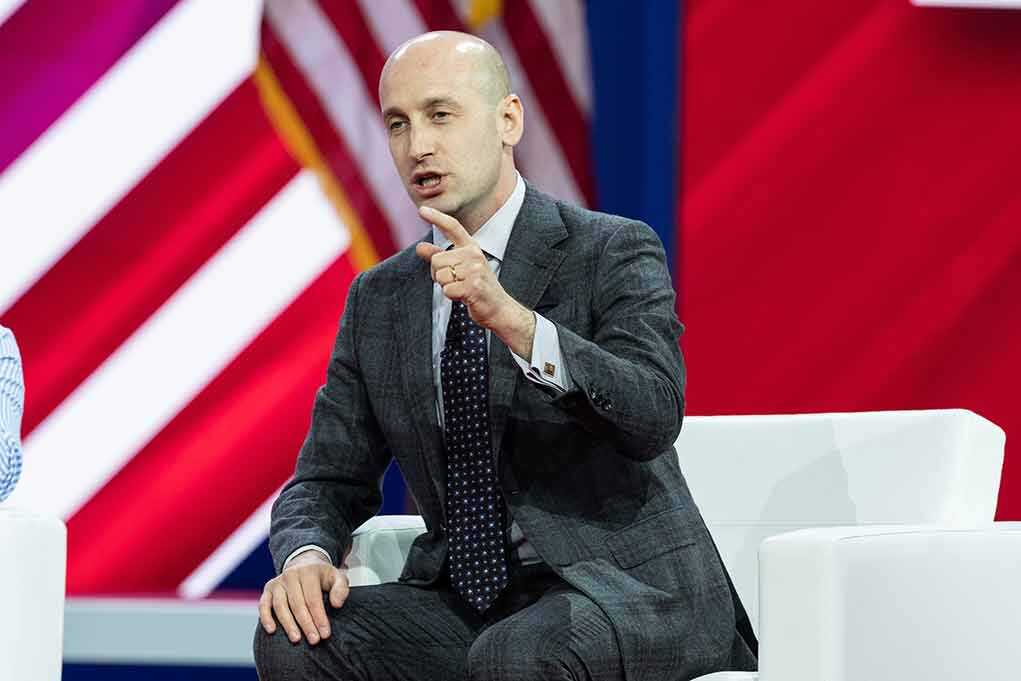
A new push to make senior federal officials personally pay civil damages over alleged constitutional violations is gathering attention, and Stephen Miller is the headline target.
Story Highlights
- Commentators urge Congress to let citizens sue federal officials and supervisors for rights violations.
- Current federal law lacks a clear damages remedy like Section 1983 against federal officers, creating a gap.
- A lawsuit tied to a fatal Immigration and Customs Enforcement encounter names Stephen Miller and others.
- Critics warn the campaign sounds like partisan payback to “drain” opponents’ bank accounts.
What Sparked The Push For New Civil Liability
Radley Balko, a columnist, proposed a federal law that would let people sue federal officers and also sue supervisors or political appointees whose policies or instructions foreseeably caused constitutional violations. He argued Congress should close an accountability gap that exists because there is no federal statute like Section 1983 that applies to federal officials. He tied the idea to recent controversies over immigration enforcement and senior decision makers, using Stephen Miller as a prominent example in the debate.
Conservative outlets described the proposal as an effort to “drain” Stephen Miller’s bank account, highlighting the risk that such a law would be used to financially punish political opponents rather than fix policy failures. Supporters frame it as civil-rights reform. Opponents call it partisan lawfare dressed up as accountability. The partisan branding matters. It shapes whether Congress treats this as neutral rulemaking or as a tool to batter a disfavored official from a prior administration.
The Law Today: Why A Gap Exists And Why It Matters
The Congressional Research Service explains that no federal statute lets citizens broadly sue federal officials for constitutional violations. Instead, courts in limited cases allow damages claims under the judge-made Bivens remedy. The Supreme Court has narrowed Bivens to three contexts and told courts to hesitate before expanding it. Qualified immunity often shields officials even when claimants allege serious rights violations, leaving only narrow pathways for relief.
This structure creates an asymmetry. People can sue state and local officials under Section 1983, but not federal officers under a similar statute. That is why some states have explored their own state-law paths to allow damages claims against federal officers for violations that occur within their borders. Those state efforts show growing pressure to fill the gap, though they raise complex federalism and supremacy questions that will land in court.
The Case Advocates Cite: Allegations Naming Stephen Miller
A lengthy civil complaint filed by the family of Renee Good reportedly names Stephen Miller, South Dakota Governor Kristi Noem, and former Immigration and Customs Enforcement official Tom Homan. The filing alleges Miller helped direct operations in Minnesota, including daily calls, and pushed actions that led to an alleged fatal encounter. The suit also includes claims under the Federal Tort Claims Act against the United States for wrongful death and related harms, showing parallel routes that do not impose personal liability on officials.
These are allegations, not findings of liability. The complaint’s claims must be tested in court through motions, discovery, and, if needed, trial. Still, the filing gives ammunition to those arguing that policy-level decisions should carry civil consequences when they foreseeably lead to constitutional violations. It also shows why any new remedy would need clear standards for causation, defenses, damages, and how to separate lawful policy choices from individual wrongdoing.
Congressional Options And Conservative Guardrails
Congress holds the pen if it wants a federal cause of action that reaches federal officers and supervisors. Lawmakers could define what conduct triggers liability, set mens rea thresholds, allow or limit punitive damages, and decide how qualified immunity applies. They could also bar retroactive claims to prevent backward-looking punishment and protect good-faith officers who follow the law. Without these guardrails, a new law could chill lawful enforcement and turn into a political weapon.
For conservatives, the stakes are clear. The Constitution demands both accountability and limited government. Any law must protect citizens’ rights without inviting partisan bank-account warfare. A tailored statute could target clear, willful violations while shielding sound policing and national security work. The current debate—elevated by headlines about “draining” Stephen Miller—tests whether Congress can write neutral rules that punish misconduct, not politics, and keep enforcement strong while rights stay secure.
Sources:
pjmedia.com, radleybalko.substack.com, thefederalist.com, congress.gov, newsweek.com, statecourtreport.org