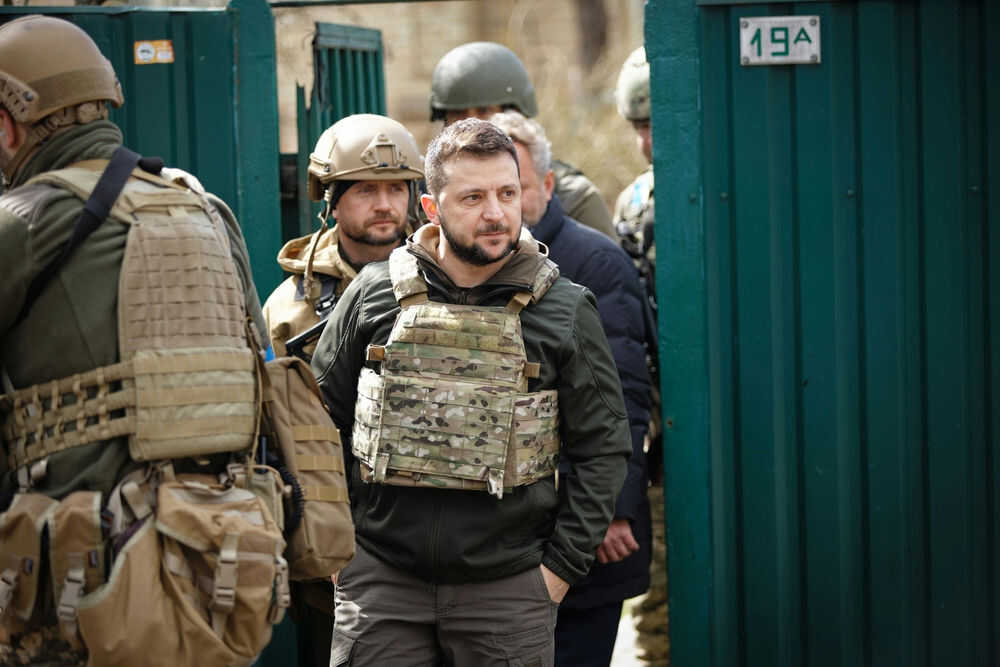
Zelensky’s surprise landing in Saudi Arabia signals a new kind of leverage in modern war: the country taking hits can also sell the shield.
Story Snapshot
- Zelensky arrived in Saudi Arabia March 26, 2026, for an unannounced visit tied to an air-security cooperation deal.
- The agreement builds on Ukraine’s recent deployments of more than 200 anti-drone specialists across multiple Gulf states.
- Ukraine’s selling point is hard-earned experience stopping Shahed-type drones and mass raids, not just “classic” missile defense.
- Saudi and neighboring states want practical defenses as Iranian drones and missiles pressure the region after the Feb. 28 war outbreak.
A surprise visit built around one urgent commodity: air defense know-how
Volodymyr Zelensky’s unannounced trip to Saudi Arabia on March 26, 2026, was reported as a stop with paperwork attached: a security cooperation agreement centered on air defense. Surprise matters here because it changes the negotiating posture. Quiet arrivals reduce political theater and put attention on deliverables—training, systems integration, and operational methods. Ukraine comes offering something rare: real-time lessons from surviving drone saturation attacks under wartime conditions.
Saudi Arabia’s incentive is plain. The Gulf faces heightened pressure from drones and missiles as regional fighting escalates, and governments want layers of protection that work tonight, not in five budget cycles. Ukraine, still fighting Russia, wants more than cash; it wants relationships that translate into hard assets and diplomatic pull. That’s the subtext: air defense is becoming currency, and Ukraine is trying to spend it wisely.
Ukraine’s product is not a gadget—it’s a playbook written under fire
Ukraine’s pitch rests on the ugly mathematics of modern air threats. A single expensive interceptor can’t be the only answer when cheap drones come in waves. Zelensky has pointed to Ukraine’s experience against Shahed drones and the ability to scale interceptor-drone production dramatically, presenting Ukraine as a country that learned to industrialize defense under pressure. Gulf militaries, often optimized for high-end missile threats, now need the “dirty work” skills of mass drone defense.
The deployments tell the story. Reports described teams of Ukrainian anti-drone experts sent into the region beginning in early March, with Saudi Arabia among the destinations along with Qatar and the UAE, and mentions of other states such as Kuwait and Jordan. That kind of footprint signals something more substantial than a sales call. Advisers in-country can help tune radars, refine engagement rules, train operators, and integrate disparate systems so alarms turn into timely interceptions.
Why the Gulf wants Ukrainian help when it can buy Western hardware
Wealth buys equipment; it doesn’t automatically buy competence under stress. Gulf states can and do purchase advanced systems, but the region’s problem shifted toward drones, cruise missiles, and mixed salvos designed to confuse defenses. Ukraine has lived that reality daily, especially against Iranian-designed systems used by Russia. That battlefield schooling produces pragmatic tactics: how to conserve interceptors, how to prioritize targets, and how to create layered defenses where cheaper counters handle cheaper threats.
Talk of specific exchanges has surfaced alongside the expert deployments, including reports of Saudi-linked interest in Ukrainian interceptor capabilities and Ukraine’s desire to secure high-end Patriot interceptors in return. Even if details remain partly opaque, the logic holds. Ukraine needs scarce air-defense missiles to protect its own cities; Gulf states need the “how” of stopping drones without hemorrhaging billion-dollar inventories. Both sides can claim a win without a public spectacle.
The Saudi angle: quiet brokerage, strategic timing, and a message to multiple audiences
Saudi Arabia sits in a unique position as a buyer, a regional signaler, and a potential intermediary. A deal anchored in air security lets Riyadh emphasize defensive intent while improving resilience against attacks. The timing—amid broader regional conflict—also communicates seriousness to friends and adversaries. For Ukraine, Saudi engagement broadens options beyond the familiar Western pipeline. Diversifying partners is not disloyalty; it’s survival strategy when your enemy benefits from high oil prices.
American conservatives often evaluate foreign deals through the lens of reciprocity, deterrence, and taxpayer value. On those terms, Ukraine exporting expertise instead of simply requesting aid has a common-sense appeal: it’s work-for-value. If Ukrainian know-how helps protect U.S. partners and bases from drone attacks, it reinforces deterrence without pretending diplomacy alone stops incoming explosives. The caution is verification—anonymous sourcing and quiet talks demand scrutiny before anyone treats rumored swaps as completed facts.
What happens next: the anti-drone market goes global, and Ukraine wants the lead
This Saudi stop fits a larger arc: Ukraine positioning itself as a drone-defense exporter, not just a recipient of charity. A reported UK-Ukraine framework for jointly exporting drone technology to third countries points in the same direction—Ukrainian battlefield innovation paired with foreign manufacturing capacity and financing. If the model works, Ukraine’s defense industry gets oxygen, partners get fast solutions, and adversaries learn that drone warfare creates counter-industries as quickly as it creates headlines.
The open question is durability. Deals signed during crisis can fade when attention shifts, and Gulf procurement often spans competing suppliers. Ukraine must prove it can deliver consistent training, maintain supply chains, and protect sensitive methods from leakage. Saudi Arabia and neighbors must decide whether they want a patchwork of systems or a coherent architecture. The next few months will show whether this surprise visit produced a press-cycle artifact—or the start of a new security alignment.
Ukraine’s bet is that competence beats reputation. If that bet pays off in the Gulf, Zelensky’s surprise landing will look less like improvisation and more like a blueprint: turn wartime pain into exportable protection, then trade that protection for the tools that keep your own people alive.
Sources:
https://www.arabnews.com/node/2636746/%7B%7B
https://kyivindependent.com/ukraine-war-latest-2026-03-10/
https://www.iranintl.com/en/202603104299
https://newsukraine.rbc.ua/news/ukraine-in-talks-with-middle-east-countries-1774024515.html
https://kyivindependent.com/ukraine-sends-drone-experts-to-qatar-saudi-arabia-uae/