

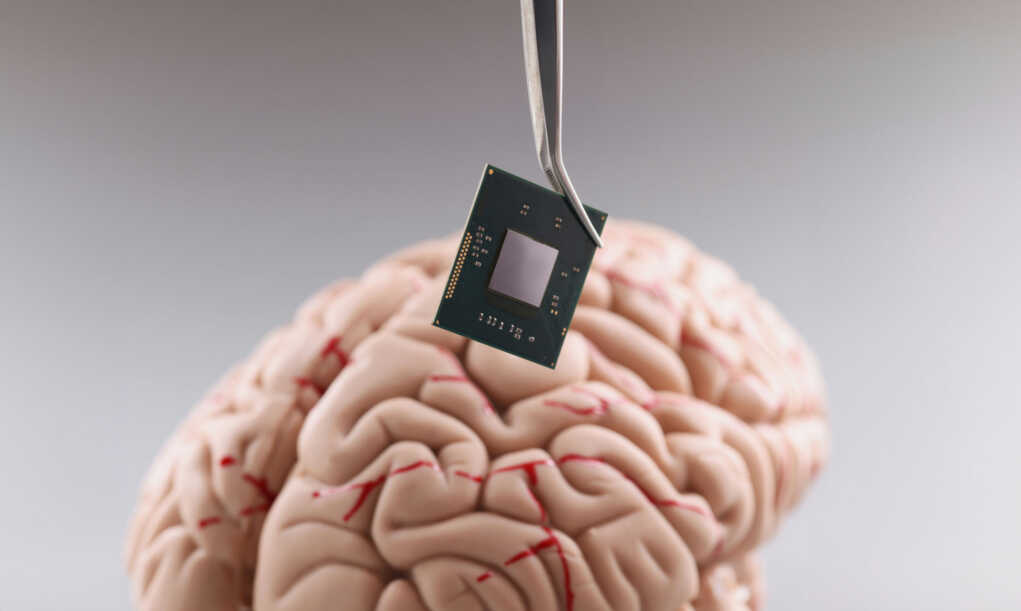
A Bezos-backed neuroscience startup is selling a huge promise before it has shown a single public breakthrough, and that should make taxpayers, investors, and AI watchers pay close attention.
Quick Take
- Flourish has emerged from stealth with **$500 million** in funding and a reported **$2.5 billion valuation**.[3]
- The company says it is searching for the brain’s “core algorithm” by studying real neurons.[1]
- The available record shows investor confidence, but not public proof of scientific success.[1][2]
- The case highlights a familiar problem: big money can create hype long before hard evidence arrives.[1][2]
What Flourish Is Promising
Flourish is presenting itself as a neuroscience-driven alternative to today’s brute-force artificial intelligence race, and that framing is getting enormous attention because of the scale of the financing.[1] Reporting says the company is “putting real neurons under the microscope” to search for what it calls the brain’s “core algorithm,” a phrase that sounds like a major scientific breakthrough even though the public record does not show one yet.[1]
The startup’s central pitch is that biological intelligence may hold principles that current machine-learning systems have not captured, and that those principles could eventually improve artificial intelligence.[1] That is a serious research question, but the reports available here describe a thesis, not a validated result. They do not provide datasets, methods papers, benchmarks, or peer-reviewed findings showing that Flourish has actually decoded anything from the human brain.[1][2]
Why The Funding Matters
The funding round matters because it gives Flourish resources that few neuroscience startups ever see, including room for wet-lab work, computational infrastructure, and a long research runway.[3] The company reportedly raised $500 million, which places it in a rare category for a young science venture and explains why the story has attracted so much interest.[1][3] Large checks do not prove a thesis, but they do show that powerful investors believe the idea is worth a serious gamble.[1][3]
For conservative readers, the larger issue is not whether innovation is good; it is whether prestige and money are being mistaken for proof.[1][2] Too often, the modern tech press treats a flashy fundraising announcement as if it were a scientific validation memo. In this case, the reporting itself says whether studying real neurons will unlock better artificial intelligence “remains to be seen,” which is the most important line in the entire story.[1]
What The Public Still Does Not Know
The available sources do not spell out Flourish’s experimental design, the specific neuronal datasets it is using, or the standards it plans to use to judge success.[1][2] That gap matters because a claim about a “core algorithm” is only as strong as the test behind it. Without defined methods and measurable benchmarks, outside experts cannot assess whether the company is doing rigorous science or simply wrapping a bold hypothesis in expensive venture capital language.[1][2]
A $500M raise hit a New York neuroscience startup called Flourish yesterday. Jeff Bezos wrote the check. No product. $2.5B valuation. Their bet… stop approximating how the brain works and start mapping it directly.
The reason this is happening now, and not five years ago, is… pic.twitter.com/3uIIU5IVK4
— Toro (@ToroBotAI4BTC) June 5, 2026
The disclosure problem also matters because reporting says Flourish has been operating mostly under the radar.[2] Limited transparency makes outside scrutiny harder and raises the risk that hype will fill the vacuum left by missing technical detail.[1][2] For an audience that has watched government, media, and elite institutions oversell narratives before the evidence was ready, the lesson is straightforward: a big funding round is not the same thing as a confirmed discovery.[1][2][3]
Sources:
[1] Web – Bezos Funding Hunt for Brain’s ‘Core Algorithm’…
[2] Web – Bezos Bets $500M on Brain-Inspired AI Startup Flourish
[3] Web – Catalio’s Neuroscience Startup Flourish Emerges With Funding from …