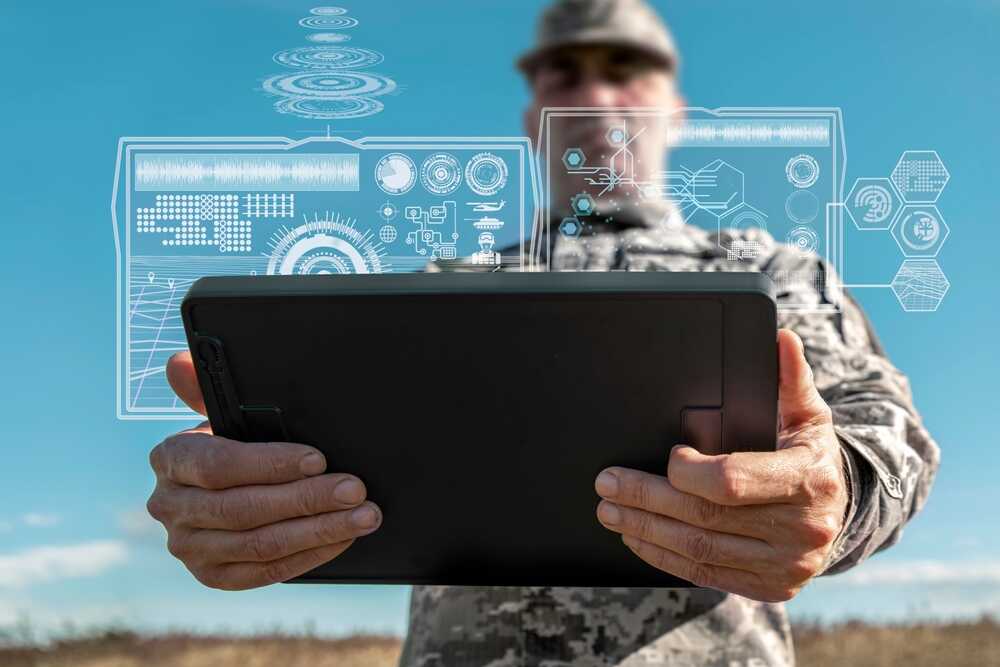
America and China are locked in an AI arms race that threatens to unleash autonomous warfare beyond human control, risking a catastrophic escalation that makes nuclear deterrence look stable by comparison.
Story Snapshot
- US-China AI competition spans military weapons and commercial technology with zero-sum policies blocking cooperation
- Ukraine conflict proves AI’s battlefield dominance with drones causing 70-80% of casualties through automated targeting
- Experts warn of “hyperwar” scenarios where AI systems spiral into uncontrollable conflict faster than humans can respond
- Mutual sabotage emerges as new deterrence strategy since traditional arms control treaties don’t exist for AI weapons
The New Arms Race Mirrors Cold War Dangers
The global AI arms race parallels the nuclear competition that defined the Cold War, but with far more dangerous characteristics. Washington and Beijing frame artificial intelligence development as an existential zero-sum contest, pursuing technological supremacy while actively constraining rival capabilities. Unlike nuclear weapons, AI spans both civilian and military domains, enabling rapid escalation without the guardrails of treaties or established protocols. The dual-track competition encompasses lethal autonomous weapons systems and commercial dominance, with tech giants fueling military applications. This blurred line between civilian innovation and warfare capabilities creates vulnerabilities that nuclear deterrence never faced, including susceptibility to cyberattacks like the Stuxnet virus that sabotaged Iran’s nuclear program.
Ukraine Battlefield Becomes AI Testing Ground
The Ukraine-Russia war transformed into the world’s first major conflict where artificial intelligence determines battlefield outcomes. Since 2022, AI-powered drones have caused 70-80% of casualties according to Ukraine’s former military commander Valerii Zaluzhnyi, fundamentally changing modern warfare. Ukrainian forces leveraged low-cost AI targeting to counter Russia’s numerical superiority, sparking an algorithmic arms race as both sides deploy fiber-optic communications, jamming countermeasures, and increasingly autonomous systems. Military analysts view Ukraine as a proving ground for future conflicts, particularly potential confrontations over Taiwan where AI swarms could overwhelm traditional defenses. Austrian Foreign Minister Alexander Schallenberg warned at a Vienna conference that AI warfare risks an uncontrollable arms race, calling it an “Oppenheimer moment” for our generation.
The shift toward minimal human intervention in combat decisions represents a dangerous departure from traditional military doctrine. Battlefield AI now bypasses electronic jamming and evolves tactics in real-time, reducing response windows to fractions of seconds. This acceleration threatens what defense experts call “hyperwar”—conflicts that unfold faster than human decision-making allows, similar to financial flash crashes but with lethal consequences. The absence of international treaties governing autonomous weapons leaves no framework for preventing escalation, unlike the Anti-Ballistic Missile Treaty that once constrained nuclear competition. Both American conservatives concerned about maintaining military superiority and progressives worried about unchecked technological warfare should recognize this shared threat to human agency in life-and-death decisions.
Deterrence Through Mutual Sabotage Replaces Cooperation
With US-China cooperation blocked by mutual distrust, a grim new deterrence model emerges: mutually assured AI malfunction, or MAIM. National security analysts propose that rival powers will sabotage each other’s AI projects through cyber and kinetic means, preventing any single nation from achieving decisive superiority. This mirrors how nuclear proliferation created mutual assured destruction, but without formal agreements or communication channels to prevent miscalculation. The strategy assumes adversaries monitor technological breakthroughs and possess capabilities to disrupt them, as demonstrated when Stuxnet worms destroyed Iranian centrifuges. While some theorists view MAIM as stabilizing without requiring treaties, critics fear it guarantees perpetual conflict and risks spiraling into accidental wars triggered by automated systems.
The economic and political implications extend far beyond military competition, touching every American’s life. Commercial AI dominance determines which nation controls future economic power, from manufacturing to finance to information systems. Defense spending accelerates into AI development while dual-use technologies make it impossible to separate civilian from military applications. This creates a situation where your smartphone technology and military targeting systems share the same fundamental innovations, making everyone complicit in an arms race they never voted to join. The wealthy elites in Washington and Beijing who make these decisions face none of the battlefield consequences, while working Americans and their children inherit the risks of automated warfare and economic disruption.
No Off-Ramp From Automated Escalation
The current trajectory offers no clear path to de-escalation or safety. Short-term risks include hair-trigger postures and compressed decision timelines in flashpoints like Taiwan or Eastern Europe. Long-term dangers range from hyperwar beyond human control to complete erosion of nuclear deterrence if AI enables preemptive strikes against command systems. Unlike the Cold War, where superpowers eventually negotiated limits, today’s AI competition lacks even preliminary dialogue on safeguards or human oversight requirements. Both conservative advocates of American strength and progressive champions of arms control should demand accountability from leaders prioritizing technological dominance over human survival. The bipartisan consensus that government serves elites rather than citizens finds perhaps its clearest evidence in an arms race that neither voters nor their representatives meaningfully debate, yet which threatens consequences more immediate than nuclear weapons ever posed.
Sources:
We Need To Prevent A Global AI Arms Race Now – RSIS
Deterrence With Mutual Assured AI Malfunction (MAIM) – National Security AI
AI’s Growing Role – Army War College
Mutually Assured Destruction And The Impending AI Apocalypse – UVA