
The Federal Bureau of Investigation has quietly fired the analysts behind the infamous “radical-traditionalist Catholic” memo, raising fresh questions about past targeting of believers and the future of religious freedom in America.
Story Snapshot
- The Federal Bureau of Investigation fired five analysts linked to the 2023 Richmond memo on “Radical Traditionalist Catholics.”
- The memo proposed “tripwire and source development” in Catholic parishes, blurring the line between worship and government surveillance.
- Internal reviews under the Biden administration admitted serious analytical failures but denied anti-Catholic intent.
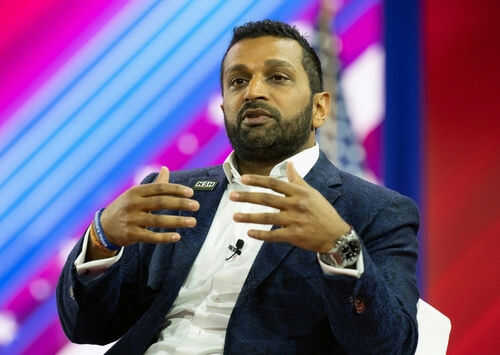
- The firings under Director Kash Patel signal a harder line on abuses that appear to criminalize traditional faith and conservative beliefs.
What the Richmond Catholic Memo Really Tried to Do
The January 2023 Richmond field office memo, titled “Interest of Racially or Ethnically Motivated Violent Extremists in Radical-Traditionalist Catholic Ideology,” explicitly linked so-called “radical-traditionalist Catholics” with racially or ethnically motivated violent extremism.[3][4] The document described “new avenues for tripwire and source development” inside Catholic communities, effectively treating traditional parishes as potential hunting grounds for informants and surveillance leads.[3][1] The memo’s language identified “traditionalist Catholics” as a category of interest and directly connected religious identity with security risk.[4]
The memo attempted to draw a distinction between “radical-traditionalist Catholics” and Catholics who simply prefer the Traditional Latin Mass and pre-Vatican II teachings, claiming the former were “separate and distinct.”[3][4] Yet the intelligence product still centered its analysis on a specific religious subset, creating the appearance that theology and worship style could trigger federal scrutiny.[3][5] According to a later House Judiciary Committee report, the product relied heavily on partisan or activist sources to characterize Catholic groups and suggested monitoring “traditional Catholic houses of worship” in Virginia.[5][1] For many faithful, that crossed a bright constitutional line.
Backlash, Retraction, and a Pattern of Targeting Conservatives
When the memo leaked in early 2023, Catholic leaders and members of Congress denounced it as a dangerous conflation of devout practice with extremism.[1][4] Facing public outrage, Federal Bureau of Investigation leadership under the Biden administration withdrew the memo and claimed it was an isolated mistake by a single field office.[1][4] However, subsequent congressional oversight uncovered that multiple field offices contributed to the product and that it had been distributed to more than one thousand Federal Bureau of Investigation employees nationwide, undermining the “one office” defense.[1][5] The memo quickly became part of a broader conservative concern that federal law enforcement was drifting toward viewing traditional religion as a breeding ground for “domestic extremism.”
An internal Federal Bureau of Investigation review admitted that everyone involved in drafting and approving the memo “failed to adhere to analytic tradecraft standards” and “equated the subjects’ interest in their self-described form of religion with racially or ethnically motivated violent extremist ideology without sufficient evidence or articulable support.”[2] A 2024 report from the Department of Justice inspector general echoed these findings, citing serious departures from proper analytical practice and inaccurate domestic terrorism terminology, though it concluded there was “no evidence of a malicious intent or an improper purpose.”[2][1] For many conservatives, this official framing—serious violations, but no intentional bias—mirrored a familiar pattern where bureaucrats admit failure but escape real accountability.
Patel’s Firings and What They Mean Under Trump’s Second Term
Under President Trump’s second term, new Federal Bureau of Investigation Director Kash Patel revisited the Richmond memo episode as part of a wider shake-up of the security bureaucracy.[1][2] Patel publicly acknowledged in 2025 that there had been “terminations” and “resignations” related to the memo and that an internal investigation was underway.[1] By June 2026, multiple outlets reported that several analysts directly tied to the memo—four intelligence analysts and one supervisory analyst—had been formally fired.[2][3] According to their lawyer, they were notified on a Friday, marking a decisive break from the more lenient approach taken under the previous administration.[2]
The firings follow years of criticism from House Republicans, who argued that the Biden-era Federal Bureau of Investigation and Department of Justice treated Catholics and other conservatives as default suspects.[5][1] A 2025 House Judiciary Committee report concluded that the “Biden-Wray FBI manufactured a false narrative of Catholic Americans as violent extremists,” pointing to the Richmond memo as a prime example of mission creep in domestic extremism policy.[5] Patel’s actions, while narrow—roughly five analysts rather than a mass purge—send a message inside the bureaucracy that using protected religious belief as an analytic proxy for threat will carry real professional consequences.[2] For many religious conservatives, that is a needed course correction rather than political revenge.
Religious Liberty, Surveillance, and the Road Ahead
The Richmond memo controversy highlights a deeper tension between threat prevention and respect for constitutional rights.[1][4] Domestic terror analysts are tasked with spotting weak signals of violence before it occurs, but when they lean on broad categories like “traditionalist Catholics,” “parents at school board meetings,” or “patriotic militias,” they risk turning lawful belief and association into red flags.[5][2] The Department of Justice inspector general acknowledged that, in this case, the flawed product “created the appearance that the FBI conducts investigative activity based on religious affiliation.”[2] That appearance alone can chill worship and speech, especially among already mistrustful conservative communities.
For Catholic families who simply want to attend Latin Mass, teach their children the catechism, and defend the unborn, being mentioned in the same breath as racially motivated violent extremists felt like a warning shot.[1][4] The firings under Kash Patel do not erase the damage, but they show that, at least under the current administration, there is a willingness to punish those who blur the line between monitoring criminals and profiling believers.[1][2] The challenge going forward will be ensuring that federal law enforcement can pursue genuine threats without turning traditional faith, constitutional gun ownership, or conservative activism into defaults for suspicion—a balance many readers believe the Biden-era Federal Bureau of Investigation badly failed to maintain.[5][2]
Sources:
[1] Web – FBI fires more agents involved in Biden memo targeting ‘radical …
[3] Web – FBI memo with ‘anti-Catholic terminology’ said to be distributed to …
[4] Web – [PDF] fbi-anti-catholic-memo.pdf – House Judiciary Committee
[5] Web – FBI reportedly fires agents in connection with memo on ‘radical …