China’s military parade on September 3, 2025, showcased a sweeping range of advanced weaponry and strategic messaging, signaling its growing defense capabilities and geopolitical aspirations.
At a Glance
- China held a grand military parade in Beijing on September 3, 2025, to commemorate the 80th anniversary of WWII’s end.
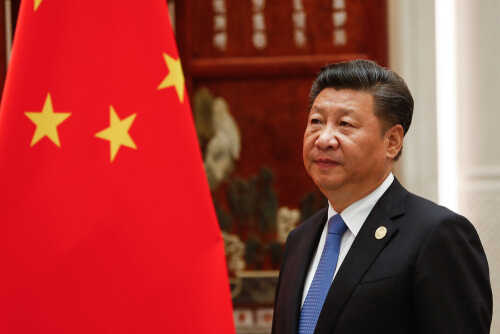
- President Xi Jinping, joined by Vladimir Putin and Kim Jong Un, presided over a display of new hypersonic missiles, laser weapons, autonomous drones, and a full nuclear triad.
- The event featured futuristic systems like underwater drone submarines, “loyal wingman” aerial drones, and land-, sea-, and air-based nuclear delivery assets.
- Xi framed the parade as a global choice between peace and war, projecting unified strategic defiance.
Advanced Arms on Display
China used its Victory Day Parade to unveil a swath of cutting-edge militaries—including hypersonic YJ-family anti-ship missiles such as the YJ‑17 and YJ‑20—and laser weaponry termed LY‑1, shown for the first time on naval platforms and armored trucks.
The parade also revealed autonomous and unmanned systems: a 60-foot underwater drone submarine, a larger HSU‑100 underwater drone, and “loyal wingman” drones to support manned fighters.
Additional displays featured robotic ground vehicles and mobile railguns, with experts noting the emphasis on rapid-deployment systems capable of long-range precision attacks. Chinese state television highlighted that many of the systems on display are “combat-ready” and operable across multiple theaters, from the East China Sea to outer space.
Full Nuclear Triad & Strategic Messaging
Notably, China exhibited a full nuclear triad—demonstrating land-, sea-, and air-based nuclear strike capabilities. This included the new DF‑61 intercontinental ballistic missile (ICBM), alongside upgraded submarine-launched ballistic missiles and nuclear-capable strategic bombers.
The exhibition of this triad follows consistent signals from Beijing regarding modernization of its deterrent posture amid rising tensions with the United States and regional rivals. Western analysts view the display as calibrated messaging aimed at reaffirming China’s status as a peer nuclear competitor.
Political Theater and Global Alignment
The parade doubled as geopolitical performance: Xi Jinping delivered a speech warning that the world faces a choice “between peace and war,” positioning China as a stabilizing force amid what he described as international disorder.
Xi stood beside Russian President Vladimir Putin and North Korean leader Kim Jong Un, sending a visual message of alignment among authoritarian powers. More than two dozen leaders from Africa, Central Asia, Eastern Europe, and Latin America attended, underlining Beijing’s efforts to build strategic coalitions beyond the West.
Sources
Reuters
Financial Times
Times of India