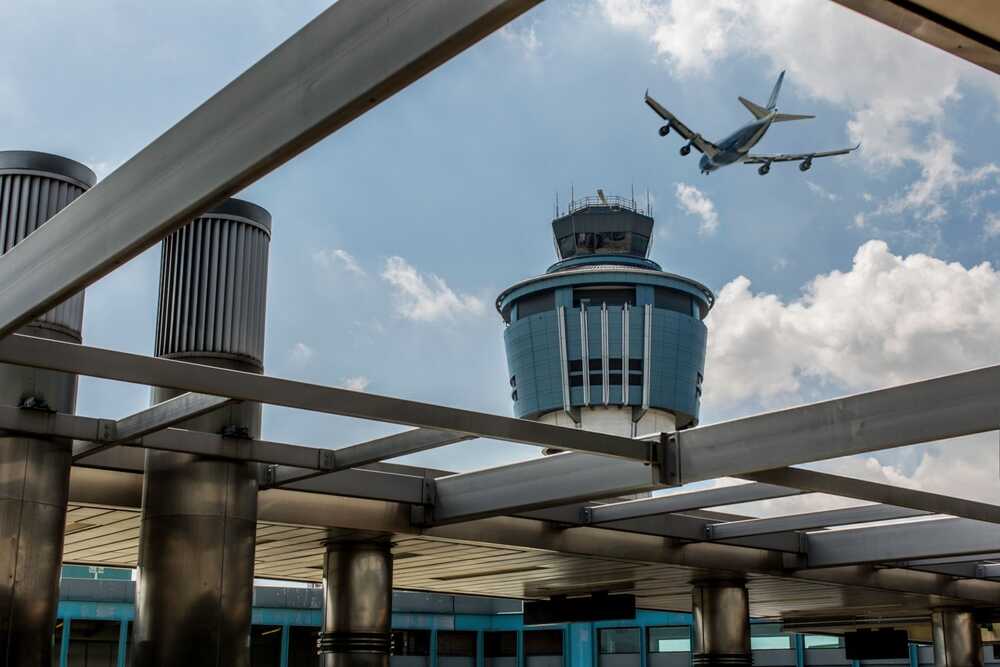
A late-night runway collision at LaGuardia exposed how one breakdown in basic safety coordination can shut down a major U.S. airport in minutes.
Quick Take
- An Air Canada CRJ-900 regional jet collided with a Port Authority ground vehicle reported as a fire truck while landing at New York’s LaGuardia Airport late Sunday night.
- The FAA issued a ground stop and the airport was closed as emergency crews responded and investigators were notified.
- Multiple injuries were reported, including at least four firefighters described as critically injured in early reporting.
- Early coverage points to a possible communication breakdown that allowed a ground vehicle to be on the runway during landing operations.
Collision on a Runway: What Happened at LaGuardia
Air Canada’s regional jet, identified in reporting as a Bombardier CRJ-900, struck a Port Authority vehicle on a runway at LaGuardia Airport around 11:30 p.m. Sunday, March 22, 2026, as the aircraft was landing. Initial accounts describe severe damage around the cockpit and forward fuselage, while passengers evacuated onto the tarmac in poor weather. LaGuardia’s closure immediately rippled across flights in and out of the New York region.
Weather conditions described in early reports included light rain, fog, and mist with reduced visibility, creating a more demanding environment for crews and ground operations. That context matters, but it does not explain why a vehicle would be crossing an active runway during a landing sequence. The facts still being pinned down include the exact vehicle movements, the clearance process, and what air traffic control communications were made to the aircraft and to the ground unit.
Injuries Reported; Fatality Claims Not Verified in Provided Sources
Emergency response was significant, with FDNY, NYPD, and EMS resources deployed to the scene. Reporting referenced injuries among people on the aircraft and among fire truck personnel, including at least four firefighters described as critically injured. The user-provided topic premise includes “at least two dead,” but the research summary itself flags a key limitation: the provided sources, as summarized, do not clearly confirm fatalities. Until official statements verify deaths, casualty reporting should be treated carefully.
The aircraft’s seating capacity was described as up to 80 people—76 passenger seats plus two flight attendants and two pilots—though exact occupancy was not confirmed. Photos and descriptions of damage focused on the front of the plane, an area that naturally raises questions about crew injury risk. Even so, the reported ability to evacuate using overwing exits suggests the airframe remained stable enough for rapid egress, which likely reduced the potential for a worse outcome.
Why Investigators Will Focus on Runway Incursion and Communication
Early expert commentary cited in the research points to a central investigative question: how a ground vehicle ended up on the runway during active landing operations. That points directly to runway incursion risk—one of the most serious hazards in aviation because it compresses reaction time to seconds. If the root cause is a communications breakdown between air traffic control and ground operations, investigators will likely examine radio logs, vehicle dispatch procedures, and whether runway-status protections functioned as intended.
The FAA’s ground stop and the airport closure underline how a single incident can disrupt a large section of the national air network. For travelers, that means cancellations, diversions, and missed connections. For the broader public, it also raises a governance question conservatives have pressed for years: whether agencies and operators are prioritizing core competence—basic safety, staffing, and accountability—over bureaucracy and messaging. The public will want clear answers, not jargon, and consequences where protocols failed.
What Comes Next: NTSB Review and Operational Lessons
With the NTSB notified, the next phase should move from chaotic early reporting to disciplined reconstruction of events. Investigators typically look at timelines, controller instructions, vehicle authorization to enter runway areas, and any technology intended to prevent runway conflicts. The research also notes uncertainty about flight identification in early coverage, another reminder that first reports can be messy. The most important outcome will be actionable safety changes that prevent a repeat at LaGuardia and at other high-traffic airports.
Air Canada plane on-the-ground crash closes LaGuardia; at least two dead https://t.co/OeoEMFwLtC via @JustTheNews
— Paula dorsey (@MaMapd3) March 23, 2026
LaGuardia has seen aviation tragedies before, including the 1989 USAir Flight 405 crash on March 22—exactly 37 years prior to this incident—though that event involved very different conditions and causes. The parallel is not the mechanism of the accident; it is the enduring lesson that aviation safety is unforgiving of shortcuts and confusion. The public deserves transparent findings, and officials should resist premature narratives until the factual record is established.
Sources:
Casualties feared as Air Canada plane crashes into truck at New York’s LaGuardia Airport
LaGuardia Airport in New York closed following collision between Air Canada plane and vehicle
LaGuardia airport: Air Canada plane crash