

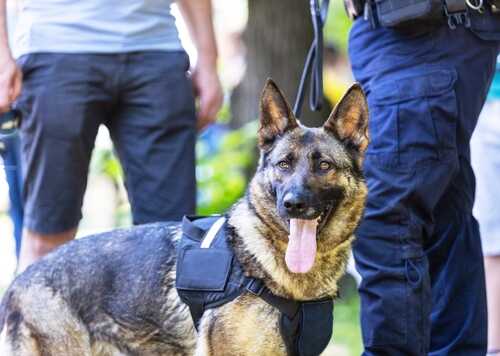
Tensions surrounding immigration enforcement have reached a new flashpoint in Minneapolis, as anti-ICE protesters are now allegedly targeting federal K-9 units. This escalation, which federal authorities have condemned as a disturbing new dimension of hostility, follows weeks of unrest sparked by the controversial incident involving a civilian by an ICE agent. The incident involving a CBP K-9 named Dina highlights a growing national dispute over immigration policy and the extent of acceptable protest, prompting federal officials to consider heightened security measures for working animals.
Story Highlights
- A kennel employee allegedly wrote “ICE OUT” on a CBP K-9’s feeding chart.
- The Department of Homeland Security framed this as part of a broader pattern of anti-ICE actions.
- The incident follows the controversial incident involving Renee Nicole Good by ICE agent Jonathan Ross.
- Tensions in Minneapolis have escalated, with the potential deployment of federal troops.
Incident Details in Minneapolis
In late January 2026, a disturbing incident unfolded in a Minnesota kennel involving a CBP K-9 named Dina. An employee allegedly scrawled “ICE OUT” on the dog’s feeding chart, a move that federal authorities have quickly condemned as an act of protest against immigration enforcement. This event underscores increasing hostility toward federal agencies, as Department of Homeland Security officials highlighted the new dimension of targeting federal animals rather than direct confrontation with agents.
The incident is part of an ongoing narrative of tension in Minneapolis. Following the January 7 incident involving Renee Nicole Good by ICE agent Jonathan Ross, protests erupted, leading to heightened security measures. Governor Tim Walz has deployed the Minnesota National Guard, and federal officials are preparing for possible military involvement. The situation is a reflection of national disputes over immigration policies under President Trump’s current administration.
THEY’RE EVEN GOING AFTER THE DOGS!
In Minneapolis, anti-ICE agitators are targeting our @CBP K-9s, including K-9 Dina, pictured here. At the kennel where K-9 Dina was staying, it was discovered that an employee had written "ICE OUT" on her feed chart. pic.twitter.com/FYseJqx68C
— Homeland Security (@DHSgov) January 21, 2026
Federal Response and Implications
The Department of Homeland Security has used social media to emphasize the seriousness of this incident, pointing to it as evidence of escalating violence and hostility towards federal operations. They stress the need for increased vigilance and security, especially regarding the placement of federal working animals. This highlights the broader implications for federal operations and the potential for policy changes in how these animals are housed and protected.
With the threat of further unrest, federal authorities are considering changes to kennel facility protocols to ensure the safety and operational efficiency of their K-9 units. This incident may set a precedent for how federal law enforcement responds to similar acts of protest that target their assets indirectly.
Broader National Context
The tensions in Minneapolis are part of a larger national debate over immigration enforcement and the methods used by federal agencies. Protests and activism against ICE have been longstanding issues, but the targeting of animals signifies a new escalation that has conservatives concerned about the erosion of law and order. This incident adds to the discourse on civil liberties and the extent of acceptable protest activities.
Immigration Officers' Dogs Are Being Targeted By Deranged Leftists in Minnesota https://t.co/FUTiBvUcQ2
— Robert M. Spencer 🇺🇸 (@rspencer1762) January 23, 2026
As the situation develops, the response from federal and state authorities will be crucial in determining the future of protest actions and law enforcement strategies. The balance between maintaining public safety and protecting civil rights remains a contentious issue that will continue to play out in the political arena.
Watch the report: Federal Officials Say Anti-ICE Protesters Targeted Dogs After Minneapolis Kennel Incident
Sources:
Federal officials say anti-ICE agitators going after dogs following Minneapolis kennel incident
CBP K-9 targeted; Minnesota kennel worker writes anti-ICE message
CBP K-9 targeted by Minnesota kennel worker
CBP K-9 targeted? Minnesota kennel worker writes anti-ICE message on feeding chart: DHS