

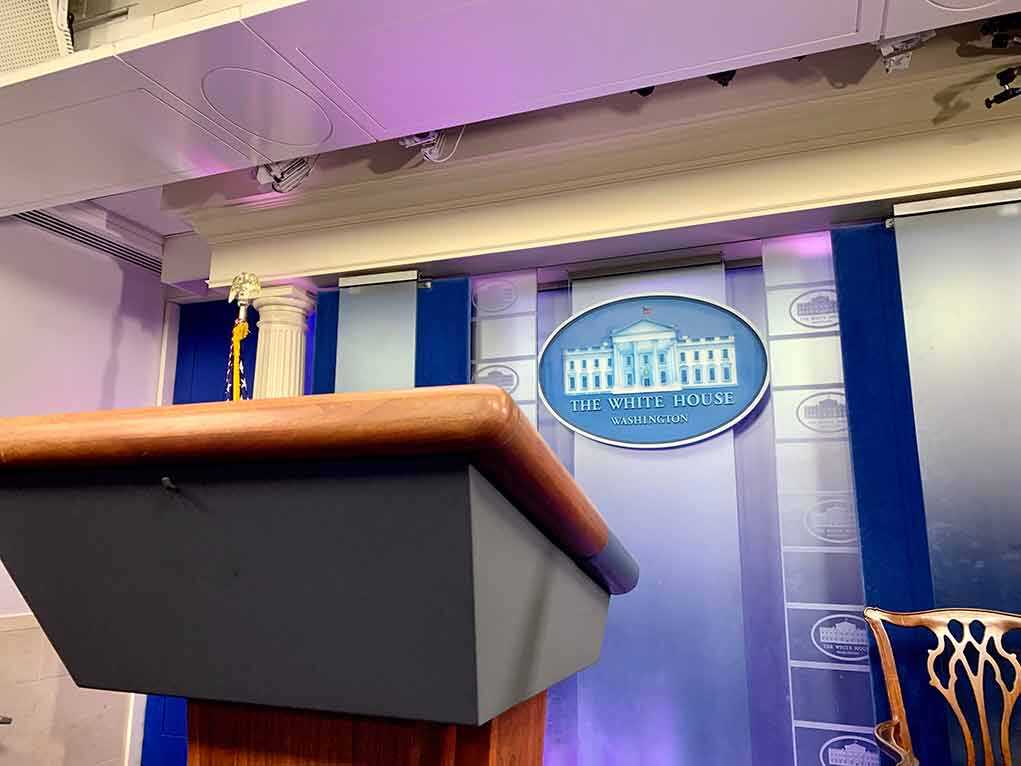
President Trump removed Katie Zacharia as White House press secretary after just five days, citing ineffective performance and limited engagement, a stunningly brief tenure confirmed by multiple reports.
Story Highlights
- Katie Zacharia exited as White House press secretary after five days on the job.
- Her first and only briefing lasted about 14 minutes before deferring questions to President Trump.
- Reports say President Trump urged Zacharia to reconsider the role before her departure.
- The five-day stint ranks as the shortest modern tenure for the position.
What Happened And When
White House officials confirmed that Katie Zacharia is leaving the press secretary role after her first week, ending a brief and rocky tenure that began October 12, 2026. On Friday, multiple outlets reported her removal, with accounts noting she served only five calendar days before departing. President Trump, speaking to reporters shortly before news broke, signaled doubts about her continuation in the job and suggested she might reconsider the position. Neither the White House nor Zacharia issued a detailed public explanation at the time of the reports.
Katie Zacharia’s only formal press briefing lasted about 14 minutes. She then directed reporters to put questions to President Trump himself, an unusual move that highlighted the central role the President plays in his own communications strategy. The short briefing reinforced concerns inside the West Wing that the press office needs a disciplined messenger who can manage hostile questions, shape the day’s message, and spare the President from avoidable press skirmishes.
Why The Tenure Collapsed So Fast
Administration sources framed the change as a performance and fit issue: the press secretary must run daily briefings, coordinate messaging, and speak with authority for the President. That job demands command of facts, calm under pressure, and deep ties inside the building. The White House concluded Zacharia did not meet those needs at this time, based on her minimal engagement at the podium and the signal from President Trump that she should weigh her future in the role. The move aims to steady communications and protect the President’s agenda.
For conservative readers, the core point is simple: the message must be clear, firm, and focused on results. Press briefings should drive policy wins on border security, energy, inflation relief, and constitutional freedoms, not hand oxygen to hostile narratives. When a messenger struggles, swift correction is not chaos; it is management. The Trump team is treating communications like policy—measure outcomes, cut losses early, and keep attention on the mission rather than the media circus.
How This Compares To History
The press secretary post is demanding and turnover is common across administrations. The office dates back about 85 years and has seen dozens of holders, with presidents often using multiple press secretaries over their terms. Even so, a five-day stint is extraordinary and appears to rank as the shortest modern tenure, surpassing prior brief West Wing records noted by media watchers. The rarity underscores how quickly a misalignment at the podium can ripple across the West Wing and the news cycle.
Past presidents, including those celebrated by the media, changed press secretaries when needed. President Barack Obama used three over two terms, while Presidents Bill Clinton and George W. Bush each had four. The job blends public performance with internal management. It is both a microphone and a control room. When either side falters, the President pays the price in headlines and lost message discipline. Quick adjustments protect the policy agenda from distraction and drift.
What Comes Next For The Briefing Room
The White House now faces a vital choice: name a press secretary who can battle a combative press corps, keep focus on policy, and withstand daily fire. The ideal candidate will know the issues cold—border enforcement, crime, energy costs, and deregulation—and will not flinch when activists with press badges push partisan talking points. The goal is a podium that advances President Trump’s priorities and defends core conservative values with facts, clarity, and resolve.
President Trump defended Katie Zacharia on Friday before she was removed from her role as White House press secretary.
Speaking to reporters outside the White House, Trump said Zacharia had been treated unfairly by the media and revealed that he had encouraged her to reconsider… pic.twitter.com/2Nd3dis3cb
— CBS News (@CBSNews) October 16, 2026
In the short term, expect tighter vetting, sharper prep, and closer alignment between the press office and senior staff. The next press secretary should reset briefing expectations: concise openings, clear news, and strong pushback when questions drift into spin. When the White House owns the message, voters hear the wins—lower prices through American energy, stronger borders through enforcement, and respect for the Constitution and families. Personnel is policy, and the podium is a key lever to keep Washington focused on results.
Sources:
cbsnews.com, nytimes.com, apnews.com