

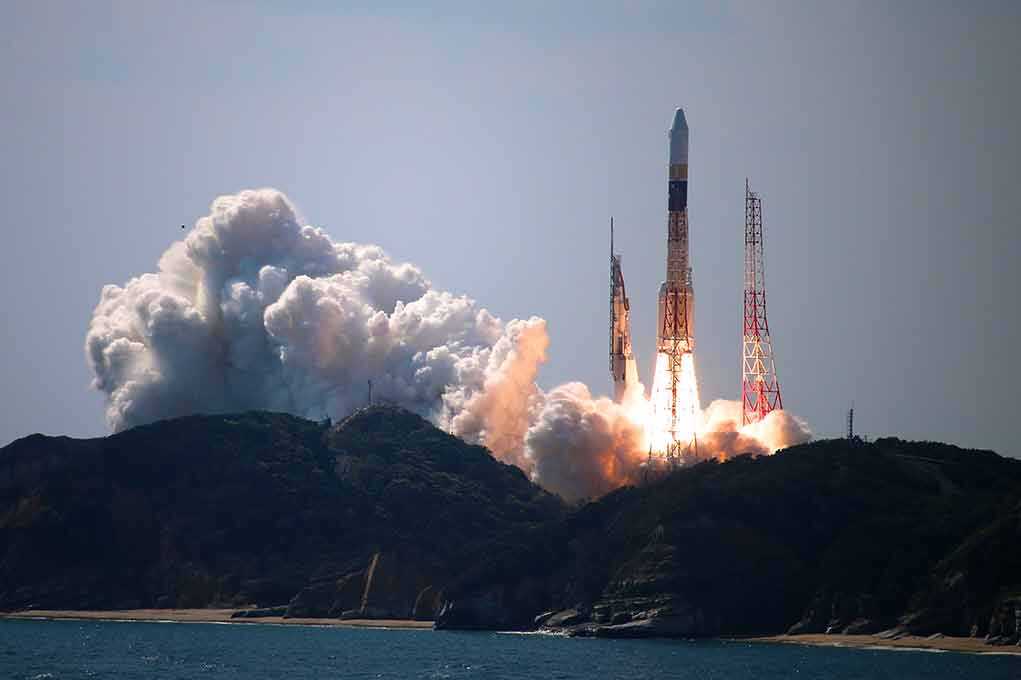
South Korea’s homegrown Nuri rocket placed 15 satellites into orbit in a precision launch, underscoring a fast-moving allied space build-up that America cannot afford to ignore.
Story Highlights
- Nuri lifted off at 12:25 p.m. local time and reached its planned orbit.
- Fifteen satellites rode to space, including five for a new national microsatellite constellation.
- Officials said the fifth Nuri mission met its main goals and marked a multi-satellite milestone.
- The launch advances allied space capacity as the United States pushes to cut red tape and rebuild industrial strength.
Launch Details From Naro Space Center
South Korea launched its Nuri rocket from the Naro Space Center in Goheung at 12:25 p.m. on October 7, meeting the planned window and flight profile. National media and the Korea AeroSpace Administration reported that the vehicle performed nominally and inserted its payloads into the targeted orbit. The mission marked Nuri’s fifth flight and carried the heaviest, most complex set of satellites in the program so far, a clear step in capability that Seoul has been building toward for years.
Officials briefed that the rocket reached its intended orbit and completed the sequence of deployments for the mission. Reports described a record manifest of 15 satellites, with the launch timeline and ascent milestones proceeding as planned from the coastal site. This flight followed earlier readiness checks and weather assessments, which set the final window. The on-time launch reinforced South Korea’s improving cadence and reliability with its domestic launch vehicle program.
What Flew: Five Constellation Microsats And Ten CubeSats
The payload included five New-space Earth Observation Constellation for National Safety microsatellites and ten smaller CubeSats. The five microsatellites form the core of South Korea’s first domestically launched microsatellite constellation, intended to gather frequent images for safety, disaster response, and national needs. Media briefings and agency statements highlighted that this was the first time Nuri deployed five primary microsatellites in a coordinated sequence, a key technical and operational milestone for the launcher.
South Korean coverage emphasized the precision needed to release multiple satellites without interference. Officials and engineers prepared by varying ejection timing and angles to prevent collisions and to place each satellite in the right slot for follow-on operations. This type of multi-payload choreography is common in advanced launch services. Completing it cleanly signals growing maturity and positions Nuri for more commercial and government missions in the region and beyond.
Why It Matters To U.S. Interests And Security
Allied strength in space supports American interests and stability in the Indo-Pacific. A friendly nation adding launch capacity, rapid imaging, and resilient communications helps counter hostile regimes and deters aggression. South Korea’s steady progress also expands the market for American components, sensors, and software when export rules allow. As Seoul proves repeatable, affordable access to orbit, the United States benefits from more redundancy in allied launch options and shared situational awareness across the theater.
This launch also sends a message about focus and discipline. South Korea cut through bureaucracy, iterated its rocket, and delivered results on schedule. That is the model. In Washington, leaders are working to speed permits, fix supply chains, and push practical innovation. The goal is clear: build more, faster, at home, while partnering with nations that share our values. Taxpayers want results, not waste. Success like Nuri’s shows what happens when mission comes first and politics takes a back seat.
Tracking Outcomes And The Next Steps
After any multi-satellite launch, final confirmation depends on health checks from each spacecraft. Early mission statements focused on the vehicle’s performance and the placement of the payloads into planned orbits. As ground stations complete check-ins and calibrations, operators will lock in the constellation’s imaging tempo and data flow. That process can take hours or days. The fifth flight’s record manifest suggests a faster learning curve for South Korea’s teams on both launch and satellite operations.
South Korea now eyes more frequent launches and a path to commercial services. That creates room for joint projects with American companies and universities, from sensors to data analytics. For U.S. readers, the bottom line is simple. Friends are getting stronger in space. America must keep its edge by backing free-enterprise builders, protecting critical technology, and stripping out red tape that slows real work. Strong allies plus a strong America keeps our families safe and our freedoms secure.
Sources:
youtube.com, en.yna.co.kr, chosun.com, en.sedaily.com, news.sbs.co.kr