

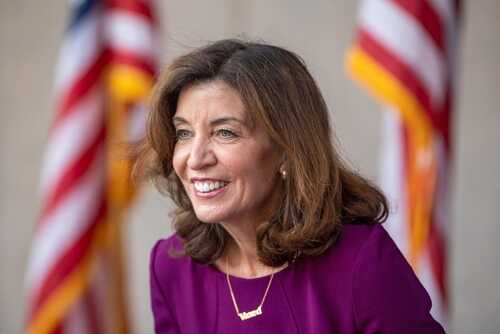
Governor Kathy Hochul’s endorsement of Assemblyman Zohran Mamdani for New York City mayor in November 2025 has ignited a political controversy, with U.S. Representative Elise Stefanik, a Republican gubernatorial candidate, strongly criticizing the move. The dispute centers on Mamdani’s record of pro-Palestinian activism, statements that have been labeled hostile to Israel by critics, and the timing of Hochul’s endorsement, which coincided with her acceptance of an award from a pro-Israel organization.
Story Highlights
- Governor Kathy Hochul endorsed Assemblyman Zohran Mamdani for New York City mayor.
- Rep. Elise Stefanik, a gubernatorial candidate, publicly criticized the endorsement, labeling Mamdani a “raging antisemite” and “communist.”
- The endorsement occurred as Governor Hochul received an award from a pro-Israel organization, which critics call a display of “political double-dealing.”
- The controversy focuses on the intersection of antisemitism, progressive political agendas, and internal divisions within the New York Democratic Party regarding policy on Israel.
- The fallout is shaping the early narrative of the 2026 gubernatorial race, with Stefanik positioning herself as a defender against antisemitism.
Stefanik Criticizes Governor Hochul Over Mamdani Endorsement
The political landscape in New York shifted following Governor Kathy Hochul’s November 2025 endorsement of Assemblyman Zohran Mamdani for New York City mayor. Mamdani’s history of pro-Palestinian activism and comments viewed by critics as hostile to Israel have been central to the ensuing debate.
Republican Representative Elise Stefanik, who is running for governor, immediately commented on the endorsement’s timing—which was simultaneous with Governor Hochul accepting an award from a pro-Israel organization—stating it was a “betrayal of Jewish New Yorkers.” Stefanik’s remarks, which included calling Mamdani a “raging antisemite” and “communist,” have amplified existing concerns about the direction of New York’s Democratic leadership.
This criticism by Stefanik is resonating among certain conservative and moderate groups who have expressed alarm about the Democratic Party’s ideological shifts. The controversy follows a period of heightened scrutiny over antisemitism in politics and on university campuses, particularly since the October 7, 2023, attack by Hamas on Israel. Rep. Stefanik gained a national profile following her aggressive questioning of Ivy League presidents concerning their response to campus antisemitism, which led to resignations and solidified her image as a proponent for Jewish students and American values.
Stefanik rips Hochul for endorsing ‘raging antisemite’ Mamdani while accepting award from pro-Israel organization https://t.co/X9s0fRVuyM pic.twitter.com/oJSNh9uZFW
— New York Post (@nypost) November 10, 2025
Party Divisions Emerge Following Endorsement
Governor Hochul’s support for Mamdani has exposed divisions within the Democratic Party. Mamdani, who identifies as a progressive advocating for far-left reforms, has faced criticism not only for his statements regarding Israel and Hamas but also for his positions on policies related to policing and social issues. Notably, key mainstream Democratic figures, including Senate Majority Leader Chuck Schumer and House Minority Leader Hakeem Jeffries, have not offered their support for Mamdani, suggesting unease with the progressive wing’s trajectory. Furthermore, pro-Israel organizations that recently honored Governor Hochul are now facing questions about her commitment to their causes as she attempts to balance support from both centrist and progressive factions of her party.
Stefanik’s campaign has used these internal divisions to mobilize voters, cautioning that leftist policies and weak leadership pose a risk to established principles. This political climate has created distance between the Democratic Party and some Jewish and moderate voters who view the party’s backing of certain progressive candidates as opportunistic. Recent events indicate a struggle within the Democratic establishment to maintain unity, with disagreements over Israel policy and accusations of bigotry contributing to fractures in the party’s base.
Implications for New York and National Politics
The consequences of this endorsement are beginning to define the narrative for the 2026 gubernatorial election. Rep. Stefanik has positioned her campaign as a defense against antisemitism and an effort to unify Republicans and disaffected Democrats, utilizing her national recognition and support from pro-constitution and pro-Israel voters. The controversy has increased scrutiny on Democratic endorsements across the state, prompting moderate voters and Jewish communities to reassess their political affiliations.
Beyond New York, the episode highlights a broader challenge for the Democratic Party as it manages rising antisemitism, the influence of the progressive left, and the complexity of uniting diverse groups under a single banner. This development has relevance for national discussions regarding free speech, campus activism, and institutional integrity. As Stefanik’s campaign continues to focus on what it terms “woke” politics and government overreach, her platform is appealing to voters who are seeking a return to perceived common sense in public life.
Analysis of Political and Community Responses
Political commentators have described Stefanik’s strategy as both a clear ideological stand and a calculated campaign maneuver, bringing the issue of antisemitism to the forefront amid national concerns. While some analysts caution that the use of strong language—such as “communist”—may increase political polarization, Stefanik’s supporters argue that direct language is necessary to address serious threats. Pro-Israel organizations have generally welcomed Stefanik’s stance, citing a reported increase in antisemitic incidents. Conversely, progressive groups have defended Mamdani, asserting that criticism of Israeli policy does not equate to antisemitism, a distinction that is often rejected by conservative voters and parts of the Jewish community.
In conclusion, the emerging 2026 gubernatorial race is anticipated to be a contest for New York’s leadership and will serve as a measure of the state’s ideological direction. For those seeking alternatives to what they perceive as progressive excesses and double standards, Stefanik’s campaign presents an option based on accountability and a focus on established American and Jewish values.
Watch the report: Stefanik Ripped Hochul on Sid & Friends for Endorsing Communist Antisemite Mamdani for Mayor
Sources:
- Stefanik doubles down on ‘jihadist’ claims as Mamdani shifts stance on Hamas
- ICYMI: Stefanik ripped Kathy Hochul on Sid & Friends for endorsing ‘communist’ Zohran Mamdani for NYC mayor
- Staunchly pro-Israeli Republican Elise Stefanik launches bid for NY governor
- Rep. Elise Stefanik, self-styled protector of Jews on the right, announces run for New York governor
- Trump ally Stefanik launches bid for NY governor, blasts Mamdani as ‘antisemitic communist’
- nypost.com