

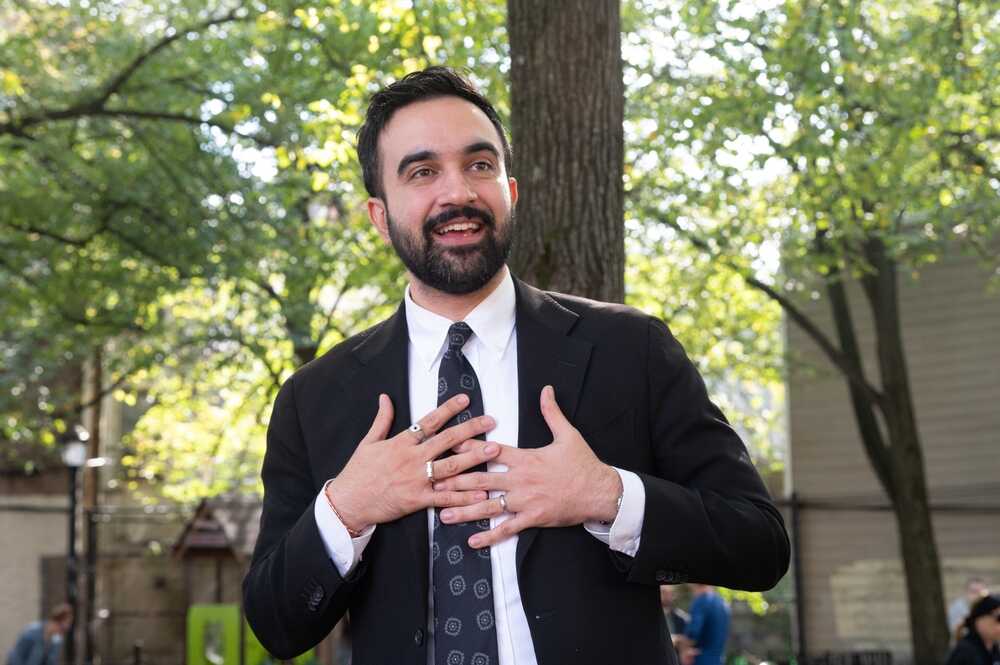
A New York City mayor is locking taxpayers into a nearly $1.9 billion hotel-shelter deal, and a Bronx leader is blasting the plan as “insane” spending that does nothing to fix the root causes of homelessness.
Story Snapshot
- New York City renewed a three-year, up-to-$1.86 billion hotel contract to house homeless families.
- The deal is structured as an emergency shelter agreement with the Hotel Association of New York City Foundation.
- Critics, including a Bronx borough leader, call the nearly $2 billion plan “insane” and demand real housing solutions.
- City officials admit taxpayers may not spend the full amount, but refuse to show clear cost comparisons.
Massive Hotel Shelter Deal Raises Bronx Alarm
New York City Mayor Zohran Mamdani’s administration has approved a new three-year contract worth up to about $1.86 billion with the Hotel Association of New York City Foundation to use hotel rooms as emergency shelters for homeless families. The foundation represents nearly 300 hotels citywide. Under the deal, hotels across all five boroughs can be turned into temporary shelters when the city’s main system is full. Supporters say this protects capacity, but critics in the Bronx see runaway costs with no long-term plan.
The contract is described in reporting as an “emergency shelter” agreement, not a regular competitively bid housing program. Payments depend on how many rooms the city uses, night by night, instead of a fixed draw on the full $1.86 billion. A spokesperson for the Department of Homeless Services has said the city “expects to pay less than” the ceiling and only “pays based on utilization.” That structure gives officials flexibility, but it also shields the real per-room cost from public view.
Bronx Leader Slams Nearly $2 Billion Price Tag
A Bronx borough leader is slamming the nearly $2 billion hotel plan as “insane,” arguing that taxpayers are being asked to fund a giant stopgap instead of real reform. The Bronx has carried a heavy share of shelter sites and emergency hotel placements for years, and many local residents feel their neighborhoods are treated as dumping grounds. To them, another billion-dollar hotel contract looks like more of the same: high-priced, short-term fixes with no path to stable homes or safer streets.
Critics point to the scale of the hotel strategy already in place. A report from the city comptroller found that about 77 percent of asylum seekers in New York were being sheltered in hotels, with roughly 15,750 rooms leased across 157 properties. That same analysis said a prior contract with the Hotel Association of New York City for 5,000 rooms was later expanded to cover up to 14,000 rooms and grew to a total value of $987 million. For Bronx leaders, the new $1.86 billion ceiling shows City Hall doubling down on an expensive model instead of changing course.
Emergency Contracting, Opaque Costs, and Conservative Concerns
The Mamdani administration’s hotel deal fits a pattern of large emergency shelter contracts that skip normal bidding rules and public debate. In past years, New York City has repeatedly used emergency procurement to sign big shelter agreements, including hotel deals for migrant families and homeless residents. That process avoids a full review of unit costs and alternatives, such as building new shelters, expanding faith-based beds, or helping families relocate to lower-cost areas. For conservatives, this looks like classic big-city government: no-bid deals, weak oversight, and little respect for the taxpayers footing the bill.
Supporters of the hotel contract argue the city is legally required to offer shelter and that hotels give fast, flexible capacity when the system is under pressure. They also stress that the $1.86 billion figure is a cap, not a guaranteed spend, and say the city plans to reduce its reliance on hotels over time. However, the administration has not shared clear per-night, per-room comparisons between hotel shelters and other options. Without those numbers, Bronx leaders and many conservative New Yorkers see the deal as a blank check to the hotel industry rather than a disciplined emergency tool.
What This Means for Taxpayers and Families
For taxpayers, the key issue is simple: nearly $2 billion is being put on the table for hotel shelters while long-term housing and mental health beds remain scarce. The Bronx leader’s “insane” label taps into a broader frustration with policy choices that seem to favor big contracts over common-sense solutions. Residents want more permanent, well-run shelters, faster moves into real housing, and strong enforcement against crime around existing sites. They do not want endless emergency deals that keep vulnerable people in expensive hotel rooms for months at a time.
Mamdani just extended the $1.86B hotel-shelter contract through mid-2029.
Same HANYC foundation.
Same emergency architecture.
82,929 people in the system as of July 31.
The right-to-shelter machine does not pause for anyone. pic.twitter.com/lQ61a3ps7l
— Gene Mikhov (@genegmb) August 3, 2026
For homeless families, the hotel rooms can offer short-term safety but often lack kitchens, support services, and stability. Even city reports warn that heavy hotel use comes with “substantial cost exposure” and is meant as a stopgap, not a permanent system. As President Trump’s administration pushes for tighter federal spending and less urban waste, deals like Mamdani’s hotel contract will draw national attention. Bronx voices calling this contract “insane” are not fighting compassion; they are demanding that compassion come with accountability, transparency, and a real path out of homelessness.
Sources:
nypost.com, a856-cityrecord.nyc.gov, brushwoodmedianetwork.com, ny1.com