Iran is daring the U.S. Navy in the Strait of Hormuz—raising the stakes for global energy prices and testing whether American power can still keep a vital sea lane open.
Quick Take
- Iranian military adviser Mohsen Rezaei threatened to sink U.S. ships if Washington tries to “police” the Strait of Hormuz.
- U.S. officials say Navy destroyers have transited the strait safely, while Iranian outlets claim a U.S. vessel was warned off—accounts that conflict.
- The strait is a narrow chokepoint that carries roughly one-fifth of global oil, making rhetoric alone capable of moving markets.
- Analysts warn Tehran could widen pressure by leaning on proxies near other chokepoints, compounding shipping and energy risks.
Iran’s Threat Puts a Chokepoint Back on the Front Page
Mohsen Rezaei, identified in reporting as a top military adviser to Iran’s Supreme Leader and a former IRGC commander, went on Iranian state TV on April 15 and issued a blunt warning: if the United States attempts to “police” the Strait of Hormuz, Iran would target and sink U.S. vessels. Rezaei framed the threat as deterrence against U.S. naval operations in waters Iran frequently claims as its sphere of control.
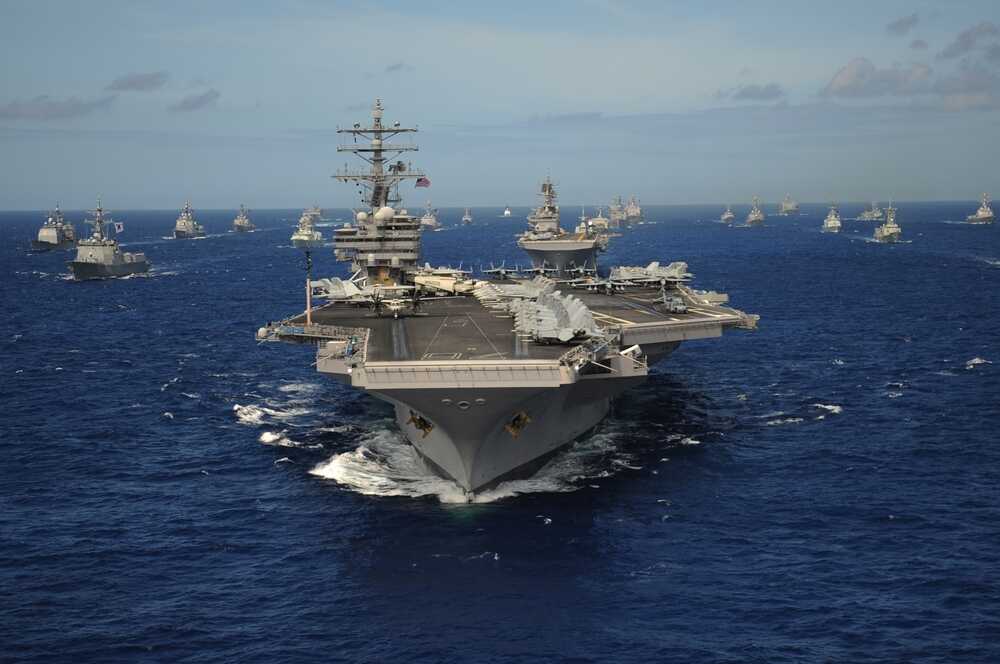
U.S. and Iranian narratives about what is happening on the water are diverging sharply. Reporting citing U.S. defense officials indicates American guided-missile destroyers have conducted freedom-of-navigation transits through the strait without incident. Iranian media, by contrast, has claimed U.S. ships were warned and turned back after being given a short window before an attack—an assertion U.S. officials dispute.
Why Hormuz Matters: Oil, Inflation, and Everyday Costs
The Strait of Hormuz is only about 21 miles wide at its narrowest point and handles around 20% of global oil flows, making it one of the world’s most sensitive economic pressure points. For American families, that geography translates quickly into real-world consequences: even a perceived risk of disruption can lift crude prices, which tends to ripple into gasoline, trucking, and the cost of goods. In an inflation-weary environment, Hormuz brinkmanship becomes a kitchen-table issue.
Competing Claims Highlight the Fog of “Information Warfare”
The immediate dispute—U.S. transits versus Iranian denials—underscores how modern standoffs often unfold in public messaging before they unfold in open combat. Iran benefits when it projects strength and uncertainty, because uncertainty can influence shipping behavior, insurance rates, and energy markets without Tehran having to fire a shot. The U.S. benefits when it demonstrates routine passage and operational control. With each side broadcasting confidence, outside observers are left sorting claims that are hard to verify in real time.
Ceasefire Fragility and the Risk of a Miscalculation Spiral
Reporting also describes a fragile regional ceasefire backdrop and broader post-2025 conflict dynamics that make threats in Hormuz more dangerous than rhetoric in a vacuum. When political leaders signal they will not extend or respect de-escalation arrangements, the margin for error shrinks. A single misread radar contact, drone incident, or proxy attack could force rapid decisions, especially when warships operate in tight waterways with heavy commercial traffic and limited reaction time.
Beyond Hormuz: Proxies and Multiple Chokepoints Could Raise the Pressure
One of the clearest strategic concerns raised in the research is that Tehran may not limit pressure to Hormuz. Expert analysis referenced in the reporting points to the possibility of Iran leveraging aligned forces—such as the Houthis—to threaten shipping near other global chokepoints like Bab al-Mandeb. That matters because it suggests a layered disruption strategy: if shipping routes face risk in more than one corridor, global trade and energy logistics have fewer safe, affordable alternatives.
BREAKING: An Iranian military advisor is threatening to sink U.S. ships patrolling the Strait of Hormuz during the ongoing blockade of Iranian ports. pic.twitter.com/DUmzWmP7QZ
— Fox News (@FoxNews) April 16, 2026
For the Trump administration and a GOP-controlled Congress, the policy challenge is balancing deterrence with discipline. Freedom of navigation is a core U.S. interest and a long-standing principle, but the economic blowback from escalation would also hit American consumers—especially if energy prices spike. The research provided does not confirm an attack, yet it does confirm heightened rhetoric and contested claims, which is often the exact mix that produces miscalculation if either side decides credibility requires action.
Sources:
Iran Military Adviser Threatens to Sink US Ships if Washington ‘Polices’ Hormuz
Iran news article on Hormuz tensions and disputed U.S. transit claims
Gate of Tears risk: Iran threatens major new global chokepoint as U.S. moves in Hormuz