

Virginia gun buyers are racing the clock before a July 1 law takes effect, and the sales spike is already exposing how quickly gun control can collide with reality.
Quick Take
- Virginia background checks surged ahead of the July 1 assault firearms ban, signaling a rush to buy before the deadline.[1][2]
- The new law bans buying, selling, transferring, importing, or manufacturing certain semi-automatic firearms and magazines over 15 rounds.[1][3]
- For most people, the measure does not criminalize mere possession, which makes it a forward-looking commerce restriction rather than a confiscation order.[1][3]
- At least 10 Commonwealth’s attorneys have said they will not enforce the law, raising serious questions about statewide consistency.[2][3]
Sales Surge Before the Deadline
Virginia is seeing a sharp rise in gun transactions as the state’s new assault firearms ban moves toward its July 1 start date.[1][2] Reporting from Virginia outlets says background checks more than doubled year over year in May, a classic sign of panic buying before a restriction goes live.[1][2] That rush tells readers something important: many Virginians are not waiting to see how the law works. They are buying now because they expect the rules to tighten fast.
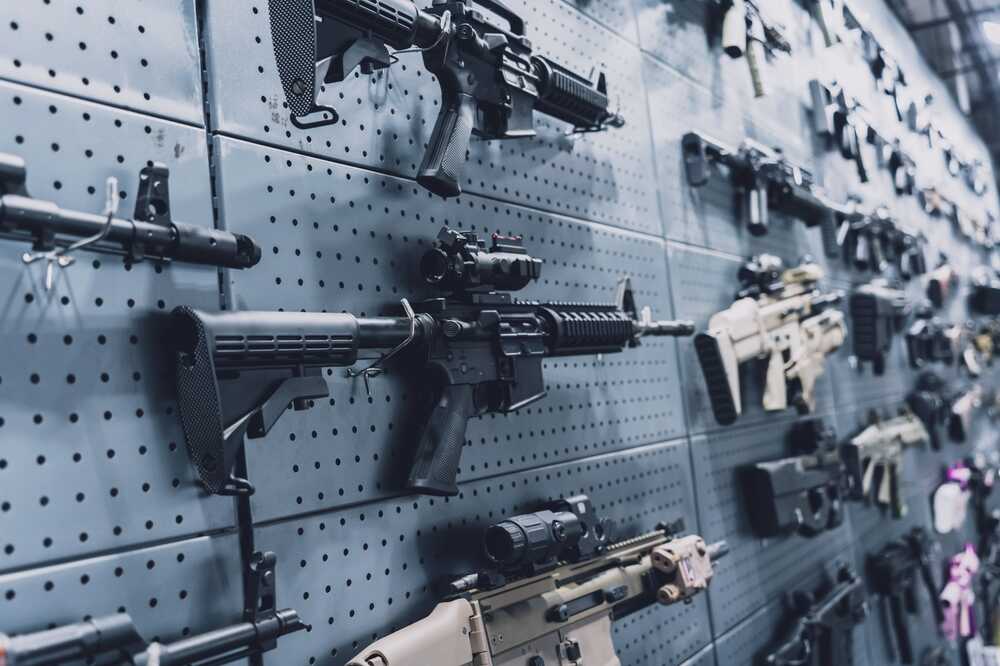
The reporting also shows how broad the market response has been. One store owner said the law would affect a large share of his inventory, while another expected the measure to touch most of what he sells.[2] That matters because the debate is not about a tiny niche of rare weapons. It is about common rifles, pistols, and magazines that ordinary gun owners and retailers say are widely sold in Virginia today.[2][3]
What the Law Actually Does
The new statute makes it a misdemeanor, punishable by up to a year in jail and a $2,500 fine, to buy, sell, transfer, import, or manufacture an “assault firearm” after July 1.[1] The law defines that category to include semi-automatic rifles or pistols with magazines over 15 rounds, along with certain other feature-based configurations.[1][3] It also applies to magazines capable of holding more than 15 rounds.[1][3] For most people, there is no penalty for merely possessing covered firearms.[1][3]
That structure is important because it shows the law is aimed at future commerce, not immediate confiscation.[1][3] Existing owners are generally grandfathered, and the available reporting says the measure does not order surrender.[3] Supporters can call that a measured approach. Critics can fairly point out that a policy that leaves current possession intact but blocks new sales may change the market more than it changes public safety in the short term.[1][3]
Enforcement Fight Is Already Underway
Even before the law begins, enforcement resistance is one of the biggest obstacles to its practical effect. Reporting says at least 10 Commonwealth’s attorneys have publicly declared they will not enforce the ban, and video coverage says several conservative prosecutors have said the same.[2][3] That gives the measure a serious credibility problem. A law that exists on paper but faces open refusal from local prosecutors can be portrayed as fragmented, uneven, and politically driven rather than uniformly applied.
Virginia gun sales spike ahead of July 1 assault weapons ban signed by Gov. Spanberger https://t.co/nDMRDgJNzd #FoxNews
— phx_reader (@ReaderPhx) June 6, 2026
Governor Abigail Spanberger defended the law with the argument that firearms “designed to inflict maximum casualties do not belong on our streets,” tying the measure to a public-safety rationale.[2][3] Supporters can also note that similar restrictions already exist in 11 other states and Washington, D.C., which makes Virginia’s move part of a broader policy pattern rather than an isolated experiment.[2][3] But the reporting in hand does not provide Virginia-specific outcome data proving the ban will reduce murders or mass shootings.[1][2][3]
Why the Debate Is So Sharp
The political divide here is easy to understand. Gun owners see a law that reaches common firearms, imposes criminal penalties on future purchases, and arrives alongside open non-enforcement by local prosecutors.[1][2][3] Supporters see an attempt to limit high-capacity weapons and slow future circulation of firearms they believe pose a public risk.[1][2][3] The problem for Virginians is that the evidence package is stronger on political messaging than on measurable results, leaving the public to judge a law that is contentious before it has even taken effect.[1][2][3]
Sources:
[1] Web – Virginia gun sales spike ahead of July 1 assault weapons ban signed by …
[2] Web – Virginia sees surge in gun sale background checks ahead of July 1 …
[3] Web – Virginia sees surge in gun sale background checks ahead of July 1 …