

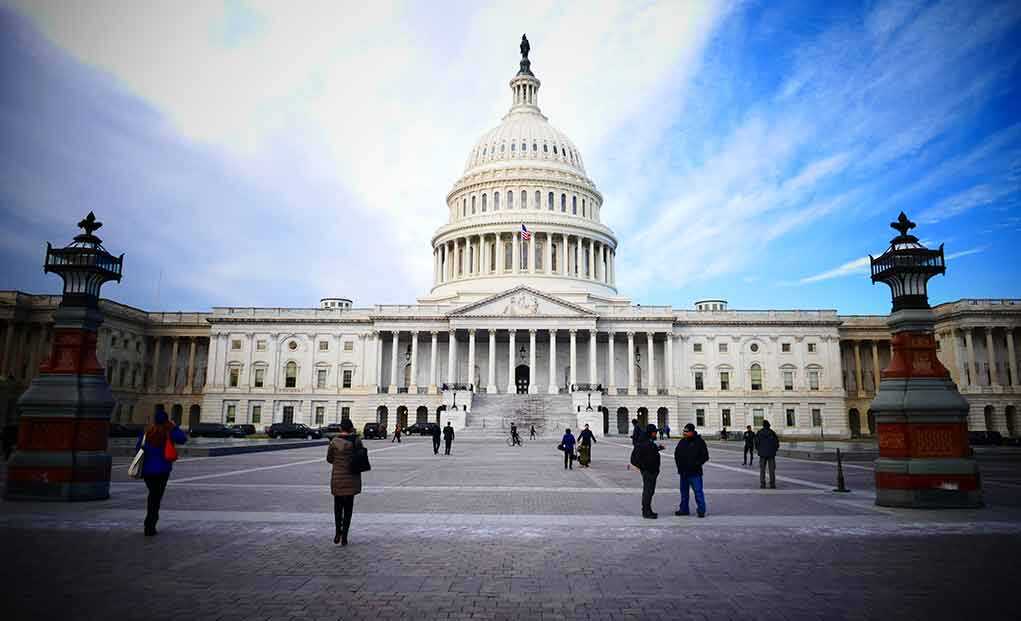
Members of Congress can hire staff with zero criminal screening or foreign tie checks, and Rep. Kat Cammack wants that loophole closed before America pays the price.
Story Snapshot
- Rep. Kat Cammack’s H.Res. 500 would force criminal background checks for every House employee, done by United States Capitol Police.
- Her plan also requires staff to disclose foreign ties, like dual citizenship or overseas financial interests, to protect Congress from hidden influence.
- Right now, only staff who need security clearances get checked, leaving thousands of workers in the Capitol with no vetting at all.
- Security experts warned after January 6 that this gap is dangerous, but the House has still not adopted universal checks.
Cammack’s Resolution: Basic Checks Congress Still Doesn’t Require
Representative Kat Cammack of Florida introduced House Resolution 500 in June 2025 to change House rules so that every employee must undergo a criminal background check by United States Capitol Police within 30 days of starting work or of a new Congress. The text says the Chief Administrative Officer must set up formal agreements with the police so these checks actually happen. Cammack has promoted the measure as “simple, common sense” security that Congress somehow still does not require for its own staff.
In public posts, Cammack has stressed that House staff today are not automatically screened for criminal history or foreign ties, even though they work around sensitive information and powerful lawmakers. She says H.Res. 500 would also force disclosures of all foreign ties, including dual citizenship and possible foreign influence, so that members and the public know who has access inside the Capitol. A local report on the resolution explains she wants both criminal checks and foreign influence disclosures for “all House employees,” not just a narrow group tied to intelligence work.
How Congress Currently Handles Staff Vetting
Under current practice, congressional staff only go through full background investigations if they need a security clearance to see classified information, usually for intelligence committees or special roles. A nonpartisan watchdog report notes that members themselves choose which staff require clearances, and those workers then complete detailed paperwork and briefings before accessing secret material. For the many staffers who never touch classified information, no formal criminal check is mandated, despite their daily access to lawmakers, offices, and internal systems.
The Federal Bureau of Investigation (FBI) has authority to investigate congressional employees only when they will access classified information or have a direct connection to matters under the control of the Departments of Justice or State. A Justice Department opinion makes clear the FBI cannot run broad checks on all congressional staff without new legislation that expands its authority and provides funding. This narrow power explains why most staffers, interns, and support workers can be hired by offices with no federal criminal background review, even though similar checks are standard for many private employers.
Warnings After January 6: Security Experts Say the Gap Is Dangerous
After the January 6, 2021 attack on the Capitol, the retired general leading a major security review urged lawmakers to require comprehensive background checks for all congressional personnel, not just those seeking clearances. He repeated that recommendation after another violent incident at the Capitol, arguing that everyone working there should be vetted and that the current rules are too weak. His comments highlighted a basic point: people who move freely through sensitive areas every day can pose serious risks if their past crimes or foreign ties are unknown.
Despite those warnings, the House has not adopted a universal screening rule, and background checks still focus only on staff tied to classified work. A Congressional Research Service report explains that elected officials like members of Congress are considered trustworthy by virtue of their constitutional role and therefore do not need clearances, but it also notes that staff must hold clearances to access classified information. That tradition may make sense for elected members, but it leaves a major blind spot when unelected employees, sometimes with little oversight, can walk the halls and handle daily operations with no mandatory vetting.
Conservative Stakes: Foreign Influence and Government Integrity
For conservative Americans worried about foreign money, foreign governments, and activist networks reaching into Washington, Cammack’s plan speaks directly to those fears. Her push for foreign influence disclosures aims to expose any staffer with dual citizenship, overseas financial interests, or other ties that could shape decisions inside the House. Supporters see this as a basic step to protect United States sovereignty and keep lawmakers focused on American citizens rather than foreign agendas or hidden pressure.
🚨🇺🇸 Believe it or not, there are NO background checks required for U.S. congressional staffers…
Florida Rep. Kat Cammack has put forth a bill (H. Res 500) to change just that.
It would require not only background checks, but full disclosure of dual citizenship and employment… pic.twitter.com/67dOEyojQM
— Mario Nawfal (@MarioNawfal) July 19, 2026
H.Res. 500 also ties into long-running conservative concerns about government integrity and double standards. Everyday Americans often face strict background checks to work at fast-food chains or local banks, yet some congressional staff can be hired with far less scrutiny while standing closer to the levers of power. Cammack’s resolution would narrow that gap by forcing the House to live under common-sense rules similar to those many private employers already use, without touching law-abiding citizens’ gun rights or everyday freedoms.
Sources:
twitchy.com, congress.gov, facebook.com, youtube.com, alachuachronicle.com, congressdocket.vercel.app, en.wikipedia.org