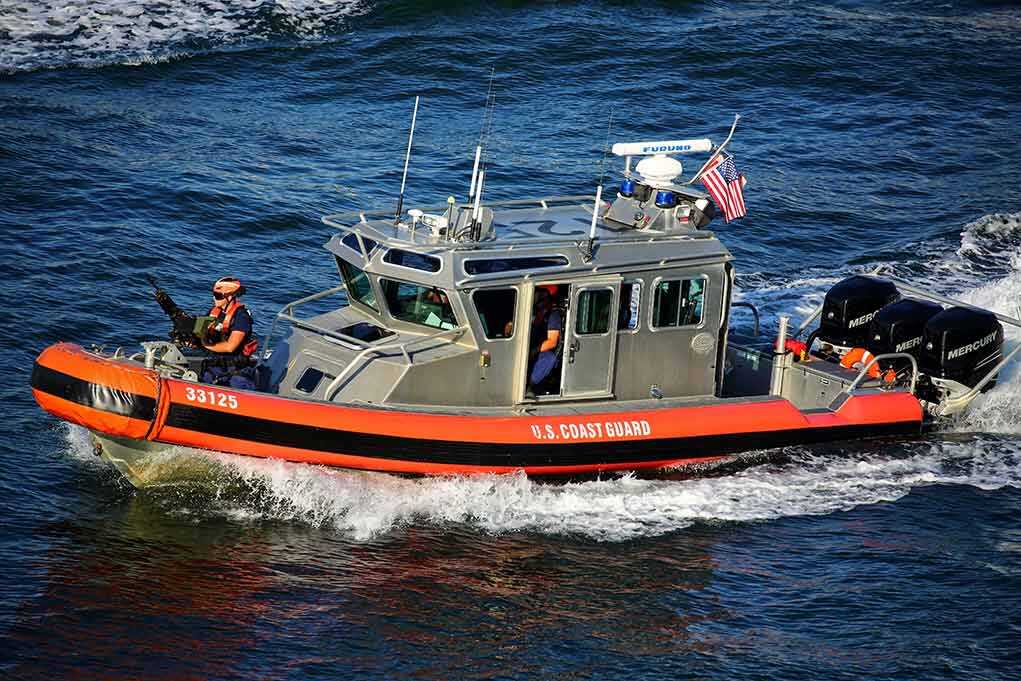
A 15-year-old Alaskan boy was found alive on a capsized fishing skiff in the frigid Bering Sea after days adrift, while his brother and cousin were recovered dead.
Story Highlights
- U.S. Coast Guard aircrew spotted the teen clinging to an overturned 18-foot skiff near St. Lawrence Island.
- Rescuers reported hypothermia symptoms; a nearby vessel finished the recovery.
- Two relatives were found unresponsive and later declared dead, authorities said.
- The crew of the motor vessel Northwest Explorer directly assisted the rescue.
Rescue Near Remote St. Lawrence Island
U.S. Coast Guard crews located the missing boat Monday afternoon near Alaska’s St. Lawrence Island, a remote area in the Bering Sea. An HC-130 Hercules aircrew saw the teen on the overturned 18-foot fishing skiff around 3 p.m. and dropped a raft and survival gear. The service coordinated with nearby vessels to complete the rescue and recovery. The location is known for fast-changing weather, cold water, and long response times that turn minutes into the difference between life and death.
The Coast Guard said the survivor showed signs of hypothermia when recovered. The motor vessel Northwest Explorer responded and brought the teen aboard after the aircrew deployed equipment and marked the site. Officials said two other boaters, identified in reports as the boy’s brother and cousin, were recovered from the water unresponsive and later confirmed dead. Authorities did not immediately release names. The group had left St. Lawrence Island on Friday and failed to return as expected on Sunday.
Timeline From Departure To Discovery
Family members and responders helped focus the search after the trio missed their planned return. The Coast Guard launched air and surface searches across a wide area off St. Lawrence Island. Multiple outlets report the skiff departed Friday and was due back early Sunday, but it was not. That delay triggered the rescue effort that found the teen days later. Public reporting does not include a complete minute-by-minute timeline, which is common early in marine cases.
Officials described a coordinated operation that relied on air spotting and partner vessels. Rear Adm. Bob Little credited the Northwest Explorer for directly assisting after the HC-130 sighting. The shared effort shows how often private mariners, local communities, and federal crews work together in Alaska’s far reaches. In such waters, staying with the vessel and being visible to aircraft often raises the chance of survival for those still able to hold on.
Cold Water Survival Realities In The Bering Sea
Cold exposure drives outcomes in the Bering Sea. Survival tables show that near-freezing water can render a person unconscious within minutes and limit overall survival to under two hours without protection. The teen’s survival while clinging to the hull, rather than floating alone in open water, likely helped him avoid longer immersion and conserve heat until spotted. Crews across past Bering Sea rescues have seen hypothermia as the defining threat in nearly every case.
This rescue underscores the value of rapid reporting, air search, and cooperation at sea. It also shows the hard truth of remote geography, where even strong responses can come too late for some. President Trump’s administration continues to back robust maritime search-and-rescue capacity, but distance and climate still impose steep odds. Here, the system worked as designed: family alerted authorities, aircrews found the survivor, and nearby mariners helped bring him home alive.
Sources:
apnews.com, theguardian.com, adn.com, cbc.ca, wesh.com, instagram.com, apps.dtic.mil