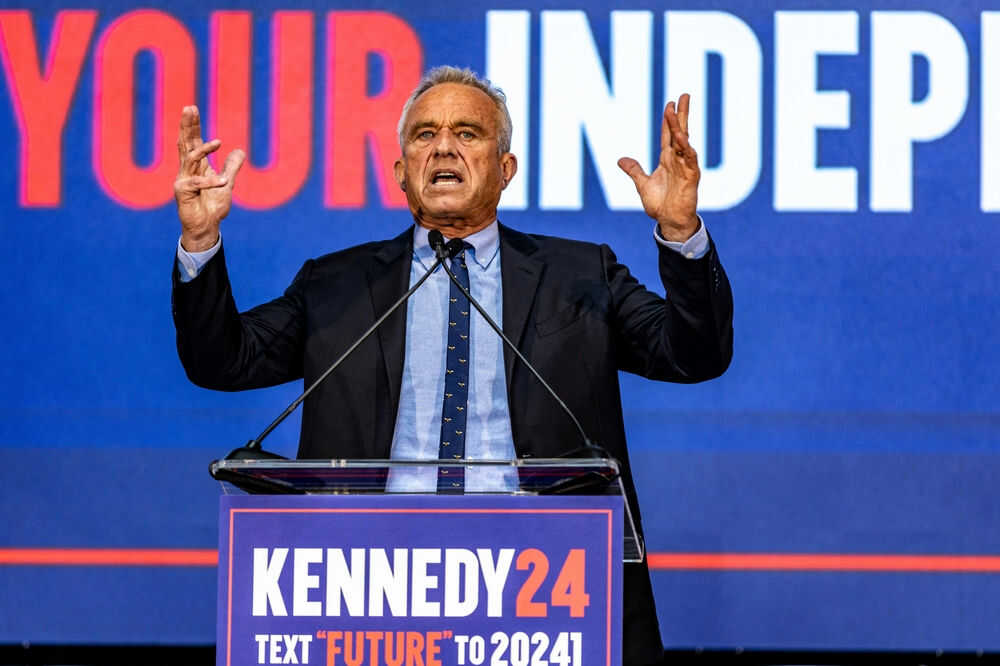
A former top Centers for Disease Control and Prevention doctor says Robert F. Kennedy Jr. turned America’s lead health agency into “pure chaos” by sidelining science and demanding political loyalty.
Story Snapshot
- Former chief medical officer Debra Houry says CDC leaders were reduced to “rubber stamps” backing policies not based on science.
- Houry and other officials describe canceled flu vaccine campaigns and shaken-up vaccine panels during record measles outbreaks.
- Kennedy insists he is cleaning up “politicized science,” while critics say he is replacing expertise with ideology.
- The fight over the CDC shows how easily unelected health bureaucrats can be steered by whoever controls Washington.
Top CDC doctor says science was pushed aside
Former Centers for Disease Control and Prevention chief medical officer Debra Houry told senators she quit because agency leaders were turned into “rubber stamps” for Health and Human Services Secretary Robert F. Kennedy Jr.’s agenda, backing policies “not based in science” and “putting American lives at risk.” Houry said Kennedy “censored CDC science, politicized its processes and stripped leaders of independence,” and that she “could not in good conscience remain under those conditions.” For readers who remember the COVID years, the pattern feels familiar: political power leaning on “the science” to get the answers it wants, instead of letting facts drive decisions.
Houry also testified that under Kennedy, all 17 voting members of the Advisory Committee on Immunization Practices, the committee that sets vaccine recommendations, “were replaced with critics.” That panel has huge influence over which shots are pushed in schools and doctor’s offices. Houry’s charge is not that reforms happened, but that the replacements were chosen for ideology instead of expertise. In her view, this was less about cleaning up conflicts and more about stacking the deck, leaving families to wonder who they can trust when guidance changes overnight.
“Pure chaos,” canceled flu campaigns, and record measles
Houry and other former officials describe life inside the agency as “pure chaos” once Kennedy took over vaccine and outbreak policy. She said the secretary halted flu vaccine campaigns even as his own department warned of rising respiratory illness, and she accused him of spreading “misinformation” and promoting “unproven treatments” during the worst measles numbers in 30 years. Former CDC director Susan Monarez told senators she was fired after refusing to preapprove vaccine recommendations “regardless of the scientific evidence,” a claim Kennedy flatly denies, calling her “untruthful.” That sharp conflict under oath is exactly why many Americans on both sides now doubt federal health messaging.
Houry’s concerns did not end with her resignation. In a later essay looking back 100 days after leaving, she warned that the situation had worsened, saying the CDC was being reshaped “away from evidence-based practice and toward ideology-driven governance.” She pointed to a wave of political hires in top posts and a shift in the agency’s public website toward hot-button issues like immigration and gender, instead of detailed data. Whether readers see those content changes as overdue honesty or ideological posturing, they show how easily a powerful bureaucracy can be steered by the people in charge, with very little say from the voters who fund it.
Kennedy says he is fixing a broken agency
Kennedy and his allies push a very different story. In a Wall Street Journal opinion piece, he argued that “politicized science had corroded” the Centers for Disease Control and Prevention and “squandered public trust,” and claimed his “shakeups” were “absolutely necessary” to remove “persistent conflicts of interest” on vaccine panels. A Health and Human Services press statement framed his moves as “restoring the CDC to its core mission of combating infectious disease by eliminating mission creep and replacing leaders resistant to reform.” To many conservatives, that language about mission creep and corruption rings true, after years of watching the agency weigh in on guns, “gender identity,” and other cultural fights.
The problem is that Kennedy has not yet produced detailed, public evidence naming which former vaccine advisers had financial conflicts, how those conflicts tainted prior decisions, or why each removal was necessary. Outside experts, including some who strongly opposed heavy-handed pandemic rules, have criticized the clean sweep of all 17 vaccine advisers as “reckless” and not backed by clear proof of wrongdoing. That leaves many on the right in a tough spot. They want deep reform at the CDC, but they also remember how quickly “trust the experts” was used to crush debate last time. Real accountability means more than swapping one set of unquestioned authorities for another.
A long pattern of politicized public health
Historians say these fights over the Centers for Disease Control and Prevention are part of a pattern going back decades, under both parties. When scientific findings around topics like AIDS, abortion, gun violence, opioids, and COVID-19 clash with political goals, science “too often loses.” During the first Trump term, four former CDC directors publicly warned that the agency’s voice had been “muted for political reasons,” and its guidance sidelined. Today, critics argue that Kennedy is repeating the same mistake from a different direction: letting his long-standing skepticism of vaccines drive decisions instead of transparent, testable evidence.
❗Some say revising the #ACIP charter is a clear move by #RFK Jr. to sidestep a federal ruling that halted the overhaul of the #CDC childhood immunization schedule. Read here ⬇️https://t.co/AZv1X2JGoS
— Infectious Disease News (@InfectDisNews) July 2, 2026
For conservative readers, the deeper lesson goes beyond Kennedy or Houry. The Centers for Disease Control and Prevention holds huge power over schools, businesses, and even churches during emergencies, but its leaders are not elected. When any administration, left or right, can lean on that power to push its own agenda, the risk to liberty is obvious. Structural ideas like fixed terms for CDC leaders, stronger firewalls between political appointees and scientific recommendations, and full public release of key data would help protect both health and freedom. Until Congress builds those guardrails, Americans will keep watching the same movie: a powerful agency, a new political boss, and another round of chaos that leaves families confused about whom to believe when it matters most.
Sources:
cbsnews.com, x.com, instagram.com, politico.com, linkedin.com, nytimes.com, youtube.com, hhs.gov, rochester.edu, ourpublicservice.org, pbs.org