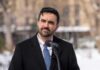
The mysterious death of Andrei Badalov, a seasoned oil executive, has intensified scrutiny over a chilling pattern of elite fatalities linked to Russia’s energy sector.
At a Glance
- Andrei Badalov, Vice‑President of Transneft, fell to his death from his Moscow apartment on July 4, 2025.
- His death marks at least the 12th unexplained fatality among high‑profile Russian executives since early 2022.
- Official reports call it suicide, citing a farewell letter, but ongoing investigations persist.
- Similar deaths include Ravil Maganov of Lukoil in 2022 and Marina Yankina in 2023.
- Critics suggest these fatalities may be linked to Kremlin purges, internal rivalries, or intelligence service pressure.
A Grisly Pattern Emerges
On July 4, Andrei Badalov, aged 62 and Vice-President of Transneft, reportedly fell from a window of his Rublyovka apartment outside Moscow, plunging 180 feet to his death. Officials quickly labeled the incident a suicide, citing a note left for his wife, but Russian authorities continue to investigate. Badalov is now the 12th high-ranking Russian executive to die under suspicious circumstances since the Ukraine invasion began in 2022, as catalogued in public records of suspicious deaths.
Watch a report: Russia’s Wave Of Falling Tycoons.
Suicides, Competition—or Kremlin Tactics?
Independent analysts are raising alarms. According to Ivan Stupak, a Ukrainian intelligence veteran, the FSB and other Russian agencies often use implicit threats: comply, or suffer the consequences. Others suggest rival factions within Russia’s massive energy sector may be leveraging violence to resolve boardroom conflicts. A report in The Economic Times highlighted that many of these deaths—Maganov in 2022, Yankina in 2023, Rogachev in 2024—all involve implausible “falls” from windows or balconies.
Even in the absence of definitive proof, the clustering of these fatalities around key state-linked enterprises fuels suspicions of systematic purging. These incidents often follow public dissent, internal power shifts, or sanctions-related stress on company performance.
High Stakes and Hollow Explanations
Transneft, where Badalov led digital transformation efforts since 2021, confirmed his death but issued no details. The company merely acknowledged his role “during a difficult and stressful period.” The Times of London noted the suspicious consistency in official narratives, with most cases labeled suicides despite the presence of conflicting indicators.
Analysts argue Russia’s urban architecture—dominated by high-rise residences—provides an effective cover for state-engineered defenestrations. As the body count grows, each new fall stretches the limits of plausibility.
The Economic Times offered a chilling summary: “So many oligarchs are dying out of windows … critics suspect a Kremlin crackdown.” With each plunge, the message becomes clearer—falling out of favor in Russia is more than a metaphor.