

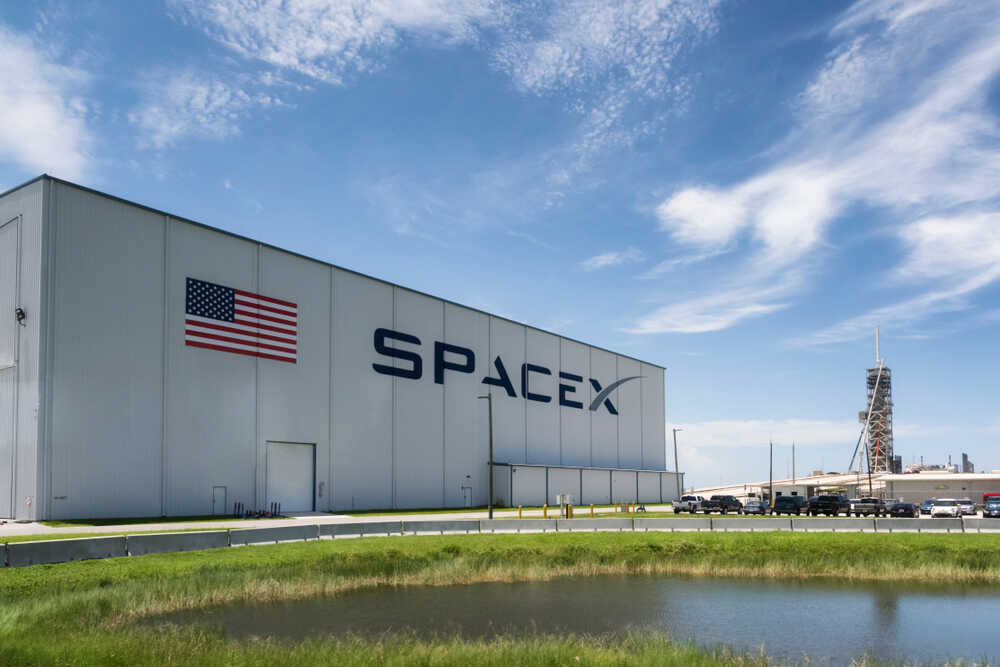
Elon Musk’s planned SpaceX initial public offering could trigger massive dilution for Tesla shareholders, sparking concerns among investors about what some analysts call a potentially devastating wealth transfer between the billionaire’s companies.
Story Snapshot
- SpaceX filed confidential SEC documents for a potential $75 billion IPO at $1.75 trillion valuation, possibly the largest in history
- Tesla investors face potential dilution risks if a long-speculated merger occurs at mismatched valuations between the two companies
- Musk denied reports of exclusive retail IPO access, while speculation grows about inevitable integration of his “three X’s” ecosystem
- Growing commercial ties show Tesla supplying chips, solar technology, and AI compute resources to SpaceX satellite operations
SpaceX IPO Plans Raise Investor Alarms
SpaceX filed confidential S-1 documents with the Securities and Exchange Commission in early 2026, targeting approximately $75 billion in capital at a $1.75 trillion company valuation. The filing represents what could become the largest initial public offering in history, dwarfing previous records. Musk publicly disputed reports claiming Morgan Stanley’s E-Trade platform would receive exclusive retail allocation rights, denying assertions that competitors like Robinhood and SoFi would be excluded from the offering. The confidential nature of the filing leaves key details undisclosed, including the extent of government contracts with NASA and the Department of Defense.
Merger Speculation Threatens Tesla Shareholder Value
Market analysts warn that a potential SpaceX-Tesla merger could devastate existing Tesla shareholders if executed at current valuations. Mathematical scenarios illustrate the dilution problem: if SpaceX merges into Tesla at equal $1.5 trillion valuations, existing Tesla shareholders could face a 50 percent reduction in their ownership stakes. Musk described such a merger as “inevitable over the long term,” citing growing synergies between the companies’ artificial intelligence and space operations. The timing remains critical—analysts suggest Tesla shareholders benefit only if Tesla’s valuation reaches $3 trillion before SpaceX hits $1.5 trillion, an increasingly unlikely scenario given SpaceX’s rapid private market appreciation to over $350 billion in 2024 tender offers.
Commercial Dependencies Create Integration Pathway
Tesla has positioned itself as a primary supplier to SpaceX’s ambitious satellite constellation plans, creating commercial interdependencies that fuel merger speculation. The electric vehicle manufacturer supplies Dojo AI chips, solar technology, and computational resources for SpaceX’s planned network of one million AI-enabled satellites. Additionally, Tesla’s Optimus humanoid robot development connects to SpaceX operations through Grok artificial intelligence oversight systems. These cross-company transactions extend beyond SpaceX to include Musk’s other ventures, xAI and X (formerly Twitter), forming what analysts call the “three X’s” ecosystem. This integration strategy mirrors Musk’s 2022 Twitter acquisition, which blurred operational lines between his corporate holdings and raised questions about conflicts of interest.
Short-Term Pain Versus Long-Term Gains
Financial analysts predict Tesla stock could experience significant volatility as retail investors potentially sell shares to participate in the SpaceX IPO. YouTube financial commentators analyzing the situation warn of near-term downward pressure on Tesla’s share price, driven by investor rotation rather than fundamental business weakness. However, long-term projections suggest a combined entity could reach valuations exceeding $3 trillion if synergies materialize as promised. The uncertainty reveals a fundamental tension in Musk’s corporate strategy—prioritizing visionary integration over short-term shareholder returns. This approach concerns investors who have watched Tesla’s robotaxi and Optimus robot initiatives face repeated delays while capital flows toward SpaceX’s space ambitions.
The lack of transparency in SpaceX’s confidential SEC filing amplifies investor concerns about government contract dependencies and revenue sources. Critics note similarities to other private companies that avoided public scrutiny by delaying IPOs, raising questions about what financial details Musk’s team may be concealing. For everyday investors, the situation exemplifies how billionaire executives can restructure corporate empires in ways that potentially disadvantage existing shareholders while consolidating personal control. Whether this represents strategic genius or shareholder exploitation remains hotly debated, but the mathematics of potential dilution present undeniable risks that individual investors must weigh carefully before maintaining or increasing Tesla positions.