

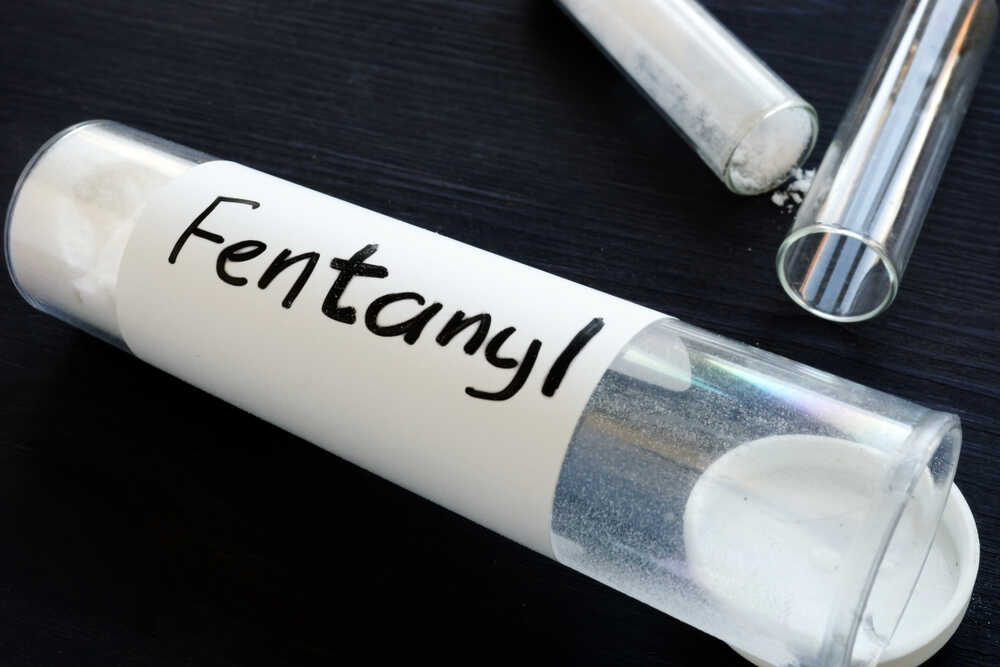
Federal officials say they’ve seized 12,700 pounds of fentanyl since Trump returned to office—an attention-grabbing number that raises a harder question: does “more seized” mean Americans are safer, or that traffickers are still finding ways in?
Story Snapshot
- DHS says CBP seized more than 12,700 pounds of fentanyl from January 2025 through April 29, 2026, a statistic promoted on National Fentanyl Awareness Day.
- Monthly and annual context matters: independent trend reporting shows seizures peaked in FY 2023, then fell sharply into early 2025 before rising again in early 2026.
- Multiple sources agree most fentanyl is intercepted at ports of entry, not between them, shaping what “border security” actually means in practice.
- Eye-popping “billions of lethal doses” claims are based on simplified assumptions and aren’t a direct measure of lives saved.
What DHS says was seized since January 2025
Department of Homeland Security messaging tied to National Fentanyl Awareness Day (April 29, 2026) credits U.S. Customs and Border Protection with seizing more than 12,700 pounds of fentanyl since President Trump took office in January 2025. Conservative outlets have amplified that cumulative figure—12,743 pounds—casting it as proof that tougher border enforcement is working. The data point is significant, but it is only one metric in a fast-adapting smuggling environment.
The seizures themselves represent real interdiction and, at minimum, real product kept out of circulation. Yet the same talking points often attach dramatic fatality math—sometimes framed as “billions of potential deaths”—without clarifying that overdose lethality depends on purity, how the drug is diluted into counterfeit pills, and who is exposed. Pounds seized can indicate effective enforcement, but it can also reflect higher attempted volumes, better detection, or shifting tactics.
Why the ports-of-entry detail changes the policy debate
It emphasizes that fentanyl is primarily seized at ports of entry, not between them, which complicates how Americans should evaluate border-policy claims. If smuggling concentrates in commercial lanes—cars, trucks, and cargo—then enforcement is less about wide-open desert crossings and more about inspections, scanning technology, personnel, and targeted investigations. That matters politically because both parties often argue past each other: one side focuses on illegal crossings, while the other points to trade corridors.
The American Immigration Council’s fact sheet also highlights that Border Patrol seizures stayed relatively stable month to month while larger swings occurred at ports of entry. That pattern suggests traffickers can adjust routes and concealment methods without necessarily changing overall crossing flows. Conservatives who prioritize limited but effective government may see an argument for concentrating resources where most fentanyl is actually found, while still demanding accountability for operational outcomes rather than slogans.
The trend line: record highs before Trump, then a drop, then a rebound
Historical context is essential because the “since January 2025” window begins after a major peak. The American Immigration Council reports CBP fentanyl seizures rose from under 100 pounds in FY 2015 to a high of 27,023 pounds in FY 2023, then fell sharply into early 2025, including a low monthly total of about 760 pounds by March 2025. That decline does not automatically validate or refute any administration’s policy, but it shows the baseline was already changing.
USAFacts adds near-term granularity: March 2026 alone saw 613 pounds seized, and January–March 2026 totaled 2,900 pounds, reported as a 19% increase from the same period in 2025. That uptick supports the view that trafficking pressure remained substantial into 2026, even if the country was no longer at the FY 2023 record peak. For voters, the practical takeaway is that enforcement success should be judged by sustained trends, not isolated totals.
What the numbers can—and can’t—prove about “Trump’s border effect”
Two things can be true at once: aggressive enforcement can improve interdiction, and drug-market dynamics can shift for reasons unrelated to who occupies the White House. The research provided does not include an official CBP dashboard link or a fully neutral verification of the exact 12,743-pound cumulative total, though it is repeated consistently in aligned reports and partially aligns with early-2026 monthly figures. The strongest, most defensible conclusion is narrower: CBP is publicizing large seizures and continued activity.
Under Trump, U.S. Customs Stopped 12,700 Pounds of Deadly Fentanylhttps://t.co/6ZaOpJSROb
— PJ Media (@PJMedia_com) April 30, 2026
Politically, the fentanyl crisis remains a stress test for public trust. Conservatives see the human cost of overdoses and want order at the border, while many liberals argue enforcement-first approaches miss treatment and root causes. The shared frustration—left and right—is that Washington often promotes headline-friendly metrics while families bury loved ones. If Republicans control Congress and the White House, the burden is on the governing party to show measurable results: disruption of networks, smarter port security, and transparent reporting the public can audit.
Sources:
Under Trump, U.S. Customs Stopped 12,700 Pounds of Deadly Fentanyl
How much fentanyl is seized at US borders?
Fact sheet: Fentanyl smuggling