
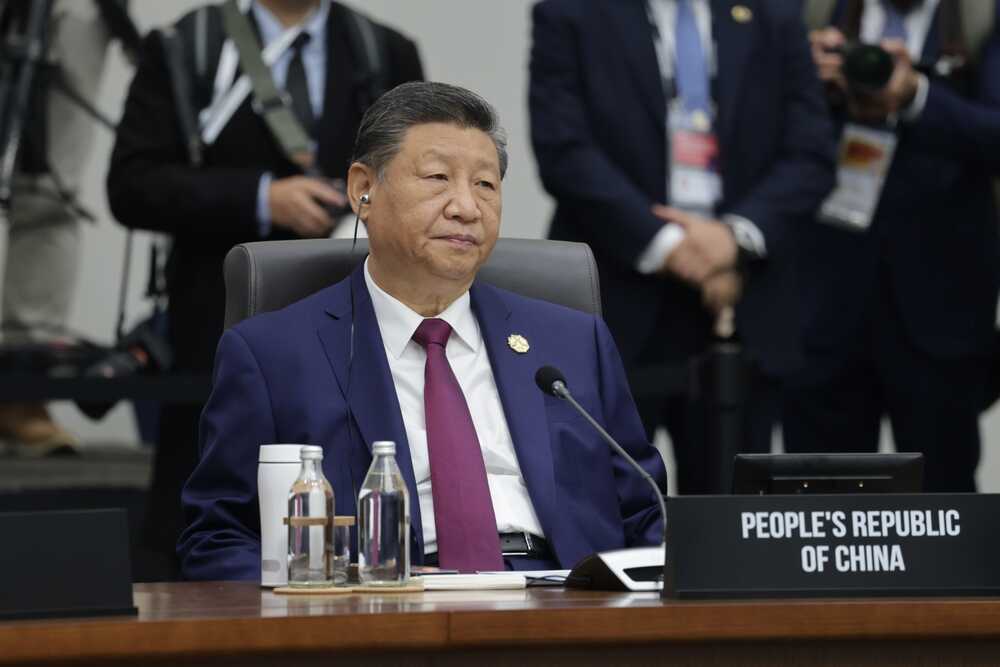
China’s latest promotions show Xi Jinping tightening his grip on a hollowed‑out military leadership while gearing up for future clashes with the free world.
Story Snapshot
- China promoted two new full generals after a massive purge gutted top military ranks.
- Xi Jinping’s anti-corruption drive has prosecuted millions and wiped out key military factions.
- The Central Military Commission is down to Xi and one other active member, raising stability questions.
- Analysts say the campaign is as much about political loyalty and power as it is about corruption.
Xi Promotes Two New Generals After Gutting the Top Brass
China’s state media announced that Xi Jinping promoted Zhang Shuguang and People’s Liberation Army Air Force commander Wang Gang to the rank of full general at a ceremony in Beijing. These promotions come right after a sweeping purge that removed many top commanders in the name of fighting corruption. The long-running drive has hit the military especially hard, with recent actions seen as a step toward a wider reshuffle of China’s war-fighting leadership.The two new generals are viewed as contenders to fill empty seats on the seven-member Central Military Commission, the body that commands China’s armed forces. That commission has been effectively reduced to Xi himself and Vice Chairman Zhang Shengmin after multiple senior leaders were investigated or removed. Experts say this gives Xi a cleaner slate to pick loyal future leaders but also shows how deeply he has cut into the existing command network.
A Purge on a Scale Not Seen Since Mao-Era Political Campaigns
Xi’s anti-corruption campaign began shortly after he took power and has become the most extensive effort of its kind in Communist Party history. Research tracking the campaign shows nearly 1,500 senior figures caught up in investigations across government and the military, with many once thought untouchable. As of 2023, about 2.3 million officials had been prosecuted for violations of discipline and law, a number that points to a deep, ongoing shake-up of China’s ruling system rather than a short, targeted clean-up.Observers note the military has been hit especially hard, with more than half of senior roles affected. A think tank assessment found at least 36 generals and lieutenant generals purged since 2022, with dozens more missing or believed sidelined. In late 2025, nine high-ranking generals were accused of crimes involving “exceptionally large amounts of money” and “extremely serious” conduct. Xi has also removed commanders in critical areas like the Rocket Force, which runs China’s missile and nuclear forces, and the Equipment Development Department that handles weapons procurement.
Corruption Clean-Up or Power Grab? What Analysts See
Officially, Beijing says the campaign aims to stamp out graft, strengthen institutions, and build a more merit-based system inside the party and the People’s Liberation Army. Supporters inside China’s elite argue that removing corrupt officers should improve readiness, especially after seeing how corruption hurt Russia’s military in Ukraine. Some party voices describe broad agreement that the campaign is needed to fix deep problems and to stop factional infighting that could threaten regime survival.However, many outside analysts see a different story. Academic studies of authoritarian regimes show that anti-corruption drives often intensify when growth slows or political risks rise, and they tend to spare clients of the leader while hitting rivals harder. In this light, Xi’s purge looks like a tool to centralize power, weaken alternative networks, and ensure absolute loyalty in a force he may use against Taiwan or U.S. allies. Critics say that without public case files or open trials for the purged generals, it is impossible to separate genuine graft from political targeting.
A Hollowed Command Structure and Rising Risk for the West
Xi’s crackdown has dramatically thinned the visible top ranks of the People’s Liberation Army. Commentators note that only a handful of full generals remain active, and the Central Military Commission has been hollowed out to just Xi and one other member. Recent probes even hit General Zhang Youxia, one of Xi’s closest military allies, and General Liu Zhenli, the chief of the Joint Staff Department. Their removal suggests that no senior officer is safe if Xi doubts their loyalty or usefulness to his plans.
Xi continues to rebuild China's military leadership and apparently takes 'risk'
BEIJING/CHINA: China's President Xi Jinping has promoted two officers to the rank of general and thus continued the restructuring of his military leadership. According to state media reports, they… pic.twitter.com/1hgvjbYyYk
— LiberlandPress (@PressLiberland) July 3, 2026
For American readers, this matters because it shapes how China might act toward Taiwan, U.S. bases in the Pacific, and allies like Japan and the Philippines. A military that fears internal purges may hesitate in the short term, but over time it can become more obedient to risky orders from the top. With Xi calling openly for stronger “political loyalty” in the military and pushing rapid modernization, U.S. leaders must assume that future Chinese commanders will be chosen first for devotion to Xi’s line, not for independent judgment. That raises the stakes for our own readiness, alliances, and defense of constitutional government against authoritarian pressure abroad.
Sources:
military.com, timesofindia.indiatimes.com, npr.org, youtube.com, reuters.com, facebook.com, reddit.com, etd.ceu.edu, jurist.org