

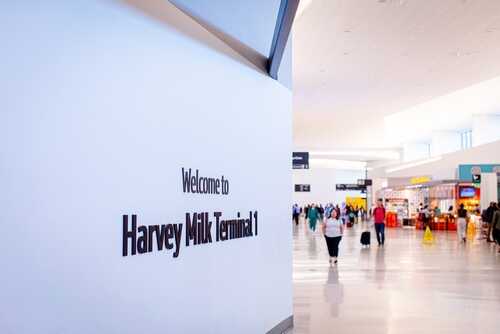
The recent top honor for San Francisco International Airport’s Harvey Milk Terminal 1 from the UNESCO Prix Versailles awards has put a global spotlight on the facility’s architectural and sustainable design excellence. However, this multi-billion-dollar redevelopment, celebrated as the first terminal globally named after an LGBTQ+ leader, has simultaneously ignited a contentious public debate surrounding financial prudence, infrastructure priorities, and the role of identity in major civic projects.
Story Highlights
- Harvey Milk Terminal 1 at SFO wins UNESCO Prix Versailles award.
- The terminal is the first globally named after an LGBTQ+ leader.
- Significant energy reductions achieved, but at what cost?
- Raises discussions on public spending and infrastructure priorities.
San Francisco Airport Terminal’s Global Recognition
In December 2025, San Francisco International Airport’s (SFO) Harvey Milk Terminal 1 was awarded the top honor in UNESCO’s Prix Versailles awards. This achievement recognizes the terminal’s architectural and interior design excellence. As the first airport terminal named after an LGBTQ+ leader, it stands as a cultural symbol, yet raises pertinent questions about public spending priorities and the role of identity in infrastructure projects.
The terminal’s design focuses on sustainability, achieving a 59% reduction in energy use compared to previous operations. This aligns with San Francisco’s progressive environmental goals but has sparked debate on financial prudence. The multi-billion-dollar redevelopment, completed in June 2024, expanded the terminal’s capacity and modernized its facilities, aiming for a balance between aesthetic achievement and environmental responsibility.
Congratulations to Harvey Milk Terminal 1 for winning the top spot on the World’s Most Beautiful Airports list. San Franciscans and travelers know that SFO is the best airport in the world.👏👏https://t.co/HvalMlTMDs
— Daniel Lurie 丹尼爾·羅偉 (@DanielLurie) December 10, 2025
Implications for Infrastructure Priorities
While the architectural feat and energy savings are commendable, the project underscores broader concerns regarding prioritization in public infrastructure. Critics argue that the focus on identity politics and high-cost aesthetic improvements may overshadow more pressing infrastructure needs, such as road repairs and affordable housing. The use of public funds for such symbolic gestures continues to be a contentious issue among conservative groups.
Despite this, the terminal’s completion has increased SFO’s passenger capacity from 10 million to 17 million annually, serving major airlines like Alaska Airlines and Delta. The facility’s advanced design is intended to enhance the passenger experience, but it also exemplifies how design choices reflect wider societal values and political statements.
Balancing Recognition and Responsibility
The recognition from UNESCO places SFO in the global spotlight, promoting sustainable airport design practices. However, it also highlights the need for a balanced approach to public projects, ensuring taxpayer money addresses fundamental civic needs while achieving excellence. As the discussion continues, the project serves as a case study in navigating the intersections of design, identity, and public accountability.
Ultimately, the Harvey Milk Terminal 1 project signifies a transformative moment in airport design. Yet, it is essential to scrutinize the impacts of such endeavors on broader public policy and fiscal responsibility, ensuring that future infrastructure projects prioritize functionality and inclusivity without compromising essential services.
Watch: The World’s Most Beautiful Airport (in the Himalayas)
Sources:
This U.S. Airport Just Won the Title of World’s Most Beautiful—and It’s More Than Just Pretty
The World’s Most Beautiful Airport Isn’t in Singapore or China — It’s Actually in the U.S.
SFO Harvey B. Milk International Terminal – AIASF