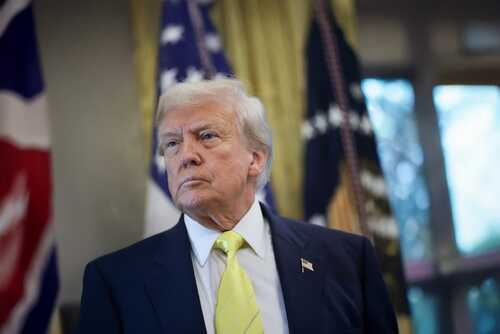
Donald Trump’s 2025 National Security Strategy marks a significant shift in U.S. policy, formally declaring border security as the primary element of national defense and asserting that the “era of mass migration must end.” The blueprint redefines the Western Hemisphere as a “Homeland Security Zone” to counter strategic rivals and aggressively pushes back on Chinese influence across Latin America. Furthermore, the strategy calls for a fundamental rebalancing of trade with China to revive U.S. industry and strengthen sovereignty, treating economic policy as an integral part of national security.
Story Snapshot
- Trump’s 2025 National Security Strategy makes border security the primary element of U.S. national security.
- The document declares “the era of mass migration must end,” tying illegal immigration to crime, social strain, and weakened sovereignty.
- The Western Hemisphere is redefined as a “Homeland Security Zone,” pushing back on Chinese influence in Latin America.
- The strategy seeks to rebalance decades of lopsided trade with China while strengthening U.S. allies and industry.
Border Security Elevated to Core National Defense
Trump’s 2025 National Security Strategy marks a decisive break from the Biden years by formally declaring border security the primary element of national security, not an afterthought folded into domestic policy debates. The document states that the era of mass migration must end and argues that uncontrolled flows across the southern border have strained public services, fueled criminal networks, distorted labor markets, and undermined social cohesion. For conservatives who watched prior administrations ignore border chaos, this blueprint reads like long-awaited recognition.
The strategy frames illegal immigration as a master threat that touches nearly every arena that concerns patriots care about: crime, drugs, cultural stability, and the fiscal burden on taxpayers. It explicitly rejects the idea that simply making mass migration “orderly” is good enough, insisting that sovereign nations have a duty to stop rather than facilitate destabilizing flows. That repositioning gives constitutionalists a clear argument that protecting the border is as fundamental as defending against foreign armies or terrorists.
Trump national security blueprint declares ‘era of mass migration is over,' targets China’s rise https://t.co/LpXniJGhmg
— Fox News Politics (@foxnewspolitics) December 5, 2025
Homeland Security Zone and the New Hemispheric Doctrine
The blueprint goes further by redefining the entire Western Hemisphere as part of America’s Homeland Security Zone, echoing and updating the old Monroe Doctrine for a new era. Stability, alignment, and infrastructure control in nearby states are treated as direct national defense issues, not just diplomatic niceties. That means ports, energy grids, telecom networks, and shipping lanes from the Caribbean to Latin America are now viewed through the lens of protecting the U.S. homeland from strategic encroachment.
To back up this doctrine, the strategy calls for shifting U.S. force posture toward the hemisphere, including more Navy and Coast Guard presence in the Caribbean, Gulf of Mexico, and Eastern Pacific. Those assets are tasked with interdicting unwanted migration, choking off cartel supply routes, and safeguarding critical sea lanes in any regional crisis. The document even envisions targeted operations, including lethal force when necessary, against transnational cartels treated less as ordinary criminals and more as national security adversaries.
Confronting China’s Rise in America’s Backyard
Alongside the border focus, the strategy identifies the Chinese Communist Party as the central external strategic competitor, with special concern about Beijing’s footprint in Latin America. For years, Chinese state-linked firms have poured money into ports, rail lines, energy projects, and telecommunications across the region. The new doctrine warns that these projects are not merely commercial deals but potential dual-use platforms for leverage, intelligence gathering, and future military access uncomfortably close to U.S. shores.
The blueprint signals that future aid, trade preferences, and security guarantees will be tied to whether partner governments limit Chinese access to strategic assets. That linkage is designed to give Washington leverage to roll back Beijing’s presence in key locations, from deep-water ports facing the Pacific to major energy corridors and data networks. For readers long alarmed by globalist complacency toward China, the message is clear: the era of subsidizing Beijing’s rise while hollowing out U.S. industry and security architecture is supposed to be over.
Rebalancing Trade, Reviving Industry, and Guarding Sovereignty
The strategy bluntly states that decades of U.S. policy enriched Beijing under the false hope that economic integration would turn China into a responsible stakeholder. It labels U.S.–China trade fundamentally unbalanced, going back to normalization, and calls for a rebalance built on reciprocity, controlled exposure in sensitive sectors, and tighter scrutiny of investment and supply chains. Chinese exports routed through proxy nations or Chinese-owned factories in countries like Mexico are flagged as loopholes that must be addressed.
At home, that rebalancing agenda aligns with Trump’s broader effort to restore manufacturing, rebuild the defense industrial base, and reduce vulnerability to hostile regimes for critical goods. The strategy argues that a more secure, less dependent relationship with China, backed by coordinated action with allies, can underpin a dramatically larger U.S. economy in the 2030s. For conservative voters weary of outsourcing, fentanyl precursors, and supply shocks, treating economic policy as national security is presented as simple common sense.
Watch the report: Is Trump’s new National Security Strategy a ‘wholesale break’ with US foreign policy’? | DW News
Sources:
Trump national security blueprint declares ‘era of mass migration is over,’ targets China’s rise
Trump national security blueprint declares ‘era of mass migration is over,’ targets China’s rise
Trump’s national security blueprint aims to combat China’s rise in Latin America
Trump’s new national security blueprint aims to combat China’s rise in Latin America