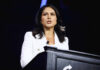
During the New York City mayoral debate on October 16, 2025, Democratic nominee Zohran Mamdani accused Israel of “genocide” in Gaza, a statement that has since generated significant discussion and criticism within the political landscape and community.
Story Highlights
- Democratic nominee Zohran Mamdani made three accusations of “genocide” against Israel in Gaza during the NYC mayoral debate.
- Opponents Andrew Cuomo and Curtis Sliwa challenged Mamdani’s statements and his capacity to represent Jewish New Yorkers.
- The debate featured an unexpected focus on foreign policy and identity politics for a municipal election.
- Jewish organizations and advocacy groups have expressed concerns regarding the remarks.
Mamdani’s Accusations and Political Reactions
On October 16, 2025, the initial general election debate for New York City mayor included remarks from Democratic nominee Zohran Mamdani, who stated that Israel was committing “genocide” in Gaza. These statements, made in the presence of Andrew Cuomo and Curtis Sliwa, prompted immediate criticism. Both Cuomo, an independent candidate, and Sliwa, the Republican candidate, questioned Mamdani’s ability to represent Jewish New Yorkers, referencing his past criticisms of Israel. The debate’s emphasis on issues concerning Jewish communities, Israel, and antisemitism highlighted existing divisions in local politics.
Cuomo and Sliwa addressed Mamdani’s rhetoric during the debate. Cuomo requested clarification on Mamdani’s position regarding Israel’s right to exist and criticized his refusal to denounce certain pro-Palestinian slogans. Sliwa emphasized his commitment to the safety of the Jewish community and suggested that Mamdani’s comments were increasing tensions. These responses reflected broader concerns among Jewish organizations regarding Mamdani’s suitability for office and the nature of his language.
Mamdani Accuses Israel of Genocide in NYC Debate
In Oct 16, 2025, debate, mayoral candidate Zohran Mamdani thrice called Israel's Gaza actions genocide. pic.twitter.com/YIwhpAaxjx
— Eli Goldman | אלי גולדמן (@EliGoldmanx) October 17, 2025
Debate’s Focus on Foreign Policy and Identity
The mayoral debate’s notable focus on foreign policy and identity politics represents a shift from previous municipal campaigns in New York City, where Middle East politics have typically been a peripheral topic. This year, the Israeli-Palestinian conflict became a central theme, influenced by recent events in Gaza and increased international attention. Mamdani’s repeated use of the term “genocide,” which is a contested legal term not recognized by international legal bodies in this context, introduced international conflict into local discourse. This required candidates to articulate positions on global issues while also addressing local concerns about antisemitism and safety.
Both Jewish and Muslim communities, which are significant in New York City, have been central to the public discourse surrounding the debate. Jewish New Yorkers have expressed apprehension regarding Mamdani’s statements, citing concerns about increased polarization and representation. Conversely, pro-Palestinian activists have supported Mamdani’s stance, interpreting it as a call for accountability. The debate has intensified existing divisions, with advocacy groups from both sides actively engaging to influence public opinion and candidate platforms. The intersection of local politics with international identity issues has increased scrutiny and raised the stakes for those involved.
Analysis: Legal and Community Implications
Legal and political analysts note that the term “genocide” has a specific definition under international law. As of the debate, neither the International Criminal Court nor the United Nations has classified Israeli actions in Gaza as genocide. Academics have cautioned that such rhetoric, while emotionally impactful, can hinder nuanced discussion and escalate community tensions. Mainstream media outlets and Jewish organizations have criticized Mamdani’s statements, while some left-leaning and activist outlets have defended his right to raise humanitarian concerns. The outcome of the debate is seen as potentially influencing political alliances and public trust in local government, with long-term implications for community cohesion and future elections.
In the short term, the mayoral race is experiencing increased polarization and activism. Jewish organizations continue to seek accountability and clear positions from candidates, while pro-Palestinian groups advocate for greater humanitarian action. The economic and social effects may extend beyond electoral politics, potentially affecting city partnerships and philanthropic initiatives related to Middle East issues. As New York City addresses these developments, the broader electorate is engaging with the implications of identity-based campaigning and intensified foreign policy discussions at the local level.
Watch the report: Zohran Mamdani REFUSES to say whether Hamas should disarm
Sources:
- Mamdani repeatedly accuses Israel of genocide in NYC mayoral debate
- Mamdani Faces Attacks After Comments About Hamas – The New York Times
- The Jerusalem Post: Reporting on Mamdani’s Statements and Reactions