
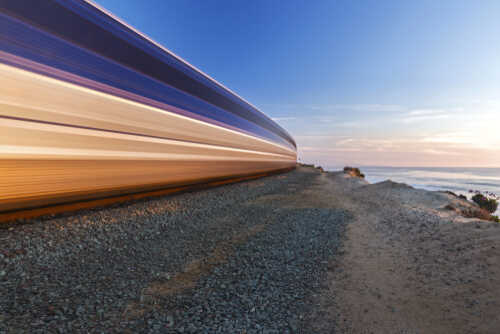
California’s high-speed rail effort collapses as President Trump cancels $4 billion in federal funding, leaving the $128 billion project without a clear future.
At a Glance
- Trump administration terminates rail funding.
- Project cost soared to $128 billion from initial $33 billion estimate.
- After 16 years, zero miles of track built.
- Future depends on private sector partnerships.
- Central Valley communities face uncertainty.
Federal Funds Vanish Overnight
The Trump administration officially pulled $4 billion in federal funding from California’s struggling high-speed rail project, delivering a potentially fatal blow to the ambitious infrastructure plan. Originally billed as a groundbreaking project connecting Los Angeles and San Francisco by 2020, spiraling costs and chronic mismanagement transformed it into a national symbol of government waste. Initially budgeted at $33 billion, the project’s estimated costs ballooned dramatically to $128 billion, leaving taxpayers and stakeholders frustrated and without visible results.
The decision followed a devastating federal audit conducted by the U.S. Department of Transportation, exposing severe inefficiencies and unrealistic planning. U.S. Secretary of Transportation Sean Duffy sharply criticized the effort, noting, “After 16 years and roughly $15 billion spent, not one high-speed track has been laid.” The audit concluded that the project’s leadership had no viable pathway to completion, leading directly to the cancellation of crucial federal support.
Watch a report: California’s High-Speed Rail Dreams Derailed
Decades of Delay and Mismanagement
Since California voters approved Proposition 1A in 2008, authorizing nearly $10 billion in state bonds for high-speed rail, the project has been plagued by escalating costs, legal challenges, and controversial decisions on routing. Originally scheduled for completion in 2020, the project quickly fell behind schedule due to continuous delays, rising costs, and extensive bureaucratic hurdles. Critics have persistently pointed out that the decision to start construction in the rural Central Valley rather than densely populated urban areas was a fundamental strategic error, resulting in wasted resources and widespread skepticism.
As of 2024, the high-speed rail authority has yet to deliver even a single mile of operational track, despite more than a decade of effort and billions of dollars spent. Central Valley communities, initially hopeful about economic revitalization, now confront uncertainty and frustration amid construction disruptions and unfulfilled promises.
Private Sector: Rail’s Last Hope?
With federal funding now eliminated, California’s high-speed rail authority is urgently seeking private-sector partnerships to salvage the embattled project. A recent memorandum signed with Brightline West aims to integrate California’s troubled rail effort into the Southwest High-Speed Rail Network, signaling a desperate shift toward public-private collaboration.
However, the absence of federal funding presents substantial challenges, and any new path forward will require a dramatic restructuring of governance and project management. The future viability of high-speed rail in California now hinges entirely upon private investment and innovative governance models. Without swift and significant action, this ambitious infrastructure vision risks permanent derailment, cementing its legacy as one of America’s costliest infrastructure debacles.