

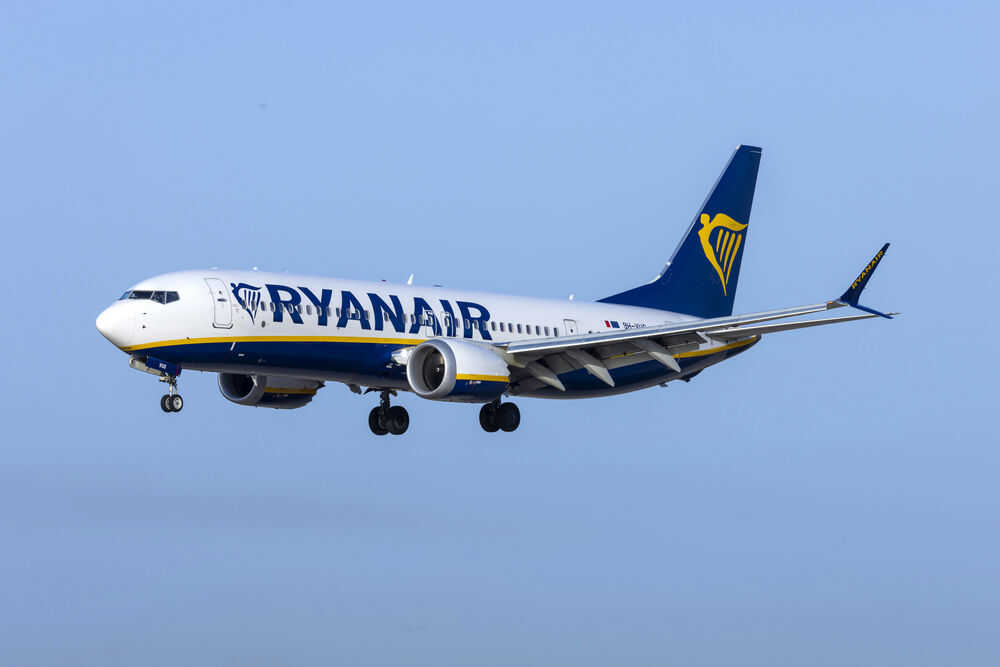
A shattered airplane window and a man nearly pulled outside at 15,000 feet exposed a deadly chain of engine failure and silence that demands answers.
Story Highlights
- Uncontained engine failure on a Ryanair Boeing 737-800 led to a window rupture and rapid decompression.
- Passengers and the man’s wife pulled him back from the opening, preventing a likely fatality.
- Investigators from Europe and the United States are probing an apparent fan blade failure.
- Ryanair acknowledged a dislodged window but offered few technical details as inquiries advance.
What Happened Aboard Flight FR1879
On July 10, 2026, Ryanair Flight FR1879 departed Thessaloniki, Greece, for Memmingen, Germany. Minutes after takeoff, the right engine suffered an uncontained failure, sending metal fragments into the fuselage. The impact shattered a passenger window and caused a sudden loss of cabin pressure. A 61-year-old man seated at the window was pulled partway through the opening before his wife and nearby travelers hauled him back inside. The crew returned and landed in Thessaloniki without further loss of life.
Video clips and eyewitness accounts show chaos, oxygen masks, and fast action to save the victim. Reports describe clear damage to the engine’s front section, with broken and missing fan blades. The pattern matches a rare but known risk: when a spinning fan blade breaks, heavy parts can escape the housing. Those parts can hit the fuselage and windows. That chain can cause a blowout and violent airflow that pulls nearby objects and people toward the hole.
Why Investigators Suspect a Fan Blade Failure
Aviation reporters citing people familiar with the case say a failed fan blade likely started the event. The right engine, a CFM International CFM56-7B, appears to have shed parts that struck the hull. Investigators from North Macedonia, Greece, the United States, Boeing, and the engine maker are assisting. That broad team points to a serious probe focused on metallurgy, inspections, and maintenance intervals for the blades and the fan assembly.
Investigators will look for a fatigue crack, missed inspection, or a sudden break from other stress. They will check service records and any past warnings on this engine. They will map debris paths and compare damage against known failure modes. That work takes time but can reveal if the blade crack grew slowly or formed quickly. If the crack built up over time, inspectors should have had a chance to find it, depending on rules and tools in place.
What Ryanair Said—and Did Not Say
Ryanair confirmed the aircraft returned to the airport and that a passenger sought medical help after a window dislodged. The airline did not share detailed findings about engine parts, prior inspections, or blade life limits. That leaves key questions for regulators and the public. When a window fails after an engine lets go, families expect straight answers, fast fixes, and proof that the risk is being driven down across the fleet.
Ryanair's Chief Executive has said "there will be a full investigation" in relation to a recent incident on a Ryanair flight from Greece to Germany where a passenger was injured after being partially sucked out of a window while the plane was in the air. #News #ryanair pic.twitter.com/odQA6WVdNg
— Roy Black (@RoyBlack41) July 15, 2026
Americans remember the 2018 Southwest Airlines tragedy, when a broken fan blade led to a fatal window failure. That case forced tighter checks on similar engines nationwide. Conservatives demand the same clarity here: what failed, who knew what, and when will it be fixed. Safety rules must be enforced without fear or favor. Fliers deserve full transparency from airlines, planemakers, and regulators who sign off on maintenance cycles.
Accountability, Transparency, and the Path Forward
Air travel is safe because standards are strict and enforced. When a blade breaks free and a window fails, the system has to show it can police itself. Investigators must recover parts, test them, and publish their findings. If inspections missed a slow-growing crack, rules must change. If the break was sudden and could not be seen, design or shielding may need updates. Either way, the public should see the fixes and the timelines for action.
For families who fly, this is not about blame theater. This is about trust. Clear facts restore trust; silence erodes it. Ryanair, Boeing, and the engine maker must support a full release of records and findings. Regulators in Europe and the United States must hold the line on safety. Our nation expects airlines serving our travelers to meet the highest bar, and to prove it with data, not talking points. That is how we keep every seat safe.
Sources:
youtube.com, blog.vibrationdata.com, theaircurrent.com, facebook.com