Two innocent journalists were swarmed by police after an AI license‑plate camera flagged their car as “stolen,” showing how privately run mass‑surveillance tech can turn a simple drive into a constitutional nightmare.
Story Snapshot
- Flock Safety’s cameras triggered wrongful police stops of two journalists after bad license‑plate data spread through its AI network.
- The company defends its system as “highly accurate,” even as outside studies and real‑world audits show alarming error rates and false stops.
- Conservatives worry this privatized surveillance grid empowers government overreach and Fourth Amendment abuse against law‑abiding drivers.
- Growing backlash has pushed cities, courts, and watchdogs to question whether Flock’s errors and contracts are worth the risk to basic freedoms.
Journalists Stopped After AI Camera Flags ‘Stolen’ Press Car
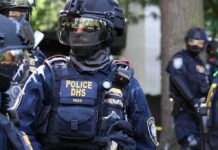
Automotive journalist Joel Feder and his wife were driving a Jaguar Land Rover press vehicle near Plymouth, Minnesota when police suddenly boxed them in with multiple squad cars. Officers were acting on an alert from Flock Safety’s automatic license plate reader system, which flagged the car as stolen based on a flawed entry in a national crime database. Feder says he was treated like a suspected criminal even though he had done nothing wrong and was simply testing a loaned vehicle for work.
Reports show the problem started when a truncated license plate entry in California marked part of Jaguar Land Rover’s media fleet as stolen, then spread nationwide through Flock’s AI‑driven camera network. Because the system matched partial plate data, every similar press car could be tagged as suspicious, even though the original data error was hundreds of miles away. In practice, that meant innocent drivers were tracked and stopped for days, not because of solid police work, but because a machine misread reality and law enforcement trusted the alert.
Flock Safety Says System ‘Worked Correctly’ Despite Misreads
Flock Safety has defended its cameras, saying the system “performed exactly as designed” when it matched the partial plate and generated the alert. Company representatives insist their technology is “highly accurate” and should be treated as an investigative lead, not the only reason for a traffic stop. One executive has pointed to internal audit‑log tools and partnerships with “democratically elected governing bodies” as proof there is oversight and accountability when officers misuse the data.
The company has publicly touted accuracy figures in the “high 90s,” and some reports cite a 93 percent read rate as a benchmark. But even Flock’s own numbers raise red flags for freedom‑minded Americans. A 93 percent accuracy rate at the scale Flock operates—tens of billions of reads a month—means more than a billion misreads in that same period. One Flock executive admitted that a one‑percent error rate at 20 billion monthly reads would still equal roughly 200 million bad plate reads. Every one of those errors is a real car with a real person inside.
Independent Studies and Audits Expose Systemic Errors
Outside investigators paint a much harsher picture than Flock’s marketing language. Surveillance research firm IPVM tested the company’s Falcon cameras and found about a 10 percent error rate, including regular misreads of which state a plate came from and incorrect vehicle details. The American Civil Liberties Union highlighted those findings and warned that even “low” error rates become dangerous when tied to armed police responses and giant databases like the Federal Bureau of Investigation’s National Crime Information Center (NCIC).
Business Insider reviewed police records and lawsuits and documented multiple cases where Flock cameras misread plates, leading to people being held at gunpoint, jailed, or even attacked by police dogs despite no crime. In Oak Park, Illinois, a review of Flock‑triggered stops found that 40 percent of 25 traffic stops were mistakes caused by bad data or officer verification failures. A lawsuit in Toledo claims it is “commonly known” within the department that Flock’s system is unreliable and often misreads plates, yet the cameras kept running and drivers kept paying the price.
Mass Surveillance, Misuse, and the Threat to Constitutional Rights
Flock’s cameras do more than watch for stolen cars; they quietly build trails of where and when vehicles travel, creating a private surveillance grid that government agencies can tap. Freedom‑oriented groups argue this turns everyday movement into something that can be logged, analyzed, and used against citizens without traditional warrants. One suppression motion filed by Data for Defenders calls Flock data “deeply unreliable” and urges courts to reject warrants based only on its artificial intelligence license plate reader hits.
The Los Angeles Police Department has let its contract with Flock Safety expire after an audit found the company’s license plate reader cameras were incorrectly flagging vehicles as stolen.
The audit documented 161 false stolen-vehicle alerts in two months, each capable of… pic.twitter.com/l6ZKARl5W8
— Straight Arrow (@StraightArrow__) July 18, 2026
Civil liberties advocates warn that this network is ripe for abuse, from targeting political critics to stalking ex‑partners, especially when officers can run searches without strong checks. Over a dozen officers across several jurisdictions have already faced discipline or arrest for misusing Flock systems, including looking up plates for personal reasons instead of genuine investigations. The Los Angeles Police Department let its contract with Flock expire after an audit found 161 innocent drivers were wrongly investigated in just two months because of incorrect stolen‑vehicle alerts, showing how quickly “errors” become real harm when government power and flawed AI mix.
Growing Backlash and What It Means for Conservative Communities
As failures mount, pushback is growing. Some cities have cut contracts, while others face lawsuits accusing Flock of enabling illegal tracking of millions of residents and sharing that information across state lines. A recent study highlighted widespread “enduring indignity” for drivers wrongly flagged by license plate readers, and singled out Flock as a major source of those errors because of its dominant market share. For many Americans, especially conservatives who value limited government and strong Fourth Amendment protections, this looks less like safety and more like outsourced surveillance.
For communities that already distrust big tech and big government, the lesson is simple. Any system that misreads even a small share of plates can still throw thousands of innocent people into the sights of law enforcement each month. When a private company’s black‑box algorithms drive police decisions, mistakes do not just mean bad data; they mean guns drawn on families, journalists, and ordinary drivers. As the Trump administration pushes to restore constitutional limits and rein in federal overreach, these local camera grids deserve the same hard look—before the next “error” lands another innocent citizen in handcuffs.
Sources:
zerohedge.com, remio.ai, datafordefenders.org, en.wikipedia.org, malwarebytes.com, gadgetreview.com, wnd.com, businessinsider.com, eff.org, aclu.org, 404media.co, reddit.com, youtube.com, deflockokc.com, timesofindia.indiatimes.com