

President Trump’s 50% tariffs on Indian imports threaten to derail a November trade deal, exposing deep rifts in U.S.-India relations, and possibly causing India to align with America’s adversaries.
At a Glance
- Trump raised tariffs on Indian imports from 25% to 50% by late August 2025.
- India continues to import Russian oil despite U.S. pressure.
- Commerce Minister Piyush Goyal projects optimism for a November trade deal.
- India resists opening agriculture and dairy to U.S. firms.
- Growing SCO engagement signals India’s multipolar alignment.
Trump’s Tariff Gamble
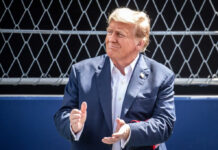
The Trump administration’s latest move against India marks a steep escalation in trade tensions. In late August 2025, President Trump doubled tariffs on Indian imports from 25% to 50%, citing India’s refusal to halt Russian oil purchases. The measure follows weeks of deadlocked trade talks that had begun in July, when Washington first introduced a 25% duty on a wide range of Indian goods.
Commerce Minister Piyush Goyal has attempted to reassure investors and exporters, noting that India still aims to finalize a trade deal by November. He emphasized that negotiations remain active, despite the tariff pressure. Trump, however, appears intent on wielding economic leverage to extract concessions on both market access and geopolitical alignment, especially regarding Russia.
Watch now: Trump’s 50% tariffs on Indian imports will hit labour intensive industries the hardest: Analysis
India’s Strategic Calculus
India’s response underscores its insistence on strategic autonomy. Prime Minister Narendra Modi’s government has rejected opening its sensitive agricultural and dairy sectors to U.S. companies, viewing such moves as politically and economically destabilizing. At the same time, India has refused to align with Western sanctions on Russia, maintaining steady oil imports despite repeated U.S. objections.
India’s participation in the Shanghai Cooperation Organization summit has further fueled Washington’s concerns. The gathering, attended by China and Russia, symbolized New Delhi’s balancing act between competing powers. While India deepens defense and technology ties with the U.S., its concurrent engagement with Moscow and Beijing signals a multipolar strategy unlikely to shift under external pressure.
Uncertain Future for Trade Talks
The sectors most affected by Trump’s tariff hike—textiles, gems, and labor-intensive industries—face immediate disruption. Indian exporters now confront shrinking margins and heightened uncertainty, while U.S. buyers brace for rising costs. The longer these tariffs remain, the more entrenched the trade friction could become, complicating efforts to secure a November agreement.
If talks collapse, the fallout may extend beyond commerce. The U.S. has positioned India as a critical partner in countering China’s regional ambitions, while India values U.S. investment and market access. However, prolonged disputes could weaken this alignment, encouraging India to accelerate diversification toward non-Western markets.
The outcome of the negotiations will determine whether both sides can compartmentalize their differences or allow trade disputes to spill over into broader strategic relations. For now, the possibility of a November breakthrough hangs in the balance, with tariffs serving as both pressure and peril.
Sources
iBulls Securities
Times of India
Atlantic Council