Iran’s “reopened” Strait of Hormuz looked like a mirage Saturday when gunboats fired on Indian-flagged ships and forced them to turn back—an unmistakable reminder that raw power, not press releases, decides who sails.
Quick Take
- Iranian gunboats fired on two Indian-flagged vessels in the Strait of Hormuz, prompting U-turns and a diplomatic protest from New Delhi.
- The incident followed Iran’s whiplash reversal after briefly signaling a conditional reopening during a regional ceasefire.
- UK maritime officials reported crews were safe, but multiple tankers reportedly halted or reversed course amid uncertainty.
- The disruption highlights how quickly energy markets and supply chains can be shaken when a single chokepoint is weaponized.
Gunfire in a “Reopened” Waterway
Iranian gunboats fired on two Indian-flagged vessels transiting the Strait of Hormuz on April 18, forcing them to turn back to safer waters, according to reports citing maritime monitoring and government reactions. One of the ships identified was the very large crude carrier Jag Annapurna, described as carrying roughly 2 million barrels of Iraqi oil, along with another Indian-flagged vessel, Sanmar Herald. No injuries or spills were reported, but the message to commercial shipping was clear.
India’s Ministry of External Affairs responded by summoning Iran’s ambassador, signaling that the incident was not being treated as routine friction at sea. Independent maritime reporting referenced by outlets said the crews were safe after the firing, but the episode triggered immediate caution across the region. Multiple tankers reportedly slowed, held position, or turned around, reflecting how rapidly a threat in Hormuz can freeze traffic—long before any official closure is declared.
Iran’s Rapid Reversal and the “Authorization” Trap
Iran’s action landed just after Tehran said it would conditionally reopen the strait during a 10-day ceasefire tied to fighting involving Israel and Iran-backed Hezbollah. Within hours, Iranian authorities reversed course and reimposed “strict management and control,” warning that passage would require authorization and, in some accounts, payment of tolls. For shipowners, that kind of discretionary gatekeeping is functionally indistinguishable from a closure because it turns a global sea lane into a permissioned corridor.
The broader backdrop is an ongoing U.S.-Iran conflict in which Washington has been applying intense pressure, including reported naval measures aimed at constraining Iranian exports. In that environment, Tehran’s mixed signals—open on Friday, controlled again early Saturday—create a risk premium that doesn’t require a single ship to be sunk. When rules can change overnight and are enforced by gunboats, insurers, charterers, and captains behave as if the worst-case scenario is already underway.
What the Hormuz Chokepoint Means for Energy and Inflation
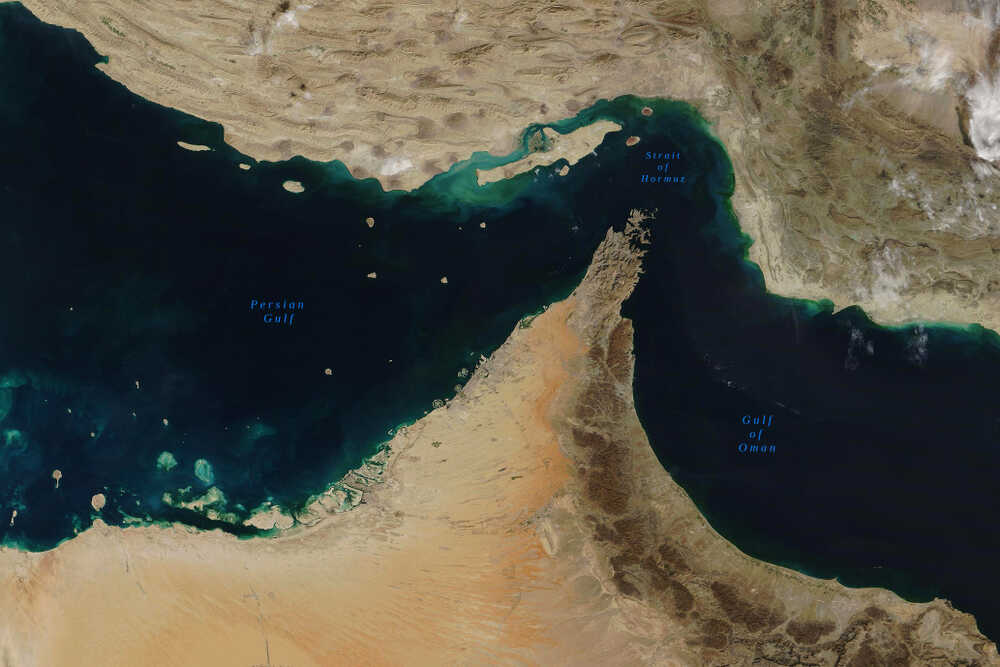
The Strait of Hormuz is one of the world’s most important energy chokepoints, commonly described as carrying about one-fifth of global oil flows. That reality is why warning shots matter even when no ship is hit. Delays raise shipping and insurance costs, and a sustained slowdown can tighten supplies, pushing prices higher across gasoline, diesel, air travel, and goods moved by truck. For American households still sensitive to inflation, instability in Hormuz is not an abstract foreign-policy debate.
Iran’s use of coercive control also reinforces a strategic lesson Washington has been relearning in the 2020s: energy security is national security. A system that relies on fragile maritime corridors and adversary tolerance is vulnerable by design. Conservatives who have argued for abundant domestic production tend to see episodes like this as proof that the U.S. cannot outsource stability to regimes willing to gamble with the world economy for leverage in a broader confrontation.
Diplomacy Meets Deterrence in Trump’s Second Term
President Trump, in his second term, has framed Tehran’s pressure tactics as blackmail and has paired diplomatic deadlines with explicit threats of renewed military action if demands are not met. Whether those signals deter escalation or harden positions is difficult to measure in real time, but the Hormuz episode shows the operational reality: Iran’s forces can impose immediate costs on third-party shipping, including countries like India that are not the primary combatants in the U.S.-Iran standoff.
Iranian Navy Fires On Two Vessels in Strait of Hormuz Demonstrating That Waterway Is Not Openhttps://t.co/UdaKLuRfGI
— RedState (@RedState) April 18, 2026
For now, the most defensible conclusion is narrow but important: the strait is not reliably “open” in any normal commercial sense if compliance is policed by gunfire and policy reversals. With crews safe but traffic disrupted, governments and markets are left managing uncertainty—often the most expensive commodity in geopolitics. As this confrontation continues, the key question for ordinary citizens is how quickly a distant maritime clash can land on their doorstep through prices, supply shortages, and renewed pressure for Washington to act.
Sources:
Two Indian Vessels Come Under Iranian Fire In Strait of Hormuz, Turn Back; Ambassador Summoned
Iran war latest news: Trump, ceasefire, Strait of Hormuz open
Iran gunboats rain bullets on vessel in Hormuz; captain reveals horror after shock attack